A line extended to the door, dishes clinked and lively chatter abounded in the coffee shop.
Amidst the organized chaos of the afternoon lunch rush, at a small table in the back corner of the restaurant, one could soon forget about all of this.
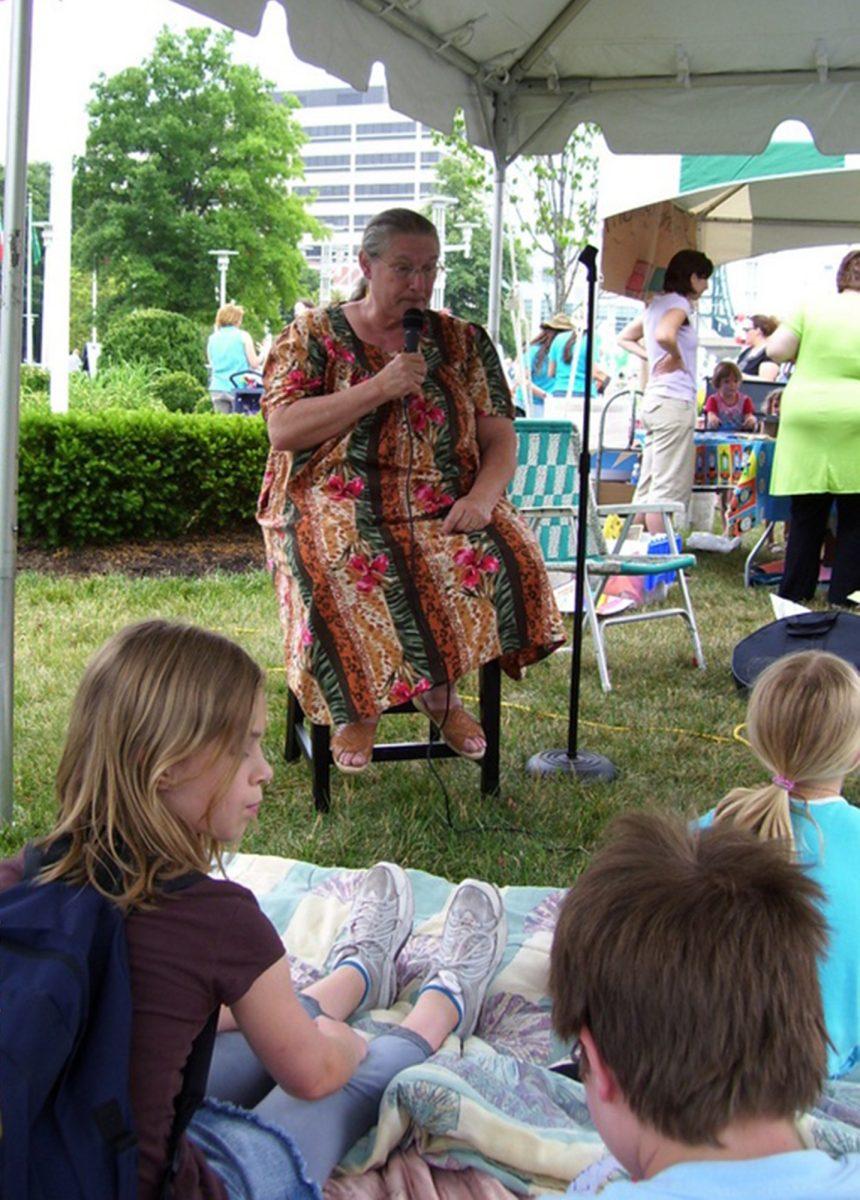
As local storyteller Kathleen Mavournin began to speak, the tinkling of dishes faded into obscurity as an entirely new world was woven. A world set in years long past, before cities and cell phone towers peppered the Earth.
Finishing her story and taking a sip of coffee, Mavournin described why she enjoys storytelling so much.
“I think of stories as the way we explain the universe to each other,” Mavournin said. “Particularly the ones I tell, which are often thousands of years old. It’s kind of like plugging yourself into the universe and letting it flow through you.”
Now residing in a retirement community, Mavournin worked at Oak Ridge National Laboratory for 22 years. But even though she holds a doctoral degree in molecular genetics, Mavournin has loved stories and fairy tales ever since she was a little girl.
“My mother and father read to me a lot growing up, so that was probably the beginning of it,” she said. “When I was in elementary school, though, I was fascinated with fairy tales.”
Mavournin can recall checking out every fairy tale book she could get her hands on, reading them repeatedly until she strayed into a new section of the stacks.
“One day, I discovered Dewey Decimal Section 398.2: folklore,” she said. “It really took off from there.”
Although she may not be as mobile as she once was, Mavournin still translates a powerful energy to her audience. She claims she never really liked to be overly energetic in her storytelling anyway, viewing herself instead as a medium that passes along stories and characters for listeners’ own interpretations.
“I put a lot of care into developing my characters and portraying them as honestly as I can, but I don’t do much that calls attention to me as the storyteller,” she said. “When I’m putting a story together, I think about what the characters are and what they represent … if I have a good image of each character in my head, then the character will come across as real.”
Mavournin isn’t the only person in East Tennessee with a love for storytelling. The Smoky Mountain Storytellers Association, an official non-profit since 1994, holds storytelling as the greatest natural resource of Southern Appalachia.
Janice Brooks-Headrick, corresponding secretary of the SMSA and Mavournin’s partner in crime, has been captivating audiences since 1986.
“We’re a very mixed group, and most of our members have had very interesting lives in other vocations,” Brooks-Headrick said. “Together, we share workshops and hold different programs throughout the year. While it may not be a very high-paying job, most of us just make a life.”
In addition to hosting a variety of programs, the SMSA also works to catalog and pass along stories for future generations.
“If you don’t tell your family stories, then who will?” Brooks-Headrick said. “Plus, storytelling is the absolute best way to teach little kids. Children, and all humans really, are hard-wired to understand things through storytelling.”
While both Mavournin and Brooks-Headrick appreciate writing, they also believe oral storytelling holds a distinct difference.
“When you hear a story, it enters your mental processes at a level just below rational critiquing,” Mavournin said. “Because of this, the emotional impact will hit you a lot more quickly than if you had just read the story.”
Storytelling also has the ability to encompass a wide range of people and experiences, Brooks-Headrick noted.
“There’s something for everybody in storytelling,” she said. “Our audiences range from small children to seniors in retirement communities. Storytelling truly is one of the last things that is for the entire family.”
To find out more about the Smoky Mountain Storyteller’s Association and view their schedule of upcoming events, visit http://smokymountaintellers.org.