The last dinosaur died more than 65 million years ago, but John Nolt, professor of philosophy and environmental ethics, said the earth is speeding toward a disaster of similarly epic proportions if carbon emissions go unchecked.
Though it is sometimes difficult to measure the concrete effects of climate change, Nolt presented an alternative method at the Howard H. Baker Center for Public Policy this Wednesday to examine the cost of fossil fuels beyond global finances — human casualties.
“Everybody will agree that if you’ve got casualties, there’s something of moral significance here,” Nolt said.
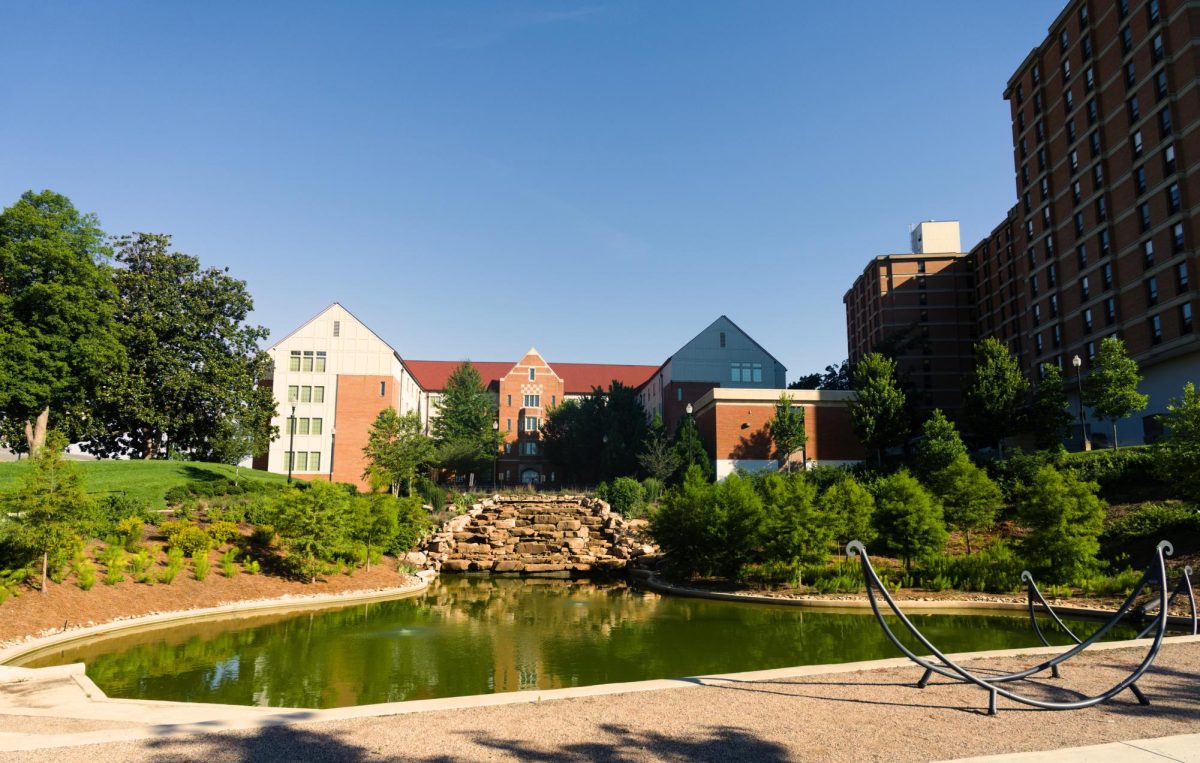
Nolt placed the Knoxville campus in the context of global emissions at a 200,000th of the total 400,000 emissions released every year into the atmosphere.
If experts were to track this figure as casualties, Nolt said, the university would be responsible for two deaths per year.
However, not all hope is lost.
The solution, he said, is to strip away the world’s reliance on fossil fuels, focusing instead on local efforts in Tennessee as an area dependent on coal to generate thermal energy and electricity.
“This university needs to be a leader in this effort to reduce fossil fuel usage, and the most effective way to do that is to take our endowment and divest it from fossil fuels,” Nolt said.
Nolt said he recognizes the obstacles in lobbying for divestment from UT and federal administration, citing Gov. Haslam’s and his family’s involvement in the oil business and the Tennessee legislature’s “unsympathetic” stance on climate change issues.
The environmental philosopher encouraged student activism as a way to publicize fossil fuel divestment and encouraged students to pressure UT administration to change policy until the nation’s “culture of consumption” is restructured.
“It would not happen quickly, but we’re seeing this happen at major universities across the country,” Nolt said. “One strategy that I think might be useful is ‘You wanna be in the Top 25? Look at what the Top 25 in respect to divestment.’ Not many of them are doing divestment yet, but there are divestment movements.”
Though 90 percent of environmental consequences like famine, drought and monsoons cause high casualty rates in places like Africa and Southeast Asia every year, Julianna Burchett, a senior in environmental science, said she had never considered lost lives as an instrument to measure climate change’s impact.
“To say ‘Oh, we have this many emissions this year,’ those kind of numbers don’t resonate with people,” Burchett said. “But when you say that two people die, that’s much more tangible for people. It’s much more tangible for me.”
For Burchett, climate change’s impact on biodiversity and primary producers, or organisms that synthesize the sun’s rays into energy, demands that humans be on the forefront of climate change.
“We may be the most important [species], but we’re also the most influential, and we have the choice to use that influence to do good things for the environment or cause it harm,” Burchett said.