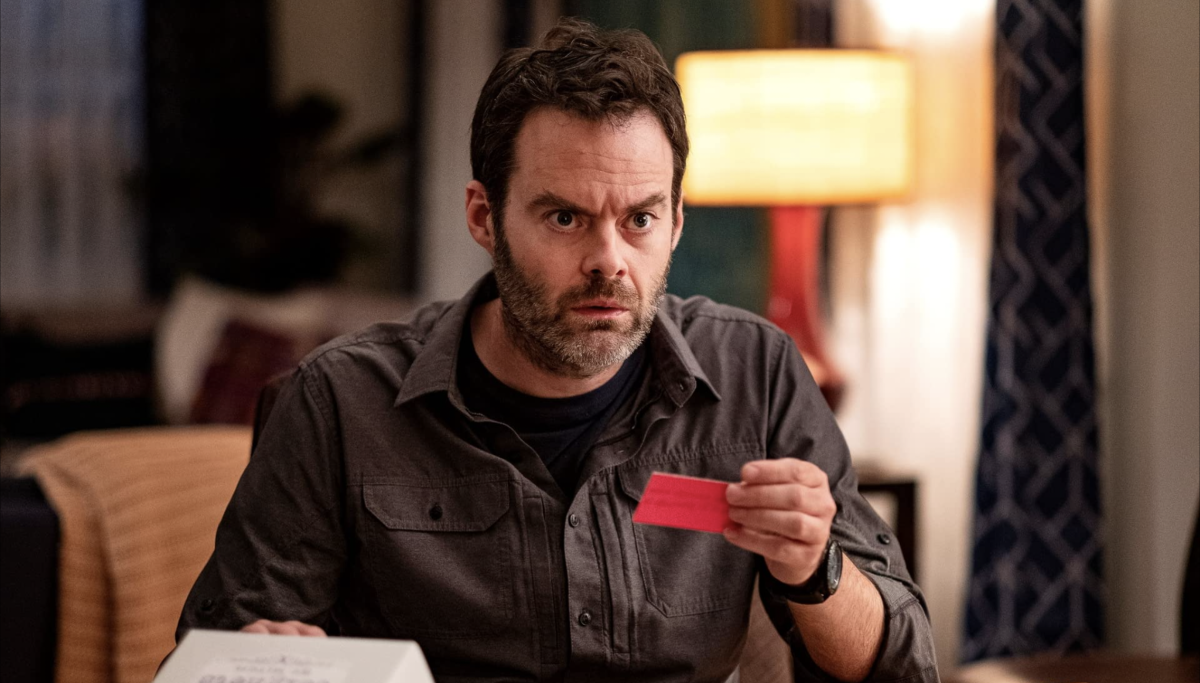
When it first hit the air back in 2018, “Barry” presented an interesting antithesis to the norm of male archetypes that television drama had been used to the decade prior. Where Walter White and Tony Soprano attempt to find some meaning in their malice, Hader’s plucky assassin was determined to do anything but that.
It’s an irony that the audience immediately notices — the role he was best in was that of the man he so desperately wanted to be. As tensions and stakes rise, it’s clear that the walls of consequence are closing in on Berkman faster than he’d like. If he can’t prove to others that he’s truly a good guy, surely he can still prove it to himself. Right?
The answer to that question is something we see Berkman wrestle with throughout the fourth and final season of “Barry.”
We spend the first third of the season with him in prison, isolated from the main cast and maybe even his own consciousness. Bill Hader directed the entire fourth season, even writing three of the episodes. His prowess behind the camera has been instrumental in some of the finale’s most pivotal moments.
Barry goes ballistic on himself, the camera staying in focus on a bathroom mirror as he frantically paces and proceeds to antagonize a prison guard before getting a smack of discipline across the face. It’s telling that the true anxiety here comes in the moments he has to spend with himself. Once the baton been’s swung across his temple, the violence is painted almost as serene. It’s very revealing of where Barry is at this point that his only peace is found either in sedation or delusion — the latter of which he’s existed in since he first stepped on stage in Gene Cousineau’s acting class so long ago.
The pivot taken in the fourth episode is jarring, though its necessity feels more and more warranted the more time is spent in the aftermath of everything prior. After a devastating phone call with Sally Reed, Barry breaks out of prison to whisk her away to their fresh start together.
Gene, fearing for his life, misfires in self-defense and goes into hiding after accidentally shooting his own son. NoHo Hank makes his toughest call in killing Cristobal, with its payoff being the life he always wanted: legitimate business.
We get a resolution to a story that initially feels like it came four episodes too early. But the viewer, as well as Hader, knows that greener pastures are not on the horizon for anyone just yet.
This is where the wheels really start rolling. Under new identities, Barry and Sally attempt to start anew. Their attempt at a family is bland, and a bit tricky. We see Barry try to raise his son, John, by feeding him stories of men with great resolve and stature. A homeschool lesson on Abraham Lincoln acts as some good foil here when Barry finds it nearly impossible to give his son a role model without some blemishes on his record.
Cousineau finally comes out of hiding when he hears of a biopic being made centering on the death of former lover and victim to Barry, Janice Moss. Naturally bringing Barry back into the fold, we see that even with fresh starts and new beginnings, our main cast hasn’t changed.
The show’s driving themes of finding happiness and redemption are brought into the spotlight, as we see that true fulfillment might not be for everyone. When those who’ve made the bed refuse to lie in it, karma may force the covers onto them.
Something that’s really bolstered season four above what’s come before it is a looser commitment to sitcom-laden blueprints it had abided by in seasons prior. There’s still a good laugh or two in every episode — anytime Stephen Root’s Monroe Fuches, aka The Raven, is on screen is bound to see some ribcages tickled. Tonally, the show’s main mood still stays intact, but its reach into darker — and weirder — territories is what’s truly been forcing growth onto our characters.
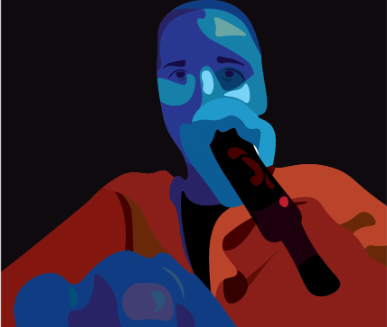
Sally’s PTSD has been a constant haunt, but hallucinations and a visually-marked stalker in the episode “The Wizard” encapsulate it in a whole new way. Barry’s aforementioned delusions and visions finally give us what little peeks Hader will let us have into the true psyche of a man with a permanent mask, finally reverting to a sick sense of normalcy once the mask is pulled off. Again, this season saw Hader at the helm for every episode. Thankfully, his knack for hitting his mark seems to be the only commonality between himself and his cold-blooded protagonist.
What we’re left with at the end of this season’s finale is a feeling of cynicism placed on the backend of justice. Fuches finally solidifies his position as the only person in Barry’s corner by killing Hank and freeing Sally and Barry’s son, John, from his capture. Cousineau gets his final retribution in killing Barry, and Sally and John flee into a life hopefully free of the evil brought onto them by their husband and father.
The film around Barry gets made, yet the new accounts of those events place the weight of martyrdom on the late Barry Berkman’s shoulders. Whatever his son knows about his father’s past can’t erase the legacy he’s been gifted, nor rid us of the notion that evil seldom has to sit with itself. The world finally told Barry what he’s always wanted to hear — that he’s really not a bad guy.
The show’s farewell season ultimately tried to cram two seasons of character exploration into one season of bullet points for its supporting cast. As expensive as this could’ve been, it’s still refreshing to see a show ready to shorthand its audience on indulgence in favor of making sure they can stick the landing.
Writer/director/star Hader is already in talks to begin work on his directorial debut, no doubt a factor in this move for the show’s early exit. Unsurprisingly, the more “Barry” garnered attention and let Hader grip the reins, the more it felt like he was trying to put increasingly larger meals on the small dishes he was given.
What started as a therapy session for the former SNL member’s psyche slowly morphed into a horrifyingly pessimistic look into human nature and how easily interchangeable good and evil can be in this world. It also leaves its viewers with a poignant question: in the end, who gets to decide what “evil” really is?