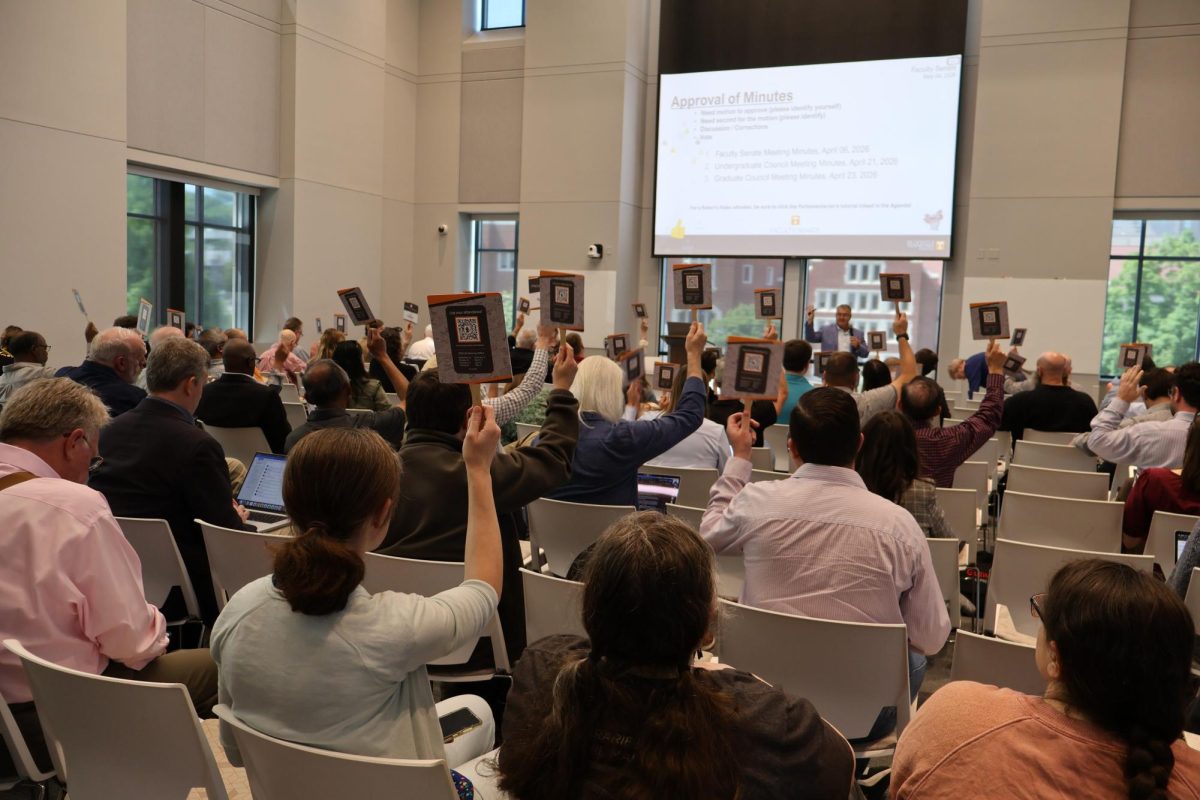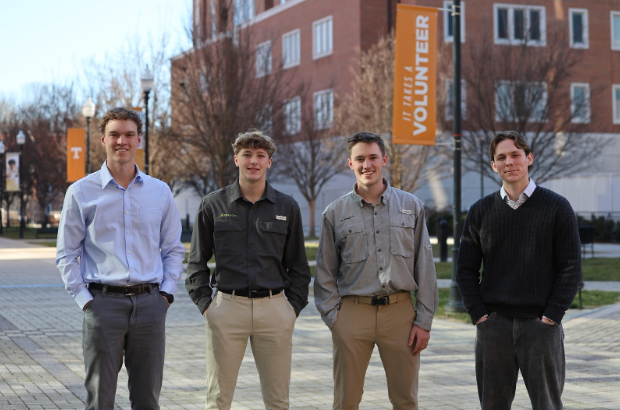
On Wednesday, Aug. 21, UT leaders gathered outside Tyson Alumni Center to celebrate the groundbreaking of the new Haslam College of Business building.
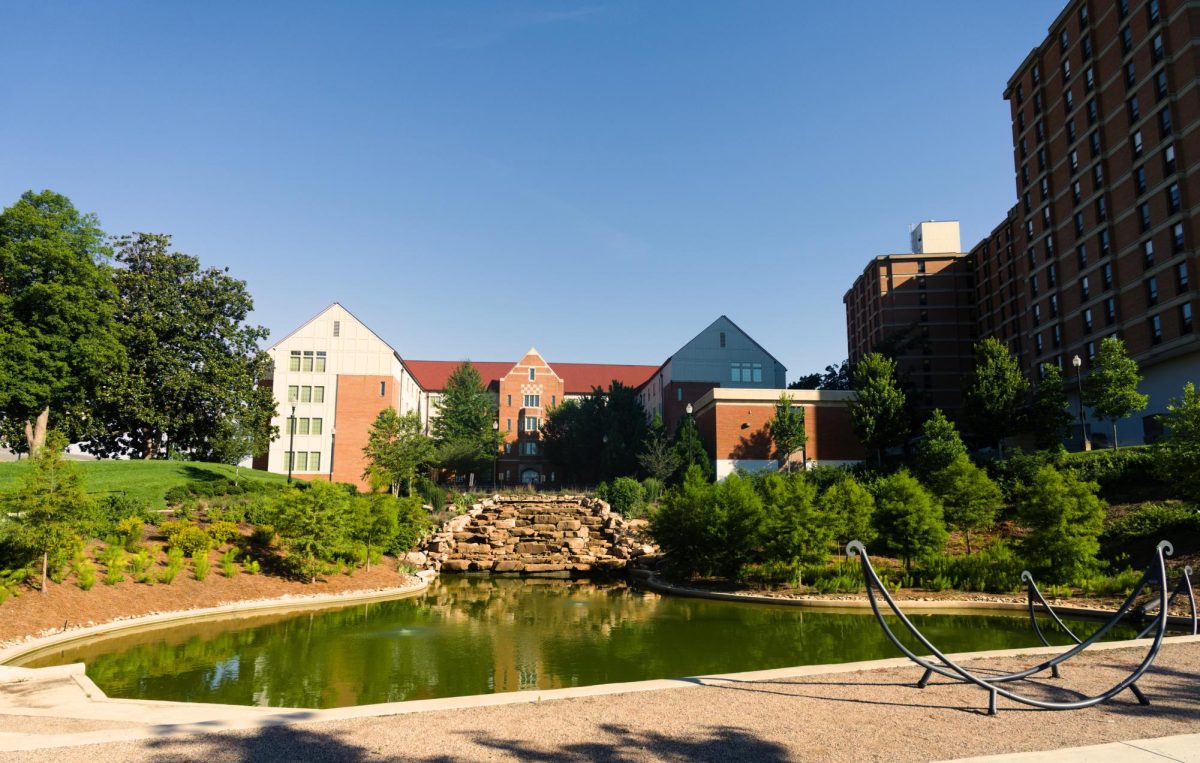
The ceremony overlooked the vast slate of dirt and construction equipment that was once home to Henson, Dunford and Greve Halls across the street from the existing Haslam Business Building and Stokely Management Center. Chancellor Donde Plowman commented on this.
“Look for a minute at how massive this site is,” Plowman said. “When I think about that, it’s a perfect symbolism of how massive the impact of Haslam College of Business is and continues to be on this university … So while we sit here, look at this and go, ‘Can it possibly be a building that big?’ The answer is yes — it will be our largest building on campus.”
The construction process for the new business building began in fall 2023 with the displacement of the history department, Humanities Center, Disability Services and the College of Social Work from Henson, Dunford and Greve Halls.
“We appreciate the understanding of campus colleagues in the department of history, the College of Social Work and other campus entities who had to change locations to facilitate this build,” said Stephen Mangum, the dean of the Haslam College of Business.
Greve, Henson and Dunford were demolished over the summer, so the construction of the new business building may officially begin. The project is projected to be completed by fall 2027 and will cost $227 million.
Of this $227 million budget, 55% is funded by the state and university, and $100 million is to be donated by alumni and private philanthropies.
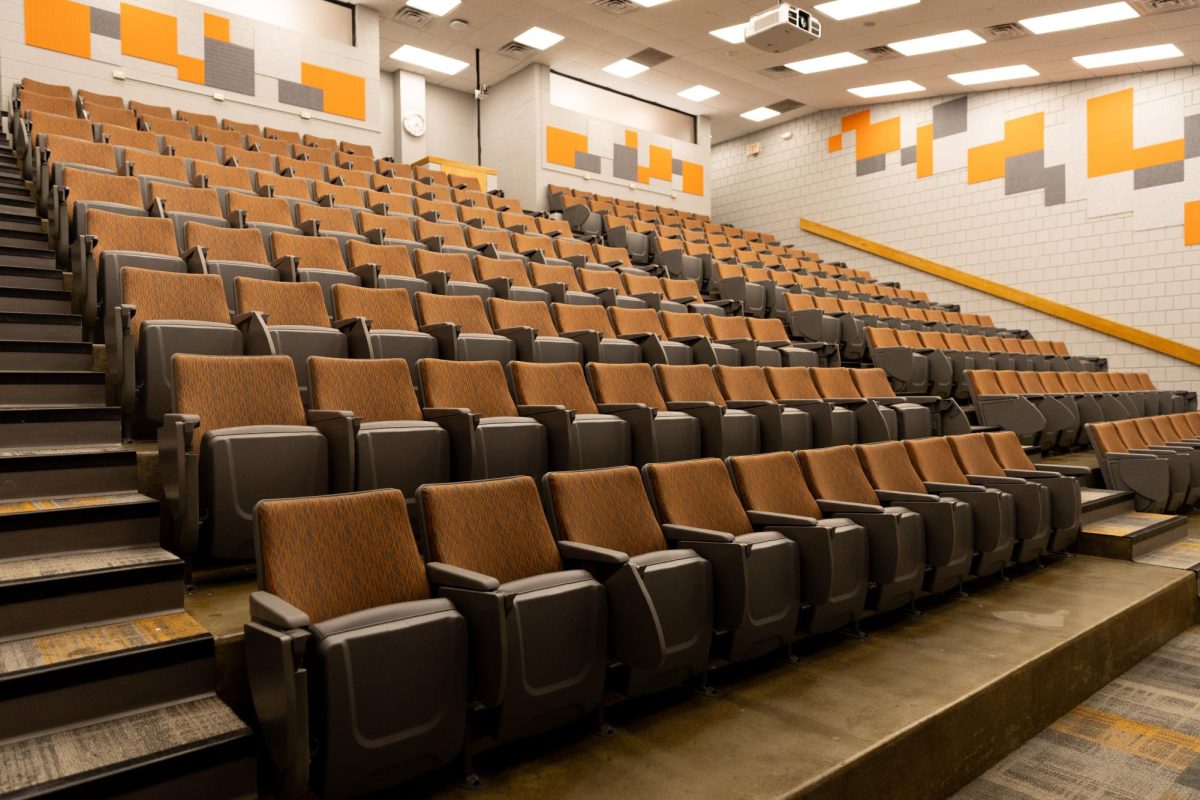
This new state-of-the-art, 243,800-square-foot facility will serve over 10,000 students, faculty and staff weekly, and it will include 16 new classrooms, two 300-seat auditoriums, three research laboratories and one food service venue across its five floors.
The building will be an expansion upon the already existing business building and house the college’s seven academic departments alongside the Boyd Center for Business and Economic Research, Anderson Center for Entrepreneurship and Innovation, and its graduate and executive education programs.
The new building will also prioritize community spaces and preserve as much green space surrounding the building as possible to ensure that students will have access to a relaxing environment to study.
This project is also funded through the state of Tennessee as a land-grant institution. To fulfill the land-grant mission, the Haslam College of Business is leading the way in aiding the state to fill the 350,000 available jobs that require a four-year degree.
“(The state counts) on us to provide the talent that makes us thrive, and so it’s our responsibility to provide that talent,” UT System President Randy Boyd said. “And the only way to do that is to continue to grow, and our biggest barrier to growth is investment in our buildings — that’s why this is so important.”
This new academic building will also be UT’s largest investment in its 230-year history, according to Boyd.
UT is spending over $52 billion on new academic buildings system-wide to also accommodate its enrollment goal of 59,000 to 71,000 students by 2030. The new Haslam Business Building is one of the first buildings of this initiative to go into construction.
Over the last decade, the Haslam College of Business has seen record enrollment, graduation and retention rates. It also leads UT with four of the university’s top 25 majors and graduate programs, with graduate supply chain management at number one, business analytics at No. 15, marketing at No. 20 and accounting at No. 23.
“We are a university on the rise,” Plowman said.
About 10 years ago, UT had around 15,000 applications at the start of the school year, according to Plowman, but UT received over 57,000 applications this fall.
Likewise, in the College of Business, undergraduate enrollment has increased by more than 100%, and master’s program enrollment has increased by 35%.
The new business building will be a massive asset to the university and will help prepare future generations of students.
“New buildings, while essential and indeed wonderful, are not a source of sustainable competitive advantage — it’s easy for other places, over time, to build buildings as well,” Mangum said. “Sustainable competitive advantage is found in the quality of the people … in the building, and how they willingly organized themselves to creatively collaborate and produce innovation (and) positive impact that drives excellent performance and which differentiates the Haslam College from its competitors, and so my thanks and admiration to the faculty, staff, students and alumni of the Haslam College of Business — they are the heart and the future of this building and this college.”