In a time where fast fashion and clickable clothing ads rule the shopping market, shopping secondhand isn’t at the masses. For a select group of fashion-forward shoppers, thrifting is a way to build a wardrobe while being environmentally conscious.
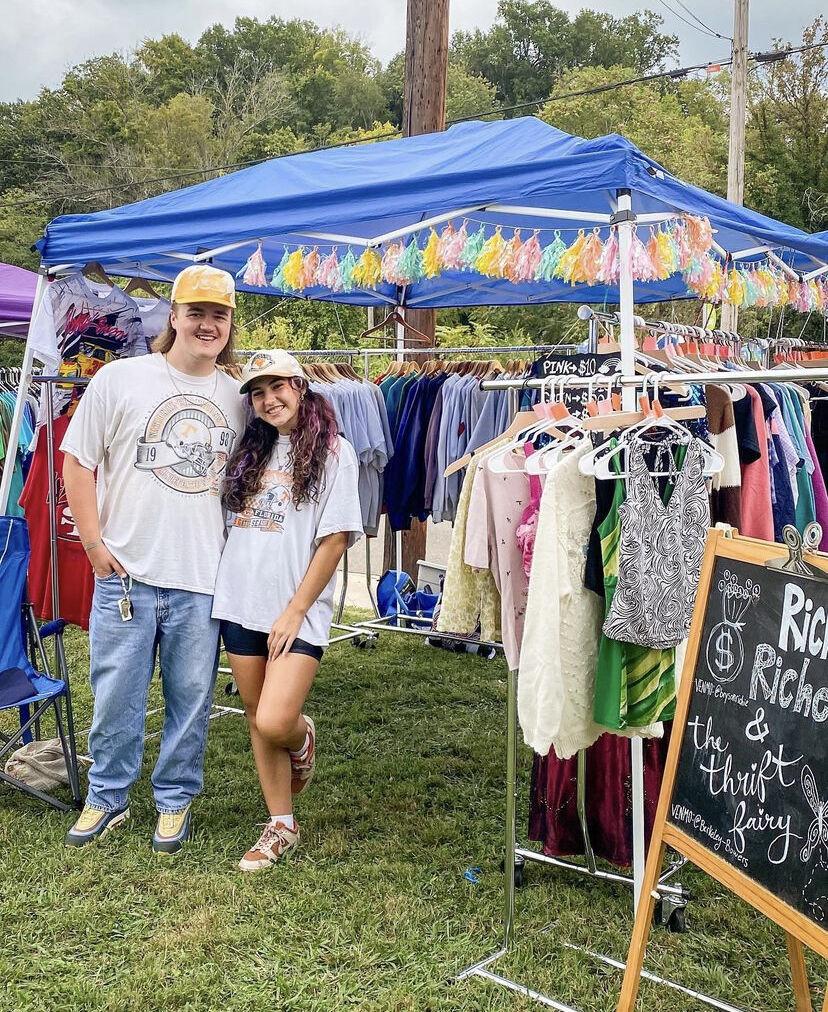
Thrifting has grown in popularity throughout East Tennessee with weekend vintage markets and online secondhand shopping. Still, for Berkeley Bowers and Bryson Richie, thrifting comes as a passion and a project.
The couple started thrifting together in high school, each creating their niche style — Y2K for Bowers and unique pieces for Bryson. Although thrifting consistently started in high school, Richie’s passion dates back to elementary school.
“In elementary school, I watched a YouTuber who taught you how to dress for less,” said Richie. “When I was 16, I got my license … and started thrifting anywhere I could and only bought stuff for myself. Whatever wasn’t in my size I left behind.”
As Richie built his capsule of unique clothing and thrift finds, peers at his high school noticed his newfound items and asked if he could buy pieces for them. High-commodity items like vintage shirts were top requests for Richie and thus sparked the inspiration to start a secondhand store.
“It wasn’t until people I went to high school started asking for certain stuff like old Tennessee stuff to be specific. And I started picking up that and then started selling it,” said Richie.
Richie turned this side hustle into a full-time business last February when Richie’s Riches opened its first storefront on North Broadway Street.
The couple collaborates in curating the store’s products as Bowers has an online sustainable clothing company, The Thrift Fairy, and sells as a vendor out of the storefront. Although she had an eye for fashion, Bowers didn’t pick up thrifting until she started dating Richie in 2020.
“Besides the Y2K stuff that I already knew about … it was all just through him and him sending me out and about to look for stuff when he couldn’t go. … I just had to learn through him showing me just like certain brands and tags,” said Bowers.
Style is subjective, and the couple finds shopping for the store to be a balance between finding staple pieces and items that are guaranteed to sell.
“I definitely have my best sellers,” Richie said. “I also put in store what other people liked even if I don’t like it. I’m not a big fan of Harley Davidson T-shirts, but a lot of people like that.”
As a store owner, Richie stays aware of trends by following other fashion accounts to see what other people are wearing, not just as a seller but as a consumer himself.
There was a rise in secondhand shopping during COVID-19 as outdoor markets were more accessible. The rise in thrifting has led to a rise of individualism and sustainable shopping and Bowers and Richies influenced the Knoxville area to shop secondhand.
“We are two people who have definitely influenced others to shop secondhand first,” Richie said. “I do think it makes an impact sustainably. … And also it helps out other people who are just now into this and are trying to sell more.”
Shopping sustainably doesn’t happen all at once. With each item of clothing, shoppers get more comfortable with the idea of being intentional with their buying. Bowers does this by motivating her inner circle to implement sustainable shopping initiatives.
“I offer … why don’t you come in the store and try on some of the stuff that I have and I’ll discount it for you,” said Bowers. “If you do buy something on a fast fashion website, maybe think about if you’re gonna wear it for more than one time before you buy it. It’s like putting little seeds in people’s heads to make sure that they’re fully and consciously thinking about what they’re buying and what their money is going towards.”
Whether in a small group, vintage market or at the Richies Riches storefront, Bowers and Richie use thrifting as a creative outlet to connect sustainability with style.