“If you look at the data nationwide, Gen Z is the loneliest generation, but also the most connected online,” Jessi Gold, a psychiatrist and UT chief wellness officer, said.
Gold said that the event “Letters to Strangers” aimed to address the current predicament of how to build a genuine sense of togetherness in the digital era.
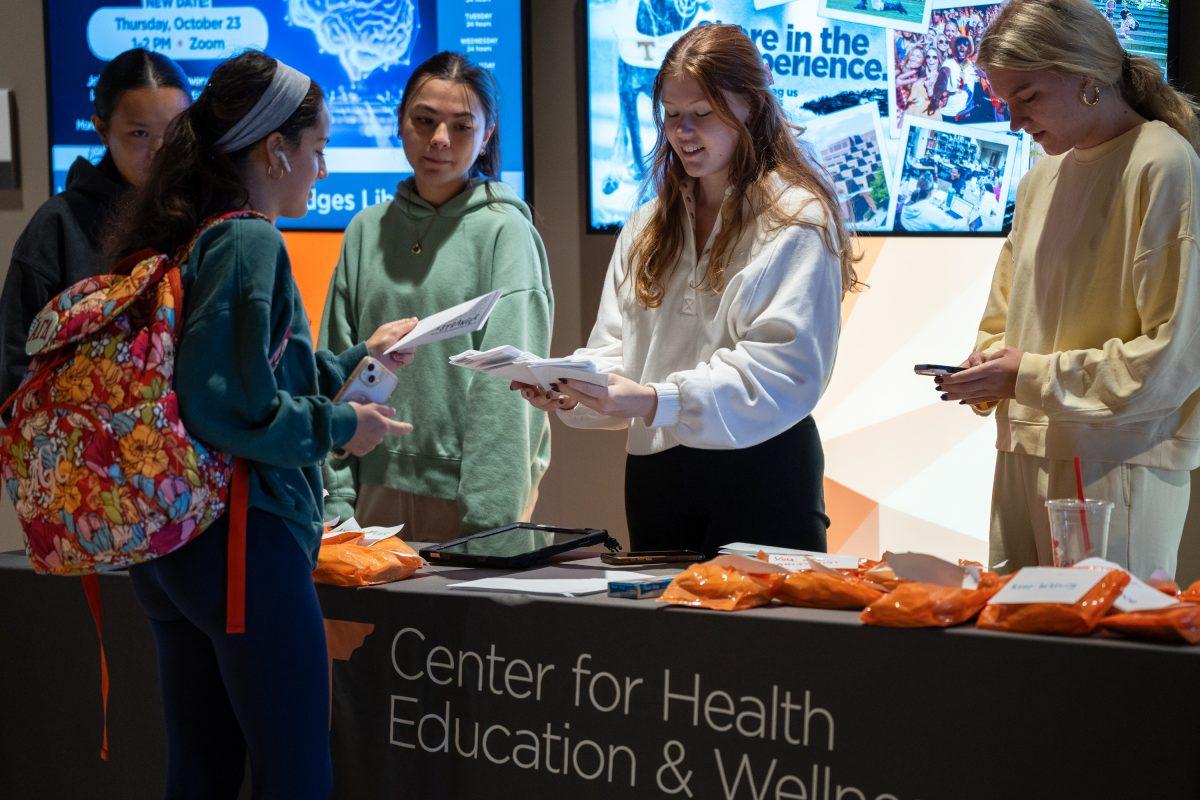
Hosted by the Center for Health Education and Wellness, the event encouraged students to write anonymous letters to destigmatize mental health and spread hope.
“At Letters to Strangers, we learned firsthand how one letter – one human connection – can and has saved a life,” Diana Chao, the founder and executive director of Letters to Strangers, said. “Our hope is that this initiative gives students and campus members a chance to reflect and share without judgment, fear, or stigma.”
According to Gold, the anonymous element of the project reduces the stigma surrounding mental health because some people are not ready to make that jump of vulnerably sharing their stories. Gold says this is the case when, “social media makes it feel like you have to share your story.”
For some students, writing a letter could be their first step in their mental health journey instead of making a bigger commitment like therapy or seeing a health care professional to gain support.
“I love therapy and that’s one level for somebody but not everybody here,” Gold said.
“Some people aren’t ready for that yet for sure, it’s just another place to see that you’re not alone and feeling not alone.”
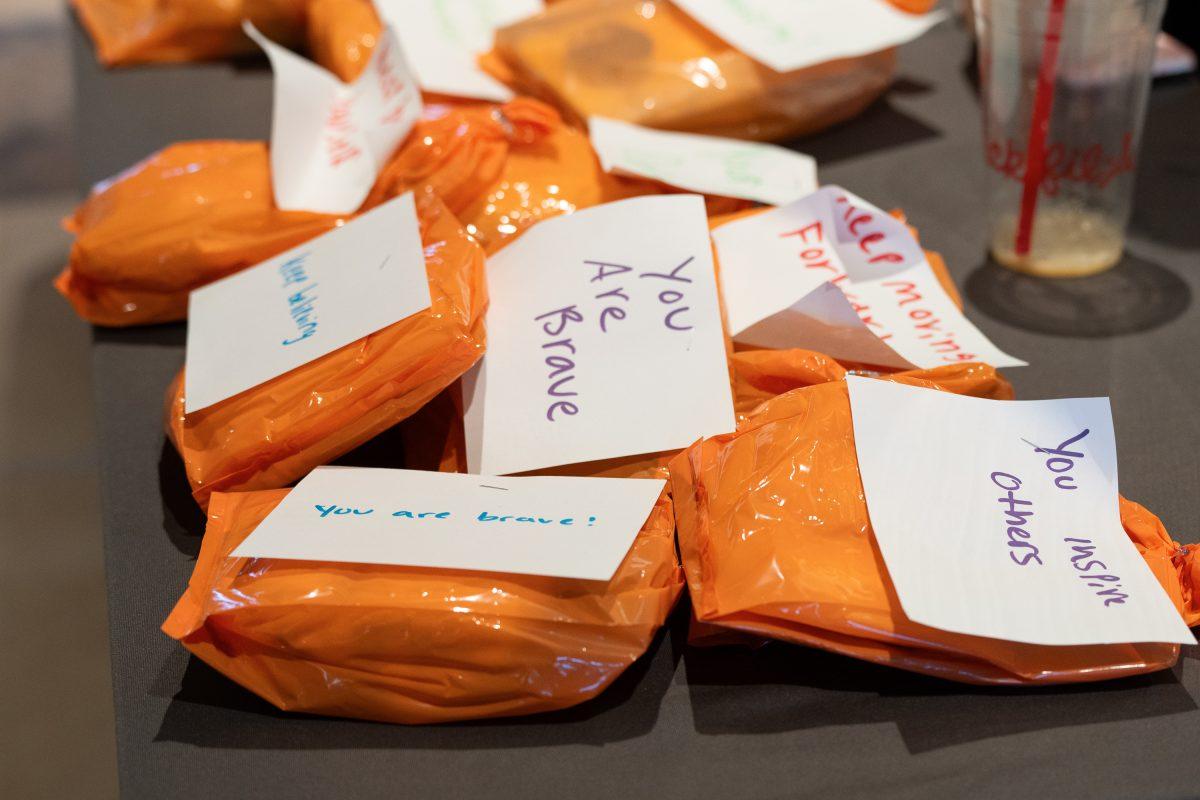
Letters and packages from the Center for Health Education and Wellness for the Write a Letter, Spread Hope event in Hodges. Wednesday, Oct. 15, 2025
People commonly journal their emotions to cope with their mental help. According to Gold, while journaling is helpful for some, it also has the tendency to allow people to “spiral” and feel lonely in the act.
The letters enhance journaling exercises to a new level — the anonymous part of the letters gives way to the same mental benefits journaling provides but with “an added layer of connection,” according to Gold.
Gold says that writing anonymous words of encouragement to others can foster the sense of talking to another person without any judgement — the letters help the recipient as well as the person who writes the letter.
“It’s just a place to have feelings and be seen and understood and let those into the world to be supported by feelings back from someone else who makes you feel less alone,” Gold said.
The creation of this event began when Gold met Diana Chao, the founder of Letters to Strangers, at an event for Rare Beauty. Both the event and Chao inspired Gold to choose the theme for UT’s well- informed series, where Gold and her team rotate around campuses and pick prevalent discussions worth having a conversation about.
Gold stated that social connection and loneliness stood out the most for this week’s theme, as faculty and staff conversed that they mainly struggled with feeling isolated.
“It was really inspiring and amazing and as part of this sort of hybrid nature activating across campuses, we’re doing letters to strangers pop-ups on every one of the five campuses in the system,” Gold said. “Those are the ones you’re doing for UTK. I really love when we get to do similar stuff across campuses and support our students with different things and different ideas.”
Cameron Provins, a senior and CHEW peer health educator, stated that CHEW prioritizes mental health on campus and this event serves as a way to check in on students.
At the event, CHEW members provided orange goodie bags filled with socks, fidget toys, stickers and other valuables for those who wrote a letter.
“A lot of people forget that sometimes you don’t have to talk to somebody directly to feel appreciated, you can decide to send a message out there to the open and just be like, ‘Hey, you’re still valued,’” Provins said.
Students had the option to write their letter or design their own online from a provided QR code.
“A letter doesn’t have to be deep or perfect to be meaningful – it just has to be true to you. We want that freedom in expressing the depth of our stories and experiences to connect us to each other the way we all so often crave,” Chao said.