A quiet crisis is stirring across America’s pastoral heartlands: the shortage of veterinarians for large animals and rural farms. In Tennessee and beyond, farmers struggle to schedule care, and in the worst cases, animals suffer or die for lack of prompt veterinary attention
The shortage is especially acute in more remote counties, where travel distances, low pay and demanding schedules discourage new veterinarians from settling in.
According to the U.S. Department of Agriculture’s Rural Veterinary Action Plan, the average debt load for new veterinary graduates, more than $200,000 in 2024, is cited as a major barrier, as many opt for companion-animal practice in urban settings instead. The decline in large-animal veterinarians is not just a convenience issue; it affects disease detection, livestock productivity and food security
Federal data shows that in 2025, 243 rural veterinary shortageareas were declared across 46 states — the most ever recorded. The shortage spans regions in Tennessee as well, where many farmers report difficulty securing veterinary care, especially for large animals.
In many rural counties, farmers must wait days for a veterinarian to arrive for emergencies like birthing complications, bloating or injuries. Some are forced to attempt treatments themselves, increasing the risk to animals and financial losses to farms.
In the rolling pastures of East Tennessee, farmer Greg Roberts recalls one of his worst days. A three-day-old calf lay weak in the pen, its life slipping away by each passing hour. Roberts had called every vet he knew. None could come in time.
“I live in Knoxville, right within one mile of the city limits, so I’m surrounded by small animal vets. But there’s only a few large animal vets.” Roberts said, “The one that usually comes to my farm is all the way from Morgan County. It’s hard to get someone local to come out.”
Roberts, a UT alumnus, said that on many occasions, the delay in veterinary response has forced him to act himself.
“I had a cow that was having trouble with a pregnancy, and I finally had to get a neighbor to help. I couldn’t get a vet to come out.” Roberts said.
For Roberts, the shortage is not an abstract issue — it is personal, painful and ongoing.
“If you can get a professional to diagnose something really really early, you have a chance to save it.” Roberts said, “I think we probably could have saved that little calf if I could’ve got someone out here.”
Roberts’ story is just one in a growing chorus of rural farmers struggling under a national shortage of large-animal veterinarians.
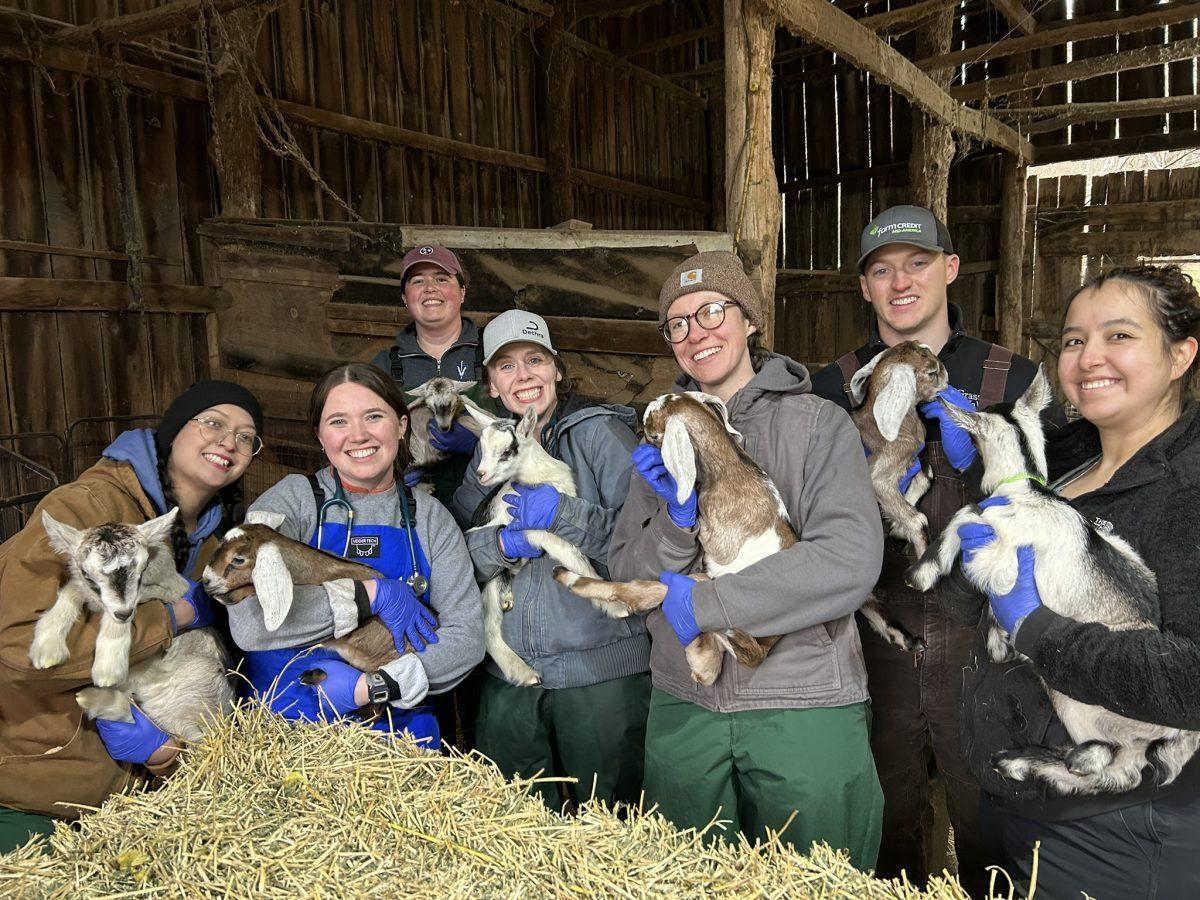
Meanwhile, UT’s College of Veterinary Medicine is playing a direct role in addressing the crisis. The university’s large animal clinical sciences department provides routine and emergency care to livestock and offers referral services across East Tennessee. In 2024, the farm animal field service teams visited almost 600 farms and treated 7,861 animals.
Professor Marcy Souza, associate dean of the College of Veterinary Services, emphasizes the urgency of the shortage.
“Without enough veterinarians to care for animals, the safety of our food system is at risk, as well as the human-animal bond that occurs between people and their animals.” Souza said.
While UT supports internships in large animal medicine, Souza emphasizes that the state of Tennessee does not currently offer incentives to draw future veterinarians to rural practice.
While the USDA administers the Veterinary Medicine Loan Repayment Program to encourage veterinarians to practice in areas experiencing shortages through loan forgiveness, Souza says that expansion could help combat the shortage.
“While this program is helpful, it needs to be expanded to have a greater impact helping underserved communities,” Souza said, “Expansion of the VMLRP could provide more loan repayment options for practicing veterinarians to work in underserved areas.”
Still, institutional efforts are constrained by broader issues. UT veterinary programs can only train so many students, and not all choose, or succeed in launching, a large animal career. Many prefer to work with small animals, like household pets.
”New graduates can make much higher salaries in small animal practice in urban and suburban areas compared to rural areas,” Souza said, “And if someone isn’t from a rural community, it may be challenging to find your personal and professional network in that setting.”
For farmers like Roberts, the hope is that these efforts translate soon into on-the-ground improvements so tragedies like his calf’s death become rarer. In the meantime, the USDA warns that the shortage could worsen if systemic solutions are not scaled quickly.
Roberts hopes that increased university involvement, financial incentives for vets to work in rural areas and community awareness can help reverse the trend.
As UT’s veterinary programs and outreach evolve, their ability to partner with farmers, alumni and federal agencies may prove crucial in closing the gap. For farmers like Roberts, every vet call counts — and the stakes are nothing less than survival.