There might be a bomb shelter underneath your classroom.
With Oak Ridge National Laboratory just 30 minutes away, the Knoxville area contains its fair share of fallout shelters — some of them still present on campus today.
For those living in Knoxville post-World War II, the threat of nuclear attack was very real. UT alumnus Adam Prosise’s Knoxville roots exposed him to stories about nuclear bomb drills that had been passed down from his parents, who both attended Oak Ridge Elementary.
“(The fear) was really sort of omnipresent back then,” Prosise said. “I remember my parents telling me about the ‘duck and cover’ drills where you would watch the films in class, and they would do drills by hiding under their desks. It was just expected because it was in the back of everybody’s mind in that area.”
A brother of UT’s Kappa Sigma chapter, Prosise recalled how the fraternity house’s basement once served as a nuclear fallout shelter. He speculated that the shelter would have been open to both students and non-students in the event of a nuclear attack.
Though no signage exists today at Kappa Sigma’s house, Prosise said the architecture of the house itself is a nod to the attack-readiness present in the nation during the ’50s and ’60s.
“You can tell it’s meant to be very futuristic,” Prosise said. “Back in ’54 when it was built, the [shelter] was just another feature to make it the latest and greatest thing. If you didn’t have to have a fallout shelter in your backyard, it was nice to know that they had one right there.”
Similarly, McClung Museum Director Jeff Chapman also recalls the bomb drills in his grammar school days.
“I don’t know how aware I was of the threat other than the fact that we had drills,” Chapman said, “They actually issued metal dog tags that had your pertinent information like your home address—in case something really happened, if they had to identify a body or a lost child.”
Morbid musings aside, McClung Museum also holds a remnant of Cold War paranoia in its basement.
Chapman said water canisters and leftover packaged supplies were found in a tiny crawl space during the building’s construction in 1961, later becoming part of the museum’s current storage space underneath McClung Auditorium.
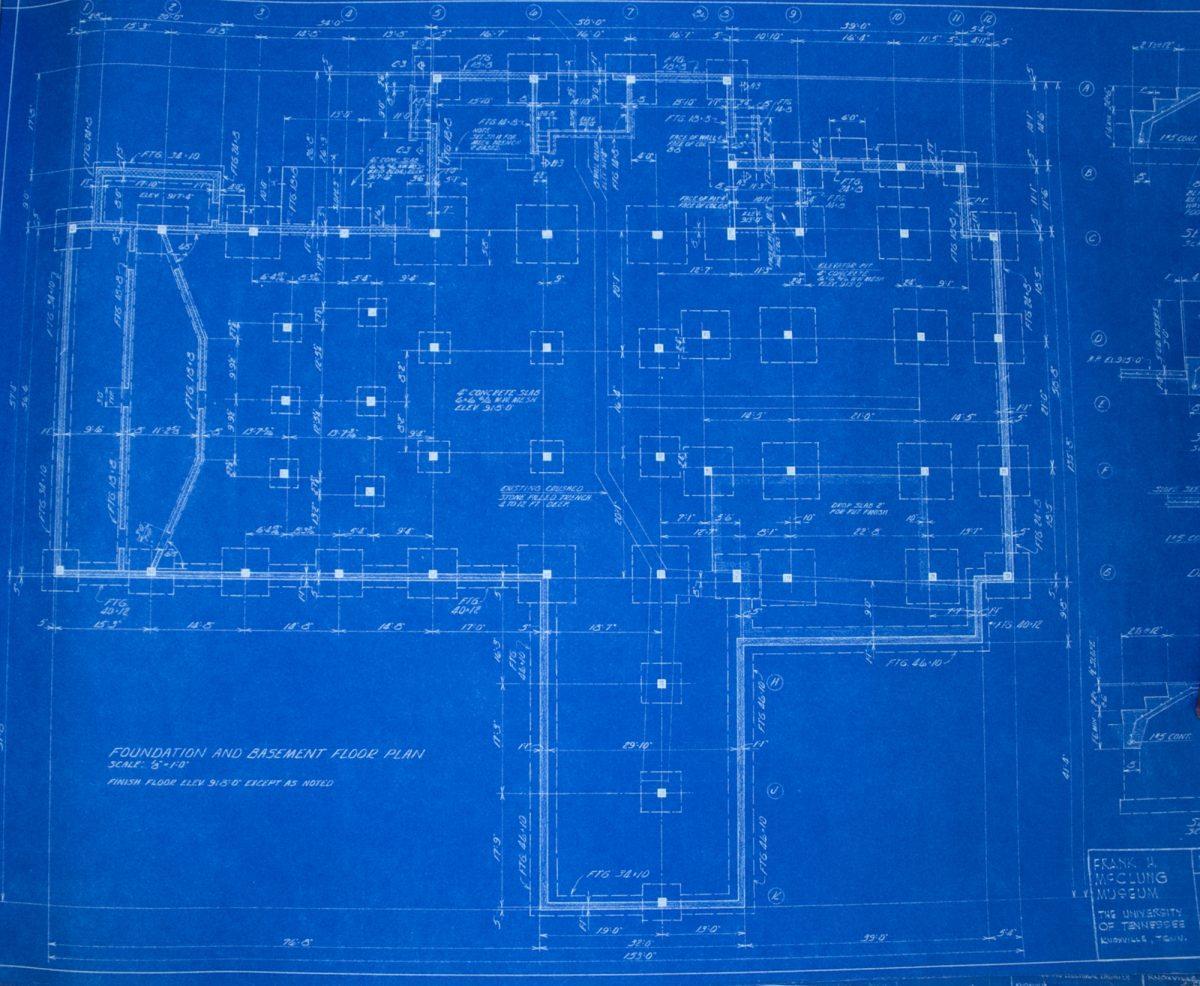
The original blueprint of McClung also includes a layout of the fallout shelter, although it was not designated as such at the time.
“It’s pretty much exactly what you’d expect from a fallout shelter,” said Brian Gard, the director of Knoxville Emergency Management for UT. “It’s in those older buildings (that) are built with a lot of concrete, and in the very bottom, low ground section there is a small space with low, overhead ceilings and it’s dark and damp.”
Like the Kappa Sigma house, no signage survives as evidence for the crawl space’s original purpose. However, Chapman said the Civil Defense Institute had in fact placed signs designating the fallout shelter’s presence.
Created by Eugene Wigner, the Civil Defense Institute positioned its home base at Oak Ridge in 1963, focusing its research on emergency strategies for urban populations and the development of urban tunnels designed to resist nuclear heat and blasts in such events.
Though the task force proved unfruitful, the laboratory at Oak Ridge would continue to improve emergency technology, particularly for efficient evacuations and chemical hazards.
Gard said this shift into a civilian-focused security paved the way for the modern field of emergency management.
“It’s actually grown to look at all types of threats,” he said. “I can’t say the threats themselves necessarily grew, but the impacts that come from weather are more drastic because of our construction and our population. Now, a few people in our field look at climate change and how climate change could potentially increase weather events and increase the threats of places like campus.”
Though the threat of nuclear attack largely disappeared at the close of the Cold War, Gard explained that his department must monitor a variety of potential emergencies, including chemical-related hazards, but stated that these emergencies are not limited to accidents in a classroom laboratory.
Gard also explained that in the event of a large-scale chemical release, the best defense is to seek shelter inside an unaffected building and prevent the chemicals from entering the premise — a protocol not so different from those established 50 years ago when a fear of massive nuclear fallout permeated the United States.
“The initial radiation is like an X-ray,” Brian said. “It goes through most material. But the fallout that would come from those radioactive particles being stuck in the air would be similar to an airborne chemical.”
Prosise, a recent graduate in economics, said this heightened sense of preparedness extends beyond the physical security that so greatly concerned American citizens 50 years ago.
“Maybe I don’t think about a nuclear bomb going off everyday, but I really do believe that attitude has kind of reared its head in other areas,” Prosise said. “After the financial crisis (in 2008), a lot of people’s savings weren’t ready and that left an impression on a lot of people. On the other side of coin, though, I think people are preparing not for an economic calamity, but just the fact that you just don’t know what tomorrow brings.”