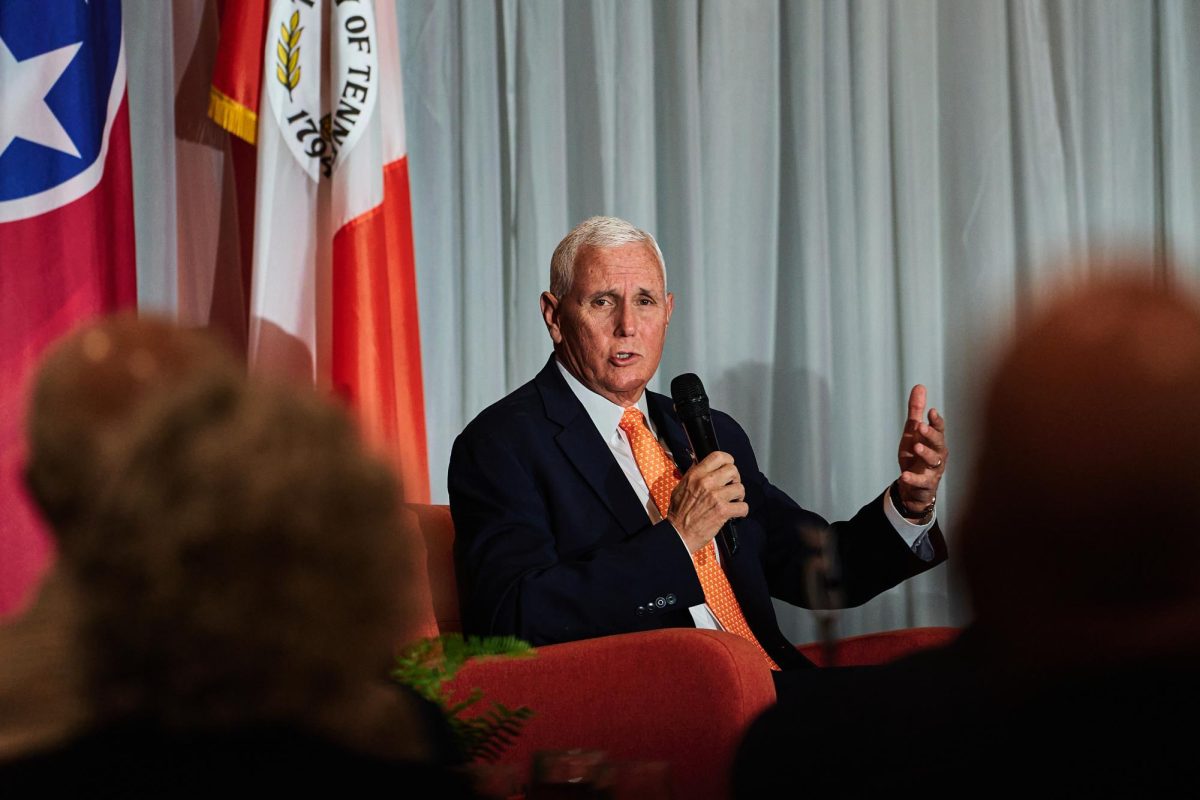
“I’m just incredibly inspired with this generation of Americans, and you have more access to information than any generation in history, but even a greater appetite for truth,” former Vice President Mike Pence told The Daily Beacon at the UT Institute of American Civics’ second annual Undergraduate Civics Symposium.
Pence, along with Yale University political scientist Steven Smith, spoke in downtown Knoxville on Saturday, March 21, to students from across 14 universities about American patriotism as a part of the Baker School’s IAC-sponsored event.
The symposium provided students within the Baker School the opportunity for involvement in the field of public policy by meeting students from across the country, engaging in civil discourse and learning from multiple distinguished speakers.
The Baker School’s IAC executive director, Josh Dunn, established this year’s theme as “American Patriotism at 250” to promote “a deeper understanding of the principles that shape our republic.”
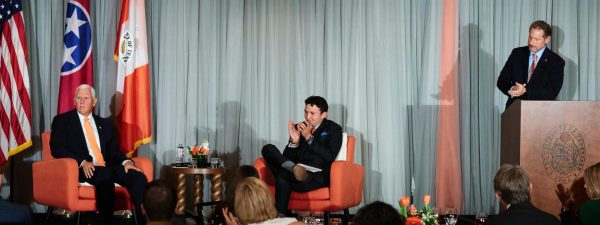
“We’ve gathered students, faculty and community members to explore the central question ‘What does it mean to practice a form of patriotism which is reflective of said principles and capable of sustaining self government as we approach our 250th anniversary on July 4,’” Dunn said.
The theme and event as a whole was meant to reflect IAC’s founding mission of providing an extensive civic education for UT students and Tennesseans.
UT Chancellor Donde Plowman and President Randy Boyd expressed this in their remarks, emphasizing the importance of the IAC as well as UT hosted events like the Civics Symposium.
“Every day, the institute is growing its reach, furthering its mission to foster shared understanding and a healthier civic nation,” Plowman said. “I hope today’s event offers a moment to reflect on that mission and an opportunity to practice leading with respect and curiosity.”
The IAC welcomed both Smith and Pence to speak on the themes of patriotism and civic engagement.
During his speech, Smith emphasized the importance of events like the Symposium in solving the issues explored in his most recent novel, “Reclaiming Patriotism in an Age of Extremes.”
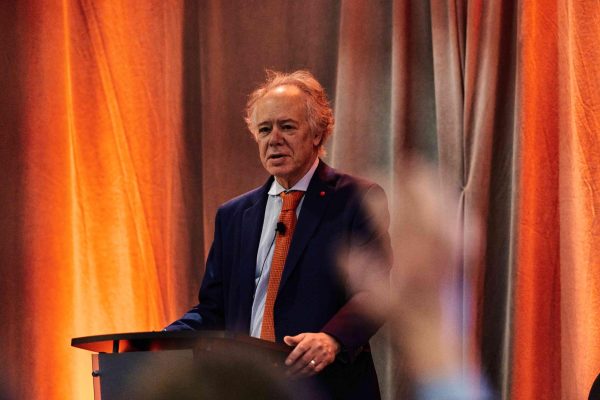
“I have to believe in the power of education, in programs like this,” Smith said.
Pence also placed emphasis on the higher education of generations to come in shaping the future of America.
“And as I’ve traveled to campuses, universities and colleges over the last five years, I’m incredibly optimistic about the future, because this is a generation that wants to know the truth, they want to understand what’s made this country strong, and prosperous and free, and it’s a privilege to talk with them,” Pence told the Beacon.
The event also featured a debate led by the College Debates and Discourse Alliance, where students were able to dive deep into current political issues.
Dunn, who invited the Alliance to contribute, believed that the debate stuck out as one of the most meaningful elements of the Symposium.
“I think that experience can be transformative for students, because you can see how this kind of civil debate over really deep questions where we disagree, often fundamentally, can be done in a way that’s productive and moves us forward,” Dunn said.
The debate, as well as the rest of the event, aimed to progress the IAC’s overall mission of broader community enrichment.
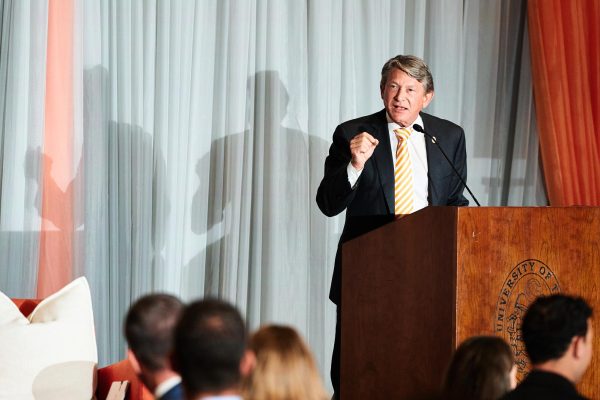
“The vision is to be a beacon of light for civility, civil discourse and civic engagement, and we’re achieving that,” Boyd said in his speech.
The stand out themes of education and civic engagement throughout the conference exemplified the significance of UT-hosted events like the Symposium for undergraduates.
“Democracy depends on heavy doses of civility, and I think the American people long for us to restore a threshold of civility in public life,” Pence said, “and I want to commend the University of Tennessee for holding up that standard.”