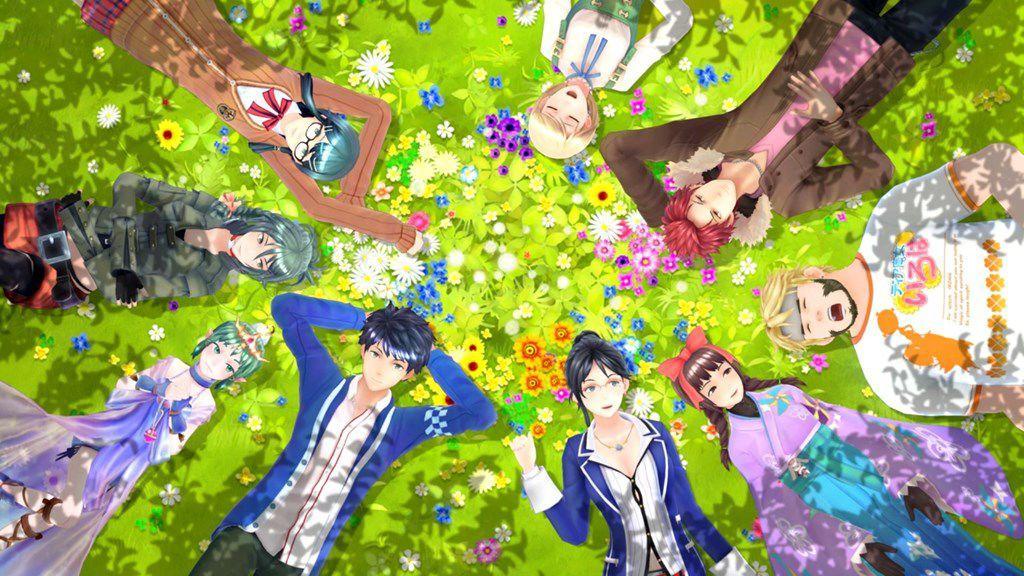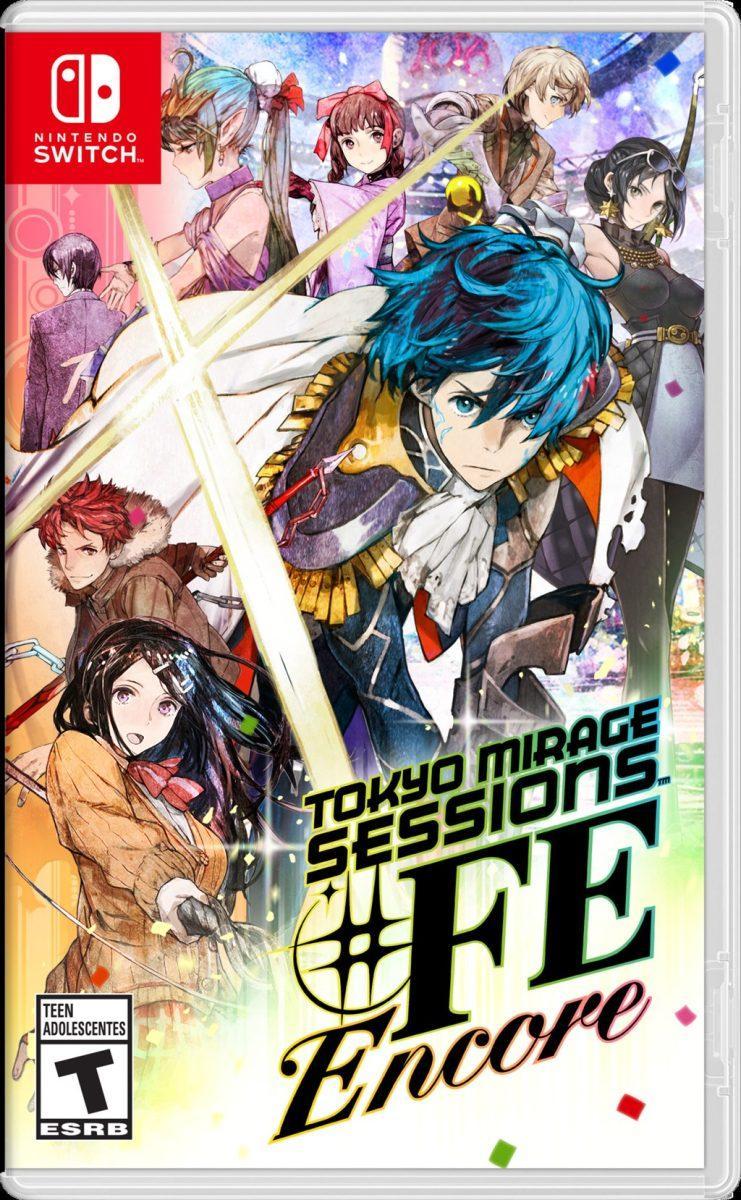
“Tokyo Mirage Sessions #FE Encore” is a remaster of a Wii U title that was a crossover between the grid-based tactical RPG series “Fire Emblem” and the Demon Saturated RPG series “Shin Megami Tensei” with themes, characters and plot centered around the modern Japanese entertainment industry. As a longtime fan of both series, I played the original release in 2015 and fell in love with the title.
Now, five years later, I’m taking the opportunity to take the nostalgia goggles off and examine this game with a critical eye.
The game takes place in Tokyo and centers around the members of Fortuna Entertainment, a multi-platform entertainment agency that secretly maintain peace. Humans, specifically entertainers, have a creative force called “Performa” that grants them the ability to inspire others and fight monsters called “Mirages” with stylized medieval weaponry.
Every playable character is a “Mirage Master;” an entertainer who has allied themselves with powerful mirages that take the form of “Fire Emblem” to keep the peace.
It’s strange as far as plots go, but the world contains charm, style and life.
Visually, the game is stunning; even in the Switch’s handheld mode the models look crisp and detailed. While the base game also looked crisp, the models have so much more texture and such an attention to detail. Fabric has weight and realistic movement, attacks have noticeable weight behind ever swing of the axe, it’s wonderful!
Additionally, it’s not just the characters who got a subtle makeover — if an item is picked up for even the most minor side quest, it’s model will almost always appear onscreen in all its glory.
While it is unnecessary for me to be able to count the grooves and the number of stitches on a leather bifold that will only be onscreen once, the effort and quality put into the visuals are greatly appreciated.
However, visuals usually aren’t much without some gameplay to back it up. Thankfully, the combat and gameplay is engaging and endlessly entertaining.
The combat is the embodiment of “extra.” If a character uses a skill that capitalized on either an elemental or physical weakness, they start a “Session,” a combo chain where other characters will fly in to chain other skills and attacks to cause massive damage.
Later in the game, if a chain goes on for long enough, there is a chance to trigger a “Duo Skill” where two characters will collaborate to pull off a performance that has special effects and continue the chain.
Occasionally, characters will perform an “Ad-lib Performance” which does even more damage and is generally hilarious.
The experience of seeing a bunch of teenage entertainers wielding medieval weapons and wailing at a group of dragons only for them to pause and perform a mini concert with choreography and costume changes to summon a cyclone before they continue to pummel literal dragons is pure catharsis.
Combat isn’t as simple as it seems, however. Your characters also have weaknesses that can be exploited. Enemies, especially bosses, can perform ridiculous Sessions that can quickly kill characters if you aren’t careful.
Your active party of three teens in ridiculous outfits needs to be arranged to maximize your combos and minimize weaknesses. You can swap out party members at will to capitalize on the situation or send an ally in critical condition to heal on the bench. Items are cheap, accessible and quite powerful.
Within the first few hours, I already had nearly thirty revival items, various items that could cast a group spell and forty items that could fully heal a single party member. The items, while allow for many interesting strategies, are debatably far too powerful and accessible. While fun, the combat needs balancing.
The difficulty in the game is prone to the occasional spike. I played on easy to quickly get to the new content, and even though I had experience with the combat, I got stuck on many bosses towards the latter half of the game. Certain bosses can act four to six times in a round, where your three party members can collectively act only three times.
Also, the late game is saturated with enemies that can take advantage of your main character’s weaknesses, the one character that you are required to keep in your party. This includes the final boss fight where he can die in a single round even on the easiest difficulties.
While these bosses can usually be brute forced after a few levels of grinding, it can get absurd.
Your party members are also very unbalanced. While most party members are specialized to specific roles, your only official tank has no real flaws.
She takes hits for other party members and has by far the highest attack in the game and is unequivocally the best healer in the game. She can revive all unconscious party members, heal everyone to full health and perform any action she wants in one turn if you use your special meter.
She takes slightly more damage from magic-based attacks, but it is not nearly as extreme as the weaknesses of all the other characters. There will be little incentive for extermination later in the game, but it’s not the worst.
Now I should probably address the original title’s handful of controversies. First, while the game is a crossover between two series with rabidly loyal fans, the gameplay and themes of Sessions turned many fans away.
The combat was too experimental. The story centered around a modern entertainment culture that was foreign to both general audiences and fans alike. Essentially, the game was not what fans anticipated it would be, so many choose to treat this game as an independent title.
Second, the game was censored for the western release. The censorship was fairly minor in most cases: the removal of swimsuits, a few covered bits of skin and the removal of some slightly suggestive animations.
Nintendo is generally very strict with sexually suggestive content, so the censorship did not come as unexpected. The only major differences come in the removal of DLC content and a complete overhaul of one of six chapters in the games story.
The DLC content was a tame Hot Springs event where party members had roughly 30 minutes of extra dialogue and character interaction in new swimsuits. The censored story chapter centered around gravure modeling (sensual posing) and a character gaining the confidence to step outside her expected role as an entertainer.
The censored version changed the story arc to remove anything slightly risqué by changing all the outfits to goofy casual street wear and shifting the character arc from an aspiring idol struggling with confidence in her appearance to a bumbling girl learning how to pose without falling over.
The story isn’t terribly complex, but it’s serviceable. The dialogue for each character is generally charming and varied. Though we only have a few moments to explore the backstories and personalities through side stories, everyone feels fully realized. Atlus fans, however, will probably recognize a few character troupes that the studio likes to utilize.
While the exploration of the idol industry is fairly surface level, the concepts the story chose to dive into are interesting and informative. The writing can also be legitimately funny at times. The main character is denser than a neutron star and has a certain inability to realize obvious things like his calling as a director.
A surprise to many at launch, the game is almost fully voiced in Japanese by the Avex Group, a Japanese entertainment collective that produces nationally recognized singers and actors in Japan.
The game also has a wonderful English vocalization, but there is no English spoken outside of a few songs. While my Japanese is amateur at best, the energy and vocal range these actors pull off is impressive.
The actors know when to be serious and when to be appropriately campy. Considering over half the cast sings at least three songs each, the vocal work is phenomenal. Most songs will show up in one or two moves in combat, and I surprisingly still appreciate the music even after hearing the same 20 seconds of “Give Me” at least 80 times.
The thing I appreciate most about this game is its ridiculous attention to detail. I’ve already ranted about the high-quality models, but there are smaller details in reference to the two series it originates from.
It’s not just the bursting closet of costumes, but the names and appearances of weapons, the boss mechanics that perfectly match their canonical personalities and the item shop owner who looks like a fan-favorite merchant.
While I would like to say the experience is a fast-paced fever dream of axes and idols all the way though, I can’t. Outside of the previously stated difficulty spikes, the puzzles can send this game to a grinding halt. Some environmental puzzles are just agonizing and drawn out.
While this is also a common problem held by Shin Megami games, it is probably one of my biggest criticisms. While I appreciate a good puzzle, many of them just ruin the pacing with their difficulty and length. Even though I had solved all of these puzzles at least twice beforehand, there were at least three puzzles that took me over half an hour to solve individually.
The only other gripe I have with this game is the DLC and the new continent. While a free inclusion, the training dungeons are not nearly as efficient as simply grinding, and the only other element to the DLC is the EX episode.
The EX episode takes two characters who already have the most costumes and dialogue and simply gives them even more. I know remasters generally don’t reinvent the wheel, but when the new content is centered around characters who the writers clearly favored anyway, it’s slightly disappointing.
Overall, while the game has a handful of balancing issues and minor problems, the pure fun and off-the-wall nature of the experience is more than enough to make up for it. If you are even vaguely interested in the “Persona” series or if you’re looking for a new RPG title, I cannot recommend this game enough.
9/10