UT’s Student Government Association posted on its social media platforms a list of demands for administration following recent and continued racist campus climate on Friday evening.
The list of demands was posted a little over two weeks after a screenshot of a Snapchat of two students in blackface circulated Twitter on Thursday, Feb. 28.
The letter to administration, which was also sent directly to administration earlier in the day, is a call to enact demands in the next few months so that they can move towards the shared goal of UT being a diverse and inclusive university.
“We must acknowledge that unfortunately, hate does not have a place on Rocky Top. It is here despite our desire to deny its existence. But we can take steps to combat it as well as to educate ourselves and our peers on how to be better community members, better allies, and better Volunteers,” the letter said.
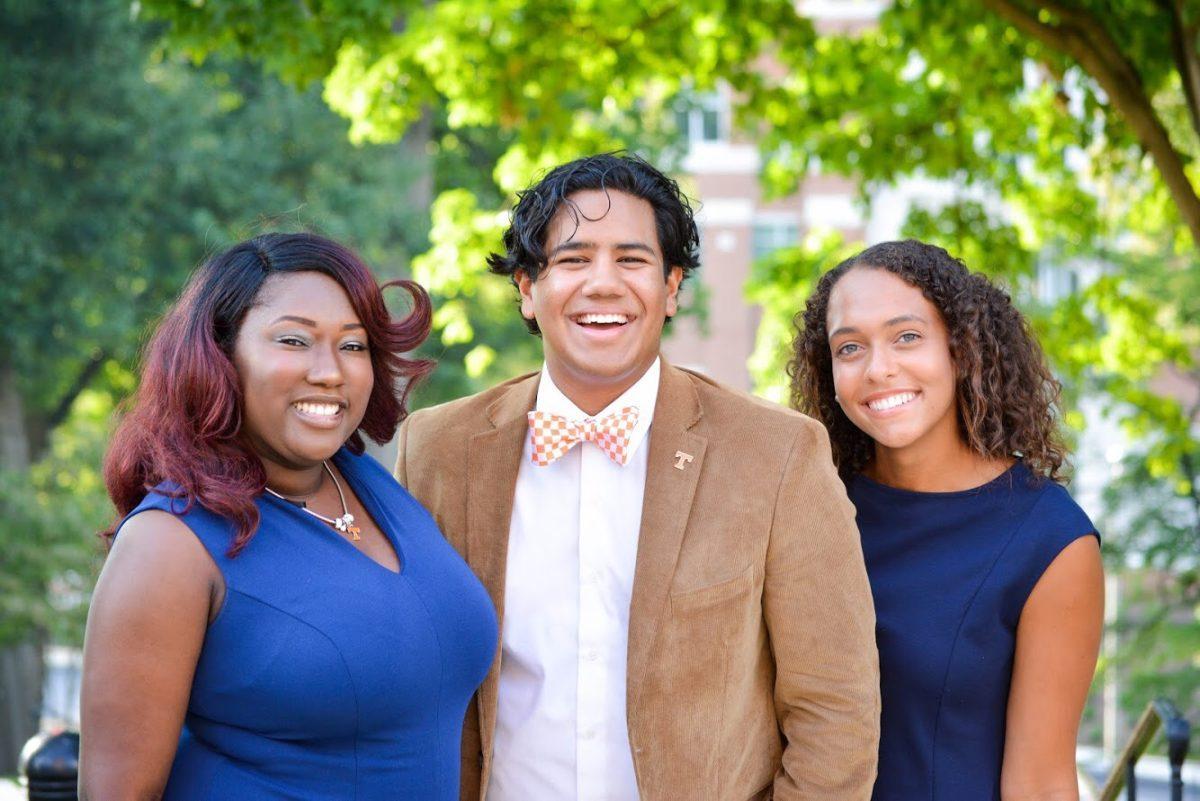
Ovi Kabir, SGA president and senior in political science, said SGA had been working on the list for two weeks, gathering research, making sure wording was right and looking to other SEC schools to see where UT is compared to them.
“Our big goal was to just get this our before spring break, I know Friday is not the most ideal day–everyone’s leaving for spring break–but we wanted to get it in before spring break to give our university leadership time throughout the spring break to talk about it, to discuss it within their cabinet and come back following spring break and meet with us and try to figure out how can we work together to make this happen,” Kabir said.
The list has seven demands that are a top priority for SGA, who promises to provide updates as progress is being made toward each goal.
The list begins with a revision of the Student Code of Conduct to set a clear guideline on what it means to be a Tennessee Volunteer, making sure to include in the code “specific language that addresses racism, bias, harassment, intimidation, and coercion towards other students by editing Section IV. Standards of Conduct, and Section I. Preamble, in a way that does not infringe on free speech.”
Currently, the preamble focuses on encouraging all members of the university to foster a learning environment that celebrates, values and respects diversity, and Section IV does list over 30 standards of conduct addressing issues from harassment and violation or disruption of university activity to prohibiting the use of drugs and alcohol on campus to harm to others and sexual misconduct. However, neither section mentions anything about racism, bias, intimidation or coercion towards other students.
The second and fourth demand on SGA’s list, focuses on increasing and retaining diverse faculty, staff and students. For students, SGA believes the first step of building better support system and increasing recruitment and retention for students of color is to increase the number of scholarships available.
SGA wants to create a five-year plan for increasing faculty of color and have it published on UT’s website.
The third demand is support and implementation of the Faculty Senate’s newly passed Volunteer Core general education curriculum. This would “focus on Global Citizenship to help engage in dialogue surrounding current climate issues, race, and inclusion. These courses will have discipline-specific content that will make them relevant, dynamic, and intellectually rigorous.”
The fifth demand focuses on establishing a formal process where students will have a say in the desicion making of funding and evaluating student programming so that student organizations are still at the forefront of programming planning and execution. They will provide complete transparency at every stage and promise that formal student organization proposals and submissions of ideas will exist is whatever new process that is created.
SGA also wants to establish a Student Advisory Board with students from diverse backgrounds and student groups for the Vice Chancellor’s Office of Diversity and Engagement to provide feedback regarding campus climate and on future diversity initiatives.
Lastly, that there be a policy created to address students who are involved in acts of bigotry, hate speech, hate crime, harassment, intimidation or coercion towards other students in the form of a program that would be required for students who are involved in Bias Report incidents, and would be modeled after the Alcohol Education Program.
Kabir said that while some students may think using “demand” is a heavy term, it is time to take action rather than simply ask administration to take action.
“I think the students who have to live the experience of racism every single day, it’s not an experience they can run away from,” Kabir said. “So, they’re not just asking for a better campus experience, they’re demanding a better campus experience.”
“I think as a student government we need to reflect that and that’s why we used more of a term of demand, because it’s not something we’re asking for, we are expecting our university to do this because the only regret I have is that we didn’t ask for this earlier in 2019, but at least we’re doing it now.”