A six to eight percent tuition raise was approved for all University of Tennessee campuses at the University of Tennessee Board of Trustees meeting this past summer.
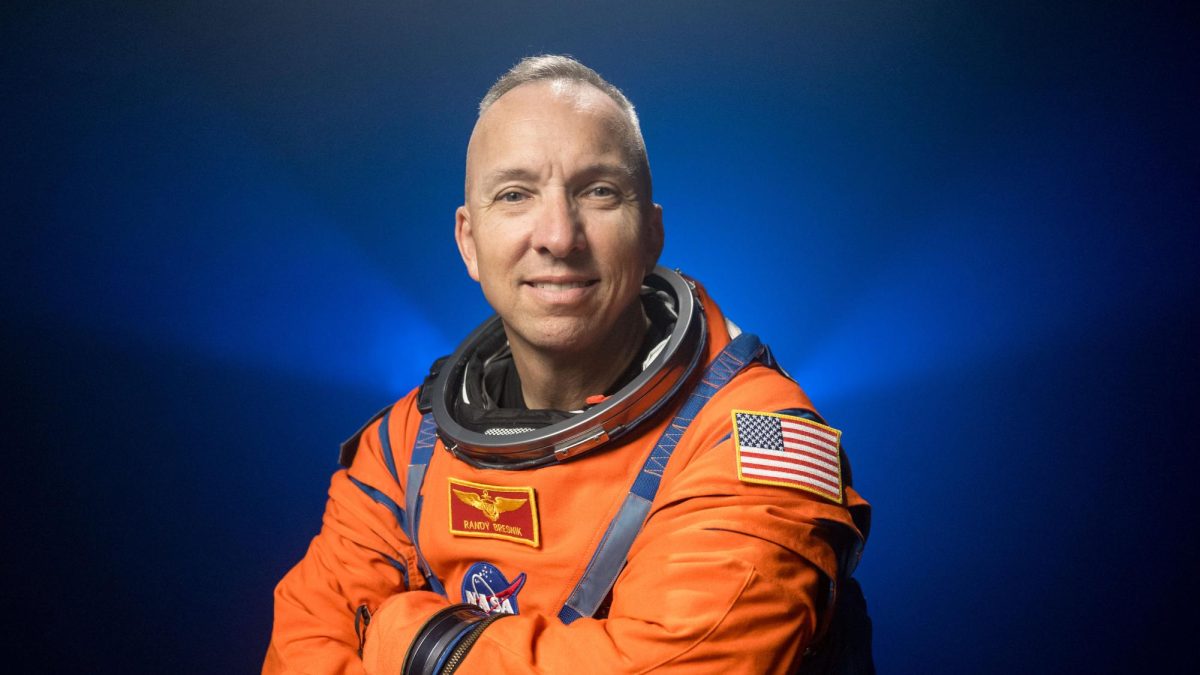
Gov. Bill Haslam, chair of the board, said that while over a 30-year period the contributions from the state to the University have diminished, putting more pressure on students and parents, he is concerned that the University and state not add to the burden.
“I hope you find this to be an exciting and challenging time,” Haslam said. “This is a critical time around higher education. The status quo will not hold. … It won’t look the same 10 years from now.”
Haslam addressed the board, saying that the decision is part of an effort to increase graduation rates in the state
“Academically, it’s shown that the longer you’re in school the less chance you have of graduating,” Haslam said. “If we can keep people on that four-year schedule to get out, I think our graduation rates will go up, which is one of our big goals.”
Haslam added that the four-year schedule for students is part of a plan to decrease the unemployment rate in Tennessee. He is concerned by the low percentage of Tennesseans with a college degree and hopes to see improvement in this area.
“We can’t have the cost of higher ed keep going up,” Haslam said. “Right now 21 percent of Tennesseans have a degree. That’s way too low. We have to make it so it’s more accessible for more people.”
While other changes will affect only incoming and transfer students in the fall of 2013, the tuition increase will be effective for all students starting in fall 2012. Haslam told the Daily Beacon that there will be a tuition rise for current students, but that the ultimate goal is to end tuition increases in the future.
“It will mean ultimately tuition for (current students) and their family increasing,” Haslam said. “Our main focus is two things. One: to stop the tuition increases on a going-forward basis. Second: We always have to look at what the net tuition charged after all the scholarships are given. Fortunately that net number hasn’t gone up that much.”
Alex Edwards, fifth-year senior in animal science, said the tuition increase is overwhelming, but he understands that the University has clear reasons for this decision. Unfortunately, Edwards’ student loans make each tuition increase a greater challenge.
“I would say the tuition has probably increased every year I’ve been here,” Edwards said. “I think its excessive, but I know it does require a lot of money to provide students with all of the opportunities UT does. It takes a lot of money to run a University. I’ve had to take out between 20,000 and 30,000 in student loans. That’s going to take several years of working hard to pay off. A decent amount of those loans I’ve had to take out because tuition and other expenditures have gotten more and more expensive each year I’ve been here. I wouldn’t be in so much debt if everything cost the same as it did when I was a freshman.
“I would say the tuition has probably increased every year I’ve been here,” Edwards said. “I think it’s excessive, but I know it does require a lot of money to provide students with all of the opportunities UT does. It takes a lot of money to run a University. I’ve had to take out between 20,000 and 30,000 dollars in student loans. That’s going to take several years of working hard to pay off. A decent amount of those loans I’ve had to take out because tuition and other expenditures have gotten more and more expensive each year I’ve been here. I wouldn’t be in so much debt if everything cost the same as it did when I was a freshman.”
Ammar Fakhar, an incoming freshman planning to study chemical engineering, said he was unaware of the upcoming increase, but that having the Hope Scholarship made tuition increase more bearable for him. While ignorance is bliss for some, Fakhar said he would like to know the reasons behind the increase.
“I’m sure they must have their reasons for doing it,” Fakhar said. “They should have informed us and let us know what those reasons are, but you just have to trust them. I do feel a little irritated, but it is your education, so I feel it’s worth it in the end.”
Chancellor of UT Jimmy Cheek said efficiency is one of the main reasons tuition is going up.
“The proposed tuition model that we are talking about would create about 6 million dollars in new revenue in year one,” he said. “The students would take 15 hours, and the students would pay for 15 hours. It would go for courses and laboratories needed for graduation. We have huge bottlenecks on this campus where you do not have the capacity to take the courses that you need to take.”
Cheek also said that some money will go to additional tutors as well as their new plan, View Track, which will be implemented in 2013. This plan seeks to do a better job at advising students and not allowing them to register at all for classes if they have not taken the necessary requirements up to that point.
In 2002, UT was 22 percent below the top 25 institutions in tuition. In 2011, they were 43 percent below, and last year they were 40 percent below.
“As you look at the top 25 institutions, they made significant increases in tuition, much greater than ours,” Cheek said. “In 2000, we were closer to being a top 25 than we are today, and part of that is resource driven. I’m not saying we have to get where they (the top 25 schools) are, but we have to get closer to where they are.”
Along with the tuition increase, incoming freshmen and transfer students will be charged 15 hours for each semester as a full time student, regardless of whether they enroll in all 15 hours of class time. This is part of a five-year program the University hopes will produce a more qualified and diverse group of graduates as part of their top-25 initiative.
The plan is called “Defining the Future,” and focuses on helping the UT System Administration achieve its goals. The Complete College Tennessee Act, which hopes to (among other objectives) increase enrollment and graduation rates, is a chief part of the administration’s plan.
“This is a moment of great opportunity. Our challenges are identified. The roles, responsibilities and accountability are agreed upon,” UT President Joe DiPietro told the board. “We have a strategic plan to guide the way, a commitment to lead the process and expectations for success.”
DiPietro discussed the proposed plan by stating that it was not just another document.
“It’s a plan for the future of the University of Tennessee,” DiPietro said. “It will help our units move in the right direction to achieve their goals and advance their reputations.”
The tuition increase for UT campuses is as follows:
UT Chattanooga — 6 percent increase or $324 a year more for in-state undergraduates ($5,722 a year total) and $388 a year more for in-state graduate students ($6,860 a year total)
UT Knoxville — 8 percent increase or $578 a year more for in-state undergraduates ($7,802 a year total) and $668 a year more for in-state graduate students ($9,000 a year total)
UT Martin — 6 percent increase or $338 a year more for in-state undergraduates ($5,978 a year total) and $405 a year more for in-state graduate students ($7,130 a year total)
UT Health Science Center — 4 percent for in-state and out-of-state tuition for all colleges
UT Veterinary Medicine — 10 percent increase or $1,941 a year more for in-state students and $4,326 a year more for out-of-state students.
While the tuition increase continues to be overwhelming for current and incoming students, DiPietro said a broad view of the matter helped make the decision more understandable.
“We understand the reality of increasingly limited state resources, and the result has been that universities have experienced a dramatic decline in public funding in the last 10 years,” DiPietro said. “Even as the amount of tuition has increased in that time, the cost per student remains stable, and tuition at the University of Tennessee, Knoxville, and at UT Martin and UT Chattanooga compared to peer institutions remains a value.”