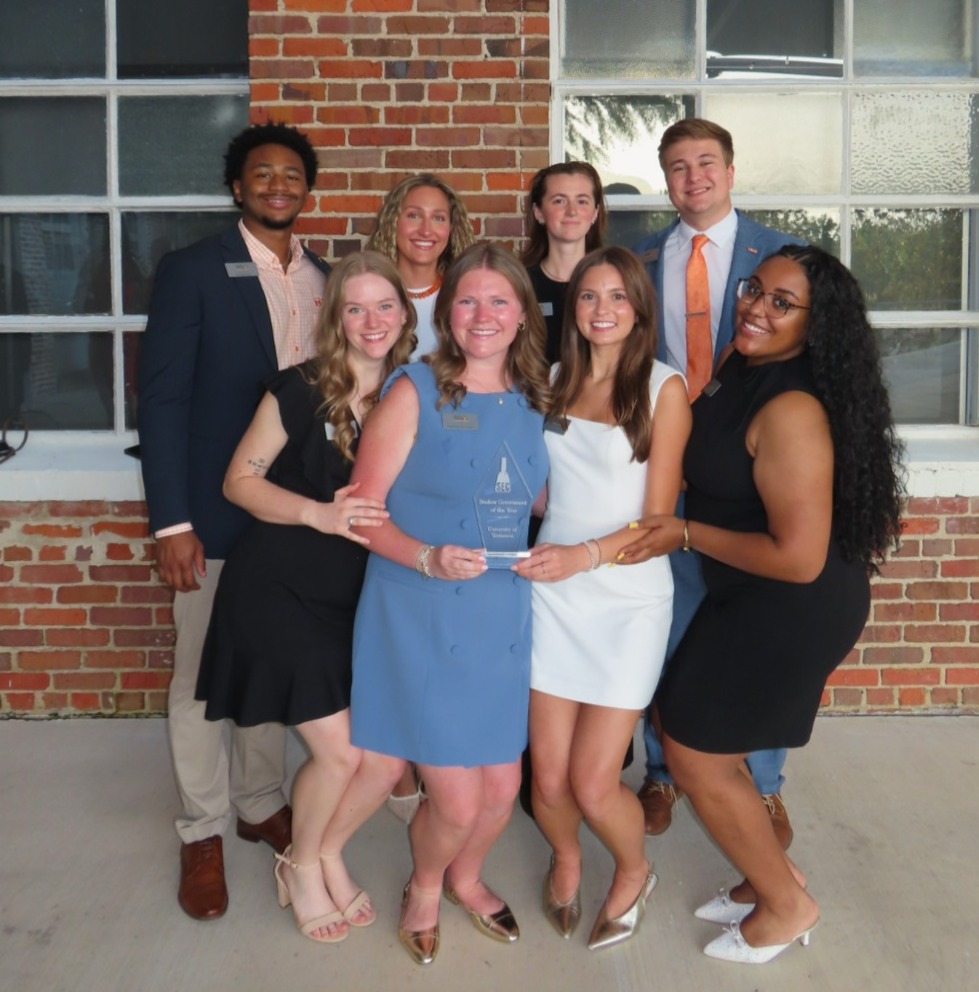
The Student Government Association passed a bill Tuesday evening that could help the Volunteer Channel get funding for its operations.
Brooke Fraser, a worker for TVC, pled their case to SGA.
“At this point in time we’re struggling,” Fraser, junior in journalism and electronic media, said.
TVC does not receive any funding from the university. Anything they need comes out-of-pocket.
Fraser and about a dozen other TVC members were at the SGA meeting. During their presentation of
Bill 10-12, they played a brief video that featured several former and current TVC students. They all explained how working for TVC has helped them prepare for their future in journalism by giving them an opportunity to work with state-of-the-art equipment, news gathering and production experience, as well as being a gateway into internships or actual jobs.
TVC claims that among the Top 25 universities, many of them fund a student-run television channel like TVC. The difference, Fraser said, is that those Top 25 T.V. channels usually only produce one weekly-news show, while TVC produces several different programs daily and without an actual budget.
“I feel like this could really help our whole Top 25 initiative that we trying to put forth,” Fraser said. “And in the 2010 Chancellor’s Report, [Chancellor Jimmy Cheek] said ‘to learn to do by doing,’ and that’s what we do at TVC.”
TVC’s bill is open to several different means of getting funding. The two primary options are either getting funding from the RES Board or from student service fees.TVC will apply for the funding at a RES Board meeting in April.
The student service fee route is another option TVC could alternatively take by receiving a portion of that fee money. While doing so could potentially raise the fee for students, the increase would only be about $1.50 per student, Fraser estimates.
SGA questioned why TVC wasn’t trying to get money from the College of Communication. TVC said they approached the administration about it, but the College said no. However, the College of Communication doesn’t provide funding for other student publications, so this was not out of the ordinary.
With the funding, TVC hopes to accomplish a number of things. First, it would allow them to continue their normal production. Secondly, they hope to hire an advertising director. This director’s main purpose would be to acquire and manage advertisements, something TVC has been lacking.
With the potential for much more advertising, Fraser said that TVC hopes to be more self-sufficient and not need as much funding from the university in the future.
TVC would also be able to purchase new or replacement equipment (TVC said a new video camera could cost thousands of dollars and one of their editing computers was damaged after the recent blackout). But with the funding, TVC could also produce new programs that they would otherwise be unable to do.
Two amendments were passed for the bill. One was to clarify that language on the bill that funding could come from a variety of sources and not necessarily from student services. The second amendment stated that if the university administration started to provide some funding for TVC, any additional funding from outside resources, like student services, would be augmented to only cover the remaining balance.
After further debate, the bill was put to a roll call vote and was passed with only four-against.
According to Terry Nowell, senate chair and senior in biological science, the bill has to be signed by the Student Senate president, Courtney Sharp, and SGA president, Ross Rowland. Then it will go before Maxine Davis, the dean of students.
“In a lot of ways it’s in the hands of the dean of students … and the leadership of the bill,” Nowell said. “And given the nature of the bill, the majority of what’s going to happen is with the RES Board.”
Although the bill was passed in SGA, it does not immediately guarantee funding for TVC. If anything, it is a symbolic gesture that will show the RES Board and university administration that TVC has the support of the students, which could be a powerful argument for getting funding.
“The point of us presenting this to SGA is not to get SGA to give us money,” Fraser said. “We know that the university isn’t going to give us money tomorrow. SGA is the biggest organization on campus. [It’s about] the fact that they’re backing us, and the fact that they represent the students, and the students are backing us also.”