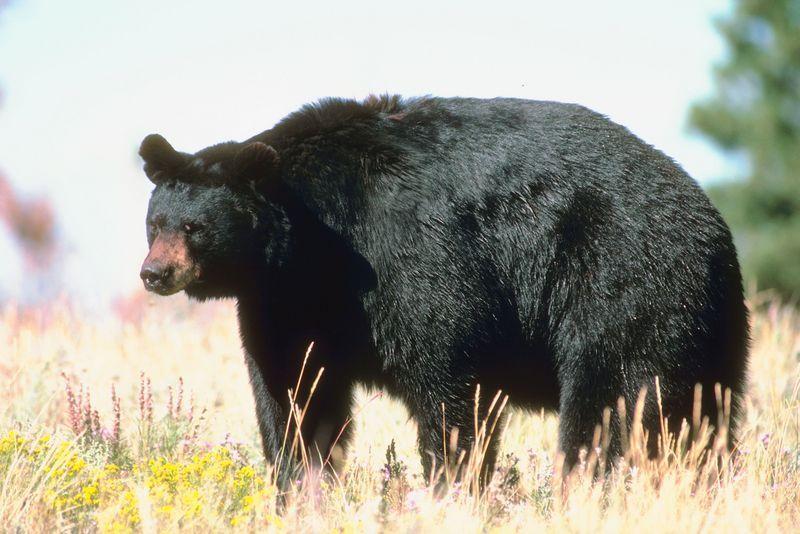
An Appalachian icon and native East Tennessean, the North American Black Bear is in the news again, dredging up tales of fearful encounters and questions about how to interact with our wild neighbors in the mountains.
On June 6, 16-year-old Gabriel Alexander was sleeping in a hammock in a backcountry campsite near the Hazel Creek section of the Great Smoky Mountains National Park when he was attacked by a male black bear. The bear dragged Alexander from his hammock and bit into his scalp before being chased away by Alexander’s father.
A male bear captured near the site was found and euthanized only to discover that he was not the bear involved in the attack. The bear responsible for the attacks had been grazed by a bullet in the nearby vicinity.
As researchers and park officials continue to search for the wounded bear, its overtly aggressive behavior begs a question of why the animal chose to attack a non-threatening target.
For Dana Dodd, the president of Appalachian Bear Rescue, a non-profit organization dedicated to raising orphaned bear cubs and releasing them back into the park, the recent activity in the bear community is the result of multiple factors, including mating season and the seasonal berry harvest.
“The yearlings must find their own territory,” Dodd said. “This is especially hard for male yearlings, as they must find their territory in areas where mature males already own much of the territory. Mother bears often cede some of their territory to their female yearlings. All the mating and family break-up activity creates a very active time for bears.”
This period of territorial uncertainty combined with mating season, the height of tourist season and the lack of food until the berries are ripe, provide a catalyst for more active bears and more human interaction with those bears.
With the heightened probability of a black bear encounter during the summer months, park officials and experts say it is important to be able to differentiate between bear myths and reality in order to avoid potentially harmful misunderstandings that could lead to harmful encounters.
According to the North American Bear Center, the key to a safe bear encounter is the tried and true standard across all the national parks—speak softly and back away slowly.
“Those are polite actions that respect a black bear’s comfort zone and help ease its anxiety,” according to their website. “It is the gentle way to separate. More aggressive action would be more likely to increase a black bear’s anxiety and send it running.”
Dana Soehn, a spokesperson for the Great Smoky Mountain National Park, said only one death, in 2000, has been reported as result of a bear encounter in the park’s history.
“What we deal with the majority of the time has to do with a food nuisance,” Soehn said. “We provided bear proof garbage cans in all of our back country camp sites. We think our education about food has helped decrease bear encounters by 65 percent in the last 25 years.”
John Addison, a Knoxville resident and outdoorsman, said that in his experiences hiking in the national park, respecting the bears’ space and maintaining a calm demeanor has proven successful in the past.
“When I come up on one of the black bears, I always just try to act as calmly as I can so I don’t scare them or make them think I’m a threat,” Addison said. “It’s important to think about them as being more scared of you than you are of them.
“If you speak their language and show respect and leave their space, you’ll probably be fine.”
Aside from this simple show of respect, the North American Bear Center advises anyone who might come into contact with bears not to give in to popular myths about bear behavior and recognize their actions as the result fear and anxiety— not necessarily aggression.
Several short videos produced by the Appalachian Bear Rescue document and interpret some of the most common bear signs to be aware of, including “huffing,” “blowing” and “lip smacking,” all forms of “blustering” that indicate anxiety and caution humans to back away.
If this does not deter the bear and they begin to persistently follow a visitor, the Great Smoky Mountain National Park advises parkgoers to stand their ground, make themselves look as big as possible and never turn away from the animal.
Since 1900, only 61 people have been killed by black bears and all three organizations emphasize that aggressive encounters with bears are extremely rare and often result from a misunderstanding between human and bear.
“You just have to take the time to understand what they’re trying to tell you,” Addison said. “It’s their world out there.”