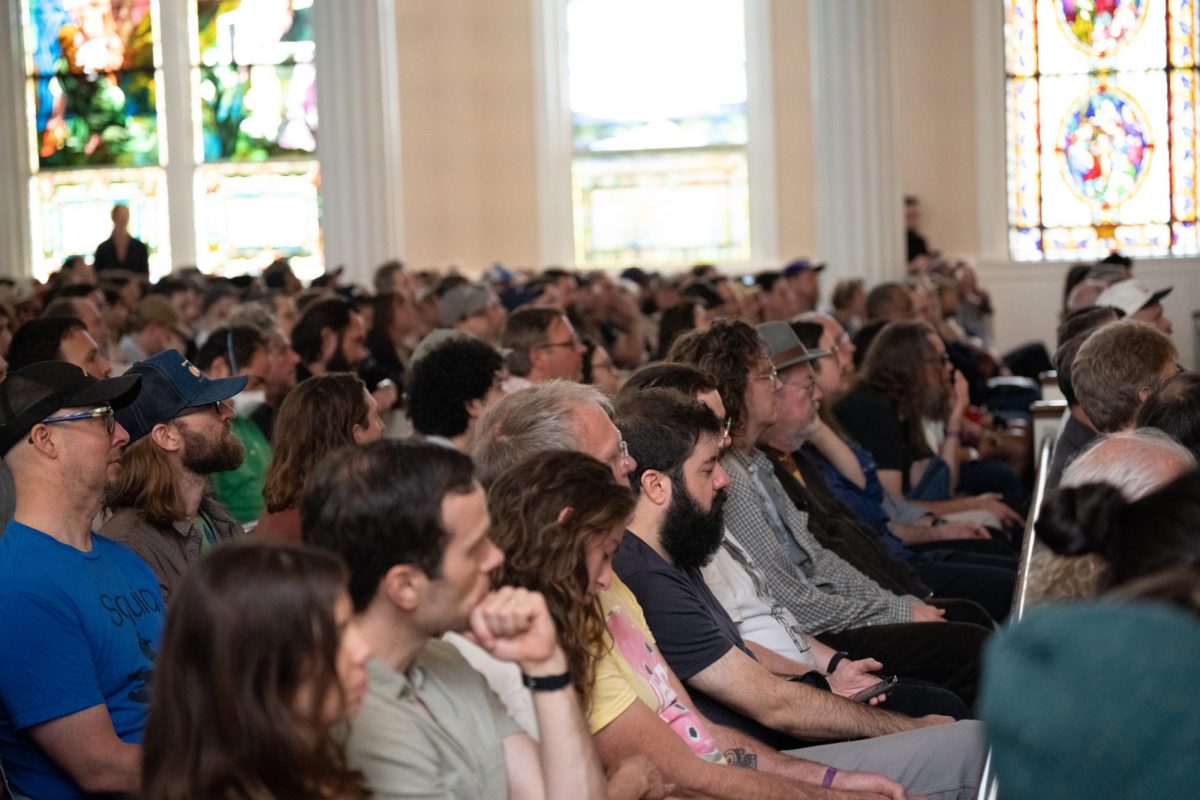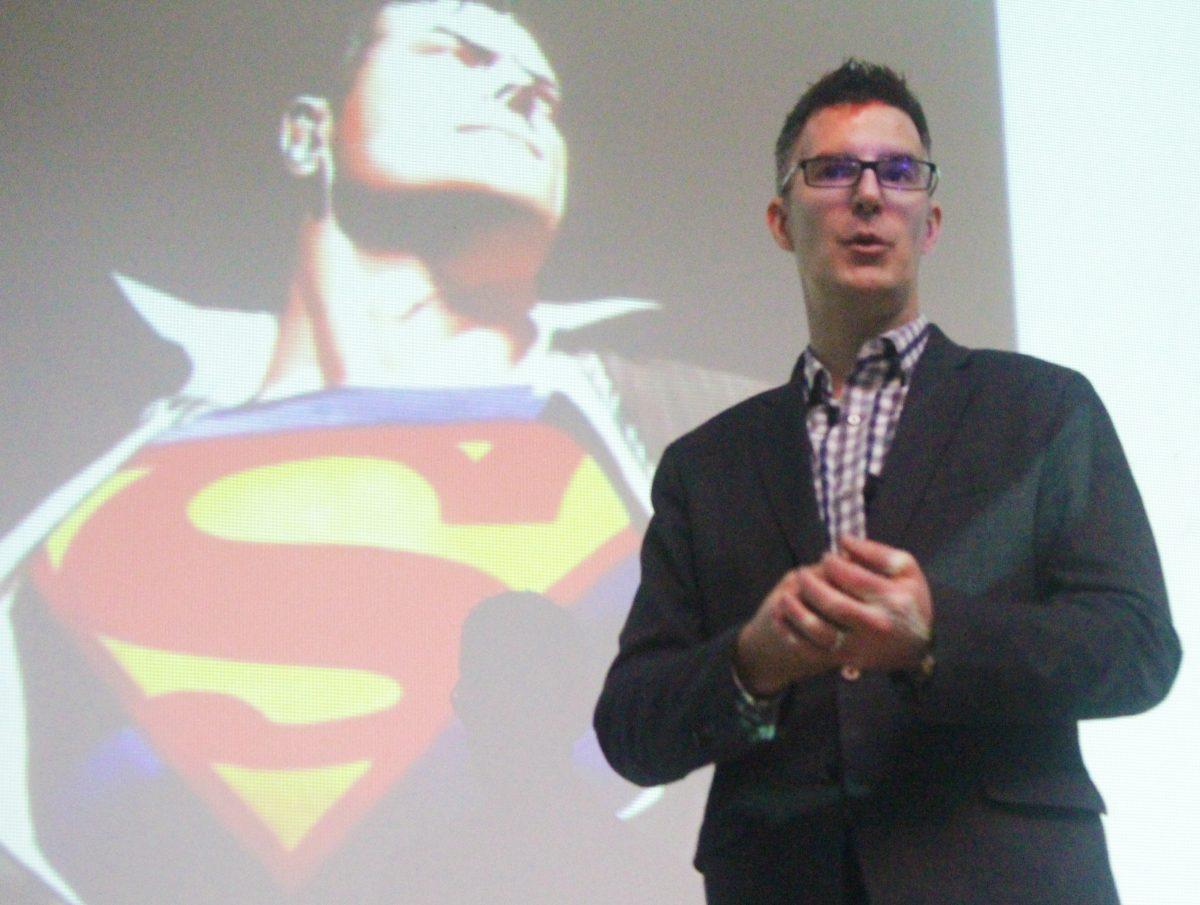
Nerds and aspiring artists alike convened Thursday night to hear Marvel’s creative director Bill Rosemann share his superhero knowledge and insight.
Rosemann spent the night elaborating on the importance of comics not only in his own life, but also as a force of inspirational and social change.
“They inspire us to be great, but we also understand and sympathize with them,” Rosemann said of the superhero appeal. “It’s not about how great they are. It’s about how wounded they are. How challenged they are, how they could give up.”
Throughout Rosemann’s childhood, the “one constant thing” in his turbulent life was the comfort and excitement offered by comic books. Moving around the country to New Jersey, Michigan and Tennessee, Rosemann regarded comic books as an irreplaceable source of inspiration and enjoyment, going so far as to retrieve a box of comics from his burning house during his childhood.
“Boy, that’s stupid,” Rosemann jokingly recalled of his rescue. “But they meant something to me.”
For all the joy superheroes brought into his life, Rosemann maintained that the ability of comic books to tackle social issues and bring about positive change is by far one of their most amazing qualities. Comparing X-Men’s Professor X to Martin Luther King Jr. and Superman to the average immigrant’s ability to adopt the American way, Rosemann said comic writers’ tendencies of “using heroes to talk about the world” illustrates the industry’s willingness to affect positive change.
No stranger to good deeds himself, Rosemann explained his role in the creation of the Blue Ear, a hearing impaired superhero created to help a young New Hampshire boy feel secure about having to wear a hearing aid. Inspired by the idea of “What would Peter Parker do?” Rosemann chose to respond to the boy’s mother’s plea for help rather than ignore it. When other deaf children began to voice their love and admiration for the character, he knew it had been worth it.
“They feel included,” Rosemann said of deaf children. “They feel that maybe they’re special, maybe they’re superheroes.”
For Ryan Adams, a freshman in English who creates his own artistic works, the chance to interact with a Marvel employee was something truly out of the ordinary.
“Stuff like this never really happens,” Adams said. “This campus is known more for its sports attendees rather than (its) artistic or creative value, so when something like this happens I have to jump before anyone else has a chance.”
By the end of the night, Rosemann revealed the potential to be a hero ultimately lies within us all, as the path to good or evil relies on the choices we make everyday.
“These characters, their true stories are about the choices they make,”Rosemann said. “That’s what separates the hero from the villain.”