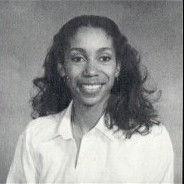
“I was part of that generation that realized African Americans had been left out of practically everything in the national heritage,” said Cynthia Fleming, one of the first two black female faculty members in UT’s College of Arts and Sciences.
Growing up during the Civil Rights Era, Fleming’s view of the world was profoundly shaped by momentous events of her time. Graduating from a Detroit high school in the same year as the destructive 1967 Detroit riot, Fleming chose to become a historian to teach about the importance and role of African Americans in the nation’s history.
“I wanted to be one of those people to do the research and writing and teaching to make sure the record was fair and accurate and reflected the way in which African Americans functioned and contributed to American society,” Fleming said.
Originally trained in 19th century history, it was thanks to the constant prodding and encouragement of Avon Rollins, a local Civil Rights icon, that Fleming chose to write the biography of little known Civil Rights activist Ruby Doris Smith-Robinson. During her life, Smith-Robinson worked with the Student Nonviolent Coordinating Commission, amassing more than 100 days in prison before her untimely death from cancer in 1967.
More than just recording history, though, Fleming wanted to teach it.
She first joined UT’s history faculty in 1982 and later earned her tenure in 1987. In more than 20 years of service to UT, Fleming helped foster the growth of UT’s African American Studies Program before her retirement last year.
Motivated by more than simply a love for history, Fleming’s “mission” has always been to rewrite and make others think about the way African American history is viewed and learned.
Before her retirement, Fleming frequently conveyed a message of historical equality to the students that would walk through her door.
“African American history is American history,” she said. “It’s just that part that was left out.”
Admittedly, Fleming said she thought that, by her age, the many racial issues within America would be largely solved. She sees the protests surrounding the deaths of Michael Brown, Eric Garner and other young African Americans, however, as contrary evidence.
“Unfortunately, what these events show is that we as a nation still have almost no understanding of African American history,” Fleming said.
Despite this criticism, Fleming said she remains resolute that the fate of blacks in this nation will not always be so bleak.
“I remain hopeful,” Fleming clarified. “The generation coming behind me and other historians of my generation who have retired, are going to continue to struggle and no doubt someday prevail.”
For History Department Head Ernest Freeburg, Flemings’ contributions to both the university and the history of African Americans cannot be understated.
“Dr. Fleming was a pioneer in the field of civil rights history,” Freeburg said. “Her work, including many oral histories with the great and now passing generation of civil rights leaders, will provide crucial documentation that will be used by generations of historians.”
Former University of Tennessee colleagues honored Cynthia Fleming Friday night in recognition of her work as both a historian and Civil Rights advocate.