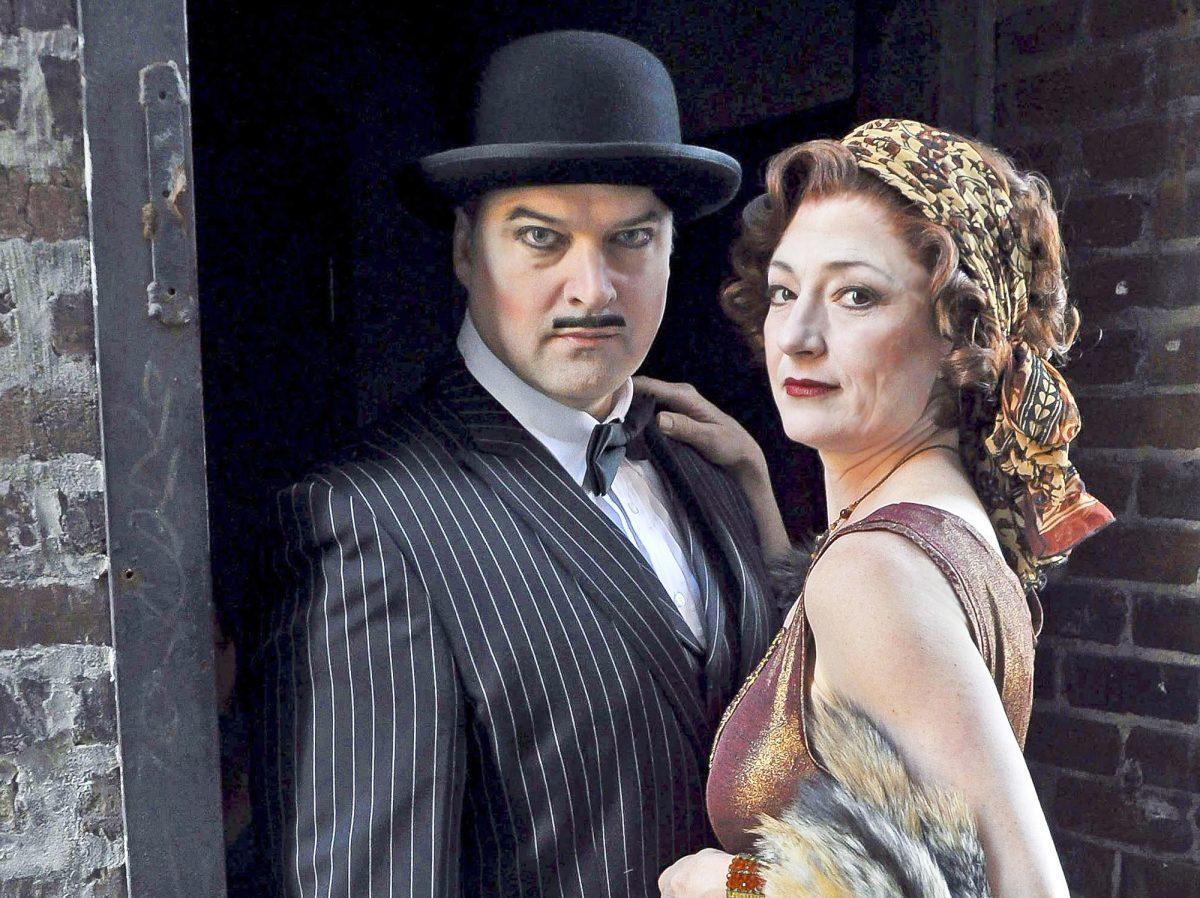
“Threepenny Opera,” Clarence Brown’s final production for the 2014-2015 season, is set in post-World War I, economically depressed Germany.
And according to Calvin MacLean, the theatre program’s department head and artistic director for the theatre department, the world presented in “Threepenny Opera” is not so different from modern day America.
“The political and social commentary that Brecht makes about his point of view in the ’20s is still relevant today,” MacLean said.
“Threepenny Opera” tells the timeless story of the conflict between the haves and the have nots, but this time, the struggle plays out among beggars in Germany. Roderick Peeples, a longtime friend of MacLean, will be playing JJ Peachum, the king of the beggars.
“He is a character that is in charge of making money off the beggars,” Peeples explained. “He issues them a license to beg, and then he takes a certain percentage of their take.”
Brecht, the original German composer, wrote the work during the first big depression in Germany.
“He was there seeing very much the same kind of social conditions we have today where you have a relatively few number of people making a lot of money and a great number of people not making very much at all,” Peeples said.
Brecht wrote the play to capture the social and economic conditions of his time. Unlike many other musicals, “Threepenny Opera” was not intended to be a compilation of entertaining show tunes.
“There are songs with really brutal, scathing lyrics set to beautiful ballads and melodies,” Peeples said.
The most well-known song, “The Ballad of Mack the Knife,” was made into a pop hit by Bobby Darin in the 1960s.
“The lyrics he used and the style he sang it in are completely different from original German lyrics and its place in the show,” Peeples said. “Most people are used to hearing it as kind of romantic and jazzy but it’s actually a really scathing bitter indictment of this character Mack the Knife.”
Peeples said the dissonance between the brutal lyrics of the songs and the beautiful musical form they are sang in was done intentionally by Brecht.
“He wanted you to keep thinking,” Peeples said. “He didn’t want you to get lost in the show, in the beauty, in the imaginary world of the play, to escape.”
Brecht resented escapist theater and wanted to do something very different from the typical musical in his day.
“Music and songs that commented on a situation in the play was a new form,” MacLean explained. “A play is a lot like a book, a text. When it moves into music it moves into a different, new, more sophisticated mode of address to the audience.”
The new type of musical established by Brecht resonated with his audience then just as MacLean hopes it will resonate with the audience now.
“People are people in essential ways whether they are people who lived in the 1920s before the crash, before the economic collapse, before the rise of Nazi Germany, political extremism and human terrorism,” MacLean said. “All of these things we are dealing with today. It still makes a point and that’s why we’re doing it.”
“Threepenny Opera” opens on the Clarence Brown Mainstage April 17 and runs through Sunday, May 3. Tickets are $5 for opted-in students and can be purchased at knoxvilletickets.com.