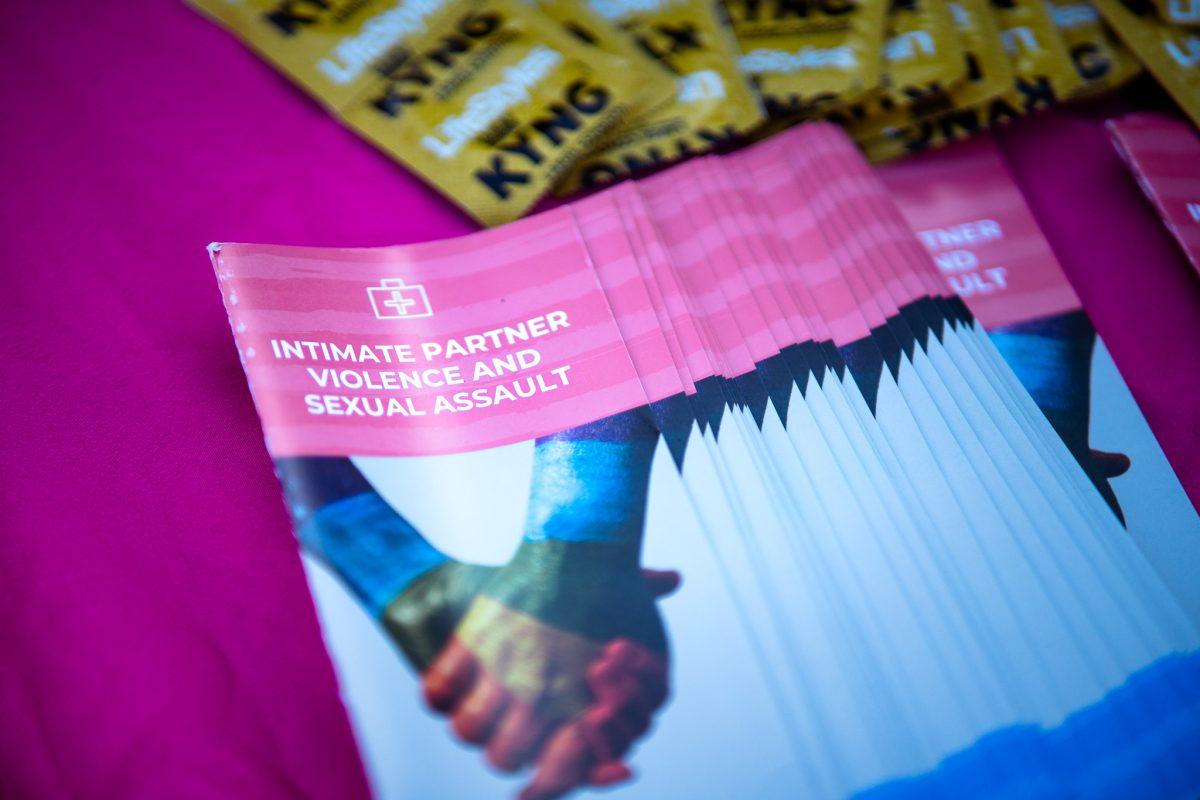
The Center for Health Education and Wellness hosted a presentation on both on and off-campus resources for people experiencing domestic/dating violence on Oct. 18. The presentation included speakers from the Office of Title IX, The McNabb Center and the Knoxville Family Justice Center.
October is Domestic Violence Awareness Month which is why CHEW wanted to hold this event now. Domestic violence can be a sensitive topic for many people, but it is important that people know what resources are available to them.
Kayley McMahan, the relationship and sexual violence prevention coordinator for CHEW, started out the presentation by discussing its goals.
“What we hope you come away from this presentation with today is an increased awareness of resources and supports that are available both on and off campus for students, faculty and staff, increased awareness for options of medical care, safety planning, and university assistance, and increase your understanding of university investigation processes and police or criminal options available,” McMahan said.
The Office of Title IX is the primary on-campus resource for students experiencing domestic or dating violence. While the Office of Title IX is not a confidential resource, they do keep as much information about the situation private as possible and cannot proceed with investigations or police reports without consent from the victim. The Office of Title IX is also able to help students without needing to start a formal investigation if the student prefers.
Sarah Thomas, the deputy Title IX coordinator for support at the Office of Title IX, shared some of the resources available through the Office of Title IX. These resources include things like academic support and connections to medical, mental health and legal resources.
“If we learn that one of our students may be experiencing these things, I will reach out to the complainant, that’s the person who has experienced the harm, and I will offer them all of these resources,” Thomas said.
The Office of Title IX can also help connect students to off-campus resources, such as the McNabb Center or the Knoxville Family Justice Center.
The McNabb Center and the Sexual Assault Center of East Tennessee are some of the off-campus resources that the Office of Title IX can help connect students to. Catherine Oaks, the director of Victim Services for the McNabb Center and the Sexual Assault Center of East Tennessee talked about some of the services they offer, focusing primarily on the McNabb Center’s services.
“The primary departments we provide in our domestic violence division are emergency shelter, transitional housing, advocacy-based at the Family Justice Center, and outreach and education,” Oaks said.
The McNabb Center also has the only shelter that provides services solely to domestic violence victims. They also help with immediate needs such as transportation services or their crisis hotline.
The Sexual Assault Center does provide forensic sexual assault exams at their office, and they are the responders to all local area hospitals. Additionally, the Sexual Assault Center provides advocacy resources, individual therapy, and education and outreach programs.
The services at both the McNabb Center and the Sexual Assault Center of East Tennessee are all free and confidential, and people seeking service do not need to file a police report.
Another resource that the Office of Title IX can help connect students to is the Knoxville Family Justice Center. Morgan Newman, the coordinated community response and outreach director for the Knoxville Family Justice Center, discussed some of their services.
The Knoxville Family Justice Center provides services such as safety planning, orders of protection and other legal assistance. They also help people access resources and immediate needs like transportation assistance, child care, cell phones, food and shelter. Their services are also free and confidential to help ease the burden that domestic violence victims may experience.
“One thing about the Knoxville Family Justice Center that we really try to stress is that we are a one place to go, one call to make,” Newman said. “By going to just our one location, you’re able to get a really wide variety of services, and you only have to share your story once.”
All of the resources that were covered in today’s presentation are free. All of these organizations recognize that finances can be a barrier to getting help and want to make sure as many people can get the help they need in order to remain safe.