What happens when one emotion becomes too overwhelming in a premature mind?
The recent film “Inside Out 2,” produced by Mark Nielsen, captures Riley’s erupting emotions as she evolves into a teenager. The original emotions from “Inside Out 1” including Joy, Sadness, Anger, Fear and Disgust, helped Riley win her hockey game in the sequel.
To add to Riley’s excitement, the high school hockey coach invited Riley and her two best friends to a camp to show off their skills. All was smooth sailing until Riley began puberty the night before hockey camp.
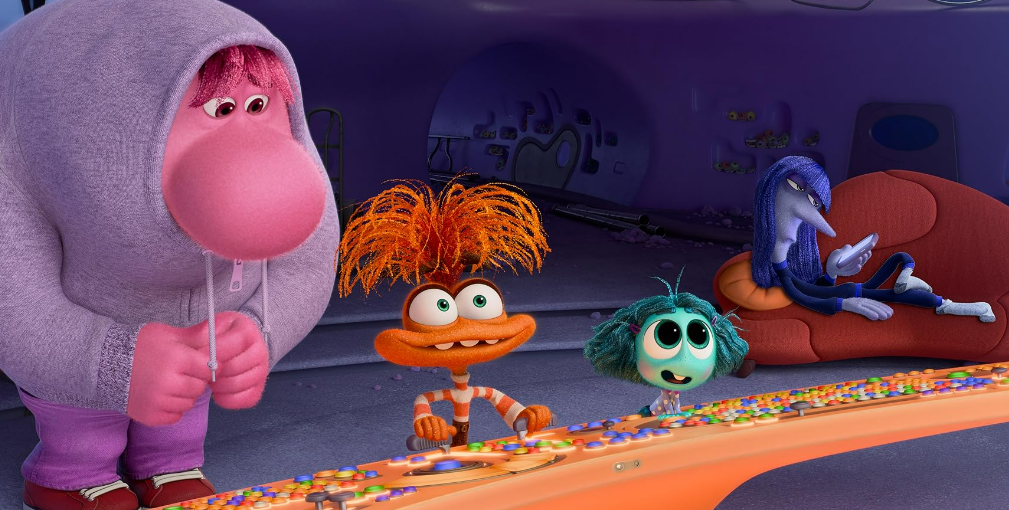
This monumental change came with the addition of four new emotions including Anxiety, Embarrassment, Ennui and Envy.
Anxiety took control and ejected the original emotions from Riley’s consciousness. It is up to Joy, Sadness, Anger, Fear and Disgust to revive Riley’s mind and get her sense of self back.
It is no surprise that “Inside Out 2” had high expectations from viewers as the film had a domestic opening of $155 million. According toThe Walt Disney Company, this established “Inside Out 2” as not just the highest-grossing opening of 2024 but the second-highest domestic opening for an animated film following “Incredibles 2” from Pixar.
This film does an excellent job of entertaining all age groups. Although some younger viewers may not understand the depth of anxiety, the younger crowd can enjoy the lively animation.
Older viewers can better understand the comedic bits and experience the nostalgic feeling that radiates throughout the movie. For example, the movie displays emotions in Riley’s parents’ heads. Riley’s mom and dad have emotions that give a relatable perception of what a parent goes through while their kid grows up.
The animation and video production were outstanding, and the scripts were well-crafted. The producers had numerous emotions to choose from, yet their selection was a perfect fit for a 13-year-old undergoing transitional challenges.
The new characters’ designs were suitable for their assigned emotions. Maya Hawke, who voiced Anxiety, was an ideal match for the character, as her voice had a natural anxious tone that was spoken rapidly and jittery. The idea behind the way each emotion looks is genius. Embarrassment has a large appearance, indicating the feeling of being the most noticeable person in the room when you have done something humiliating.
The science behind the feeling of anxiety was simple yet thought-provoking. The movie includes Riley’s flow of consciousness and an authentic brainstorm that occurs when anxiety is doing most of the intrusive thinking.
Although this movie captures the knowledge behind the cartoon emotions and how the brain works, it projects the idea that puberty happens overnight as Riley’s puberty button went off before she went to hockey camp. This stage typically approaches gradually and paves the way for striking mood swings.
Reminiscing about the first movie, I realized that Sadness saved the day. This furthered the idea that sometimes you need to go through challenging times to grow.
In the sequel, it is evident that Joy was part of the issue. Joy repeatedly sent back Riley’s unpleasant moments, preventing her from becoming her genuine self.
Another heartfelt concept this movie presents is that no emotion is bad — only some are too powerful. Hence, a balanced combination of all emotions produces the best outcome of what completes your personality — even if anxiety is part of that blend.
“Inside Out 2” takes a heavy subject such as mental health and creates a relatable, bittersweet movie that makes us reflect on how far we have come.