According to National Domestic Violence Hotline, in the U.S., roughly 24 people per minute face rape, physical abuse or stalking from an intimate partner, affecting over 12 million men and women annually. About 43% of female college students have experienced violent or abusive behaviors in their dating relationships.
Domestic violence is characterized by a series of abusive behaviors used by one partner to establish or maintain dominance over the other in an intimate relationship. It can take many forms, such as physical, sexual, emotional, financial, psychological or technological abuse, along with threats or coercive tactics.
In light of October being Domestic Violence Awareness Month, the Center for Health Education and Wellness hosted several events to spread awareness.
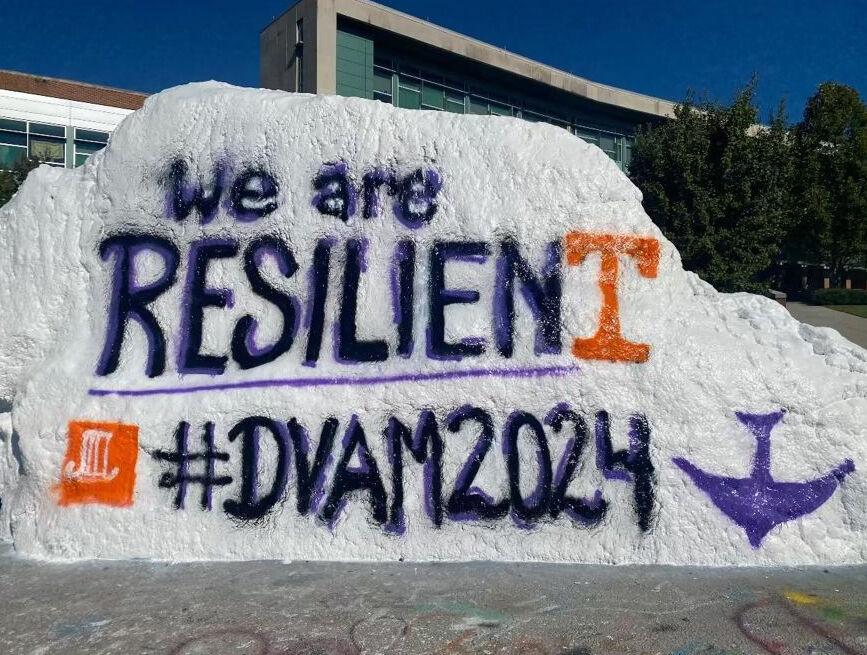
One annual event is where the University of Tennessee’s community wears purple on the third Thursday of October. The color purple represents the notion that violence is no longer tolerated. UT’s famous rock was also painted purple with the #DVAM2024 hashtag.
CHEW, in collaboration with Student Engagement and Campus Events, hosted an interactive event for DVAM featuring a movie. During the screening, students raised red flags whenever they observed potential abusive behavior among the characters.
After the film, Kayley McMahan, relationship and sexual violence prevention coordinator for CHEW, discussed in detail the behaviors portrayed on the screen.
“Together, we work to prevent prohibited conduct before it occurs,” McMahan said. “Our relationship and sexual violence prevention initiative aims to build an environment that encourages well-being and healthy choices, as well as teaching our campus community to embody what it means to be a Volunteer who ACTs.”
CHEW also partners with the Office of Title IX to educate about domestic violence at UT.
When you connect with a staff member at the Office of Title IX, they will strive to maintain your confidentiality as much as their policies allow.
This office will also work together to understand your care and support needs, outline your options according to university policy and support you in obtaining resources. Visit titleix.utk.edu to learn more about both confidential and private resources both on and off campus.
Laura Bryant, deputy Title IX coordinator, spoke about the steps students can take to report inappropriate behavior.
“If a student is unsure of what they should do, they can always contact the Office of Title IX for support and resources,” Bryant said.
Recognizing the signs of someone who may be experiencing this type of violence is crucial.
Physical indicators include bruises and black eyes. Additionally, one might notice someone withdrawing from family and friends, experiencing drastic changes in behavior, having difficulty sleeping, showing signs of low self-esteem or expressing thoughts of suicide.
Scott Erland is the communications manager for the Knoxville Police Department. He spoke on the concerning levels of domestic violence in Knoxville.
“Domestic violence is one of the most frequent calls for law enforcement,” Erland said.
Since Aug. 11, there have been over 6,100 domestic-related calls for service in the Knoxville area, according to Erland, and it’s a serious and widespread issue that impacts everyone regardless of age, race, gender and socioeconomic status.
Erland recommends that students or residents of Knoxville seeking off-campus support visit the Knoxville Family Justice Center. This organization aims to end domestic violence through collective action, education and community engagement.
“For those who are experiencing relationship violence, know that you are not alone and that the university has support and resources to help you,” Bryant said.