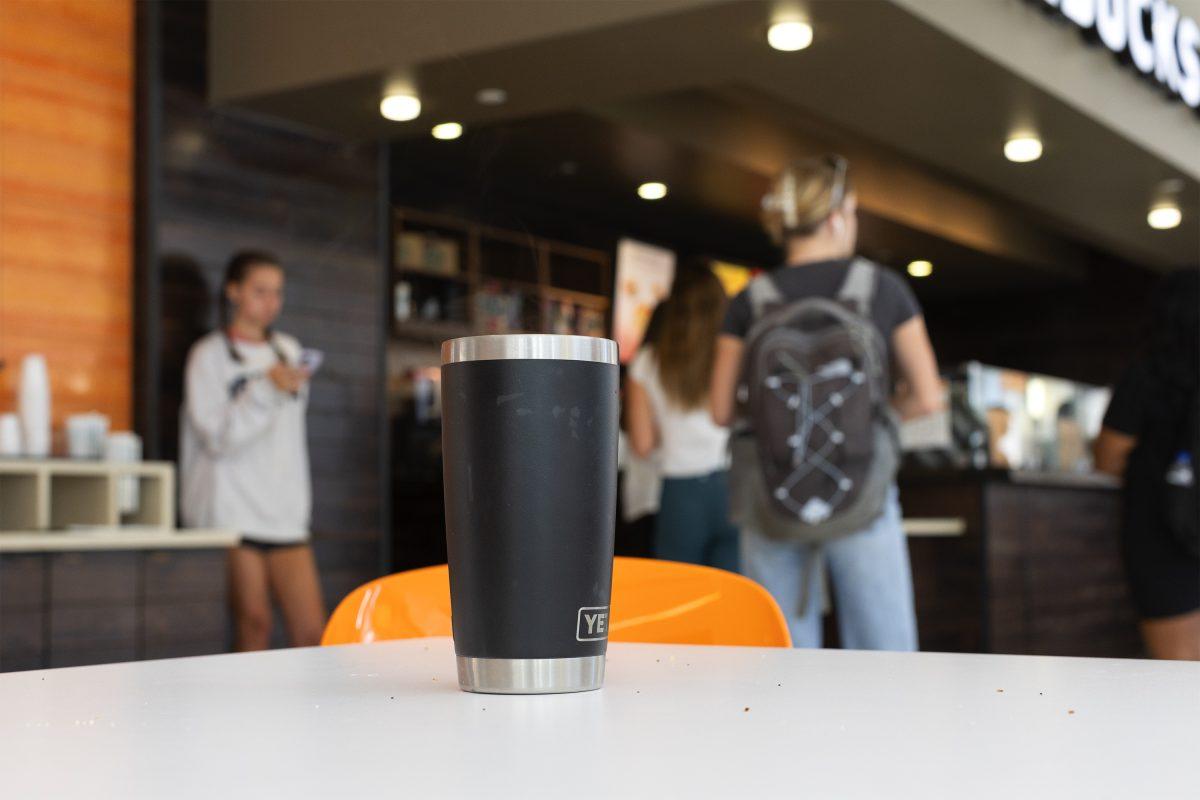
The Mug Project is an initiative by the Office of Sustainability at the University of Tennessee that is helping combat waste overflow through the use of reusable cups around various dining locations on campus.
According to the Office of Sustainability, the University of Tennessee’s student population uses over 3,000 cups daily, which is equivalent to powering four homes a year due to the usage of about 360 million British thermal units of energy, a measure of thermal energy used in heating and cooling appliances.
The Mug Project was initiated in 2010 by Emmy Waldhart, the sustainability manager. She collaborated with Mary Leslie Patterson, senior district marketing manager for Aramark at Vol Dining.
The participation process is straightforward — students and staff need to bring their own mug, which should be 24 ounces or smaller. This initiative includes locations like the POD Markets, Starbucks and Einstein Bros. Bagels.
By bringing their own mugs, students not only help protect the planet but also enjoy discounts. Participants can receive savings on beverages, including coffee and fountain drinks, along with 15% off specialty coffee items.
“Sustainability has always been a passion of mine, and the Mug Project just makes sense,” Patterson said. “The Make Orange Green campaign was launched in 2006, and the Mug Project was one of the first programs where the campus community could make a choice to make a difference.”
One of their most successful projects was in 2017 with the joint effort between Vol Dining, UT Recycling and the Office of Sustainability.
This project had approximately 70,000 refills, and those who participated saved about $50,000 altogether.
Jay Price is the sustainability manager with the UT Office of Sustainability in the facilities services department. Before this role, he was the recycling manager for over a decade.
He witnessed firsthand the significant amount of waste generated by staff and students on campus. Price spoke on the project’s success in 2017.
“We haven’t had numbers quite that high before or since, but the potential for this is huge,” Price said.
Unfortunately, the Mug Project faced a significant challenge during COVID-19, leading to a decline in interest among students and staff. As the difficulties of the pandemic began to subside, the Mug Project grew once again.
“We are very excited about the chance to let the community know that the Mug Project is alive and well,” Patterson said.
In addition to the Mug Project, the Student Environmental Initiatives Fund had a tremendous impact on creating sustainability, raising about $40,000. This money will be used to install bottle refill stations on campus.
“One day, all of the drinking fountains on campus will include or be paired with bottle fillers,” Price said.
Taking things a step further, Price explains how students can save trash along with the Mug Project.
He urges students to try to transport their waste for a week — all the trash that is recycled or reused does not have to be carried, but everything else does.
“You’ll be amazed at how differently you approach everything you purchase, the swag you grab, the free food you take, etc.,” Price said. “It makes you think about waste, which is not something most people think about on a regular basis.”
The Mug Project amplifies the common saying “Reuse, reduce, recycle.” Price teaches the expanded version, “Refuse, reduce, reuse, recycle, rot.”
Price explains that “refuse” means saying no to items you do not truly need, while “reduce” involves minimizing your consumption. He emphasizes the importance of reusing items, such as a mug.
Price says “recycle” or “rot” is a last resort, meaning compost — whatever can be refused, reduced or reused.
Most students and staff on campus often overlook the amount of trash they generate and dispose of. The Mug Project aims to make students think twice before throwing away an item.
“The Mug Project saves people money and creates less waste,” Price said.