The Knoxville Regional Transportation Planning Organization is getting started on the Mobility Plan 2050, which looks 25 years into the future of Knoxville’s transportation. The organization is responsible for the transportation systems of Knox County as well as parts of Anderson, Blount, Loudon, Roane and Sevier counties.
According to a survey conducted by the Mobility Plan 2045, Knoxville will have more than 160,000 new residents and 150,000 new jobs by 2045, but the difference in location of predicted housing growth versus predicted job growth has the potential to increase family transportation costs in the region, which are already above the United States average.
Executive director of the TPO, Amy Brooks, commented on her excitement about the Mobility 2050 Plan.
“It is so important that we engage in long-range planning processes as our region continues to grow and change,” Brooks said.
The TPO has started the process by evaluating the existing conditions of Knoxville transportation combined with the city’s growth expectations. The evaluation includes commuting and crash patterns, congestion trends, pedestrian and bicycle facilities and vulnerabilities, transit use, and more.
The Mobility 2050 Plan also considers how people can better access quality jobs, healthcare, education, food and affordable housing for all socioeconomic groups through their developments.
Along with community feedback, the 2050 Plan’s main goal is to tackle problems of increasing safety concerns, traffic congestion and air pollution. The TPO has created an interactive map that allows residents to see areas of risk concerning traffic, repair and safety in the area.
Over the next 25 years, the plan plans to invest $4.5 billion in street improvements and $1.2 billion in transit improvements over a total of 134 projects.
Senior transportation engineer Mike Conger says that the plan must be multimodal to meet federal requirements, and while public transportation, along with bike and pedestrian facilities, plays a large role in the 2050 Plan, that is not their top priority.
“We do recognize that by far the predominant mode of transportation in our region is motor vehicles (cars and trucks), so there is definitely a major focus on the roadway side of the equation and looking at where there are areas of high traffic congestion occurring, both in the present and in the future,” Conger said.
The TPO said these projects can take anywhere from 5-20 years to complete, which is why they are beginning this process so early. Currently, the Mobility 2050 Plan is exiting the outreach and data assembly phase and entering into the needs assessment and initial recommendations phase. They plan to finalize everything within 20 months, meaning that the third and final phase of refining recommendations and reporting is expected to be done by spring 2025.
As part of the KAT Reimagined plan, the Knoxville Transportation Authority is also partnering with the TPO to reconsider Knoxville’s bus transport system to help make their service more useful and increase ridership potential. This new system also has the potential to decrease pollution and congestion and increase economic attractiveness.
To improve transit, the KTA and Knoxville Area Transit are also to return their service to pre-COVID-19 levels. Starting April 8, 2024, weekday and weekend services will extend into the evening. KAT buses will also change some routes to the South Knoxville area to allow for easier access in and out of downtown and Knoxville Station.
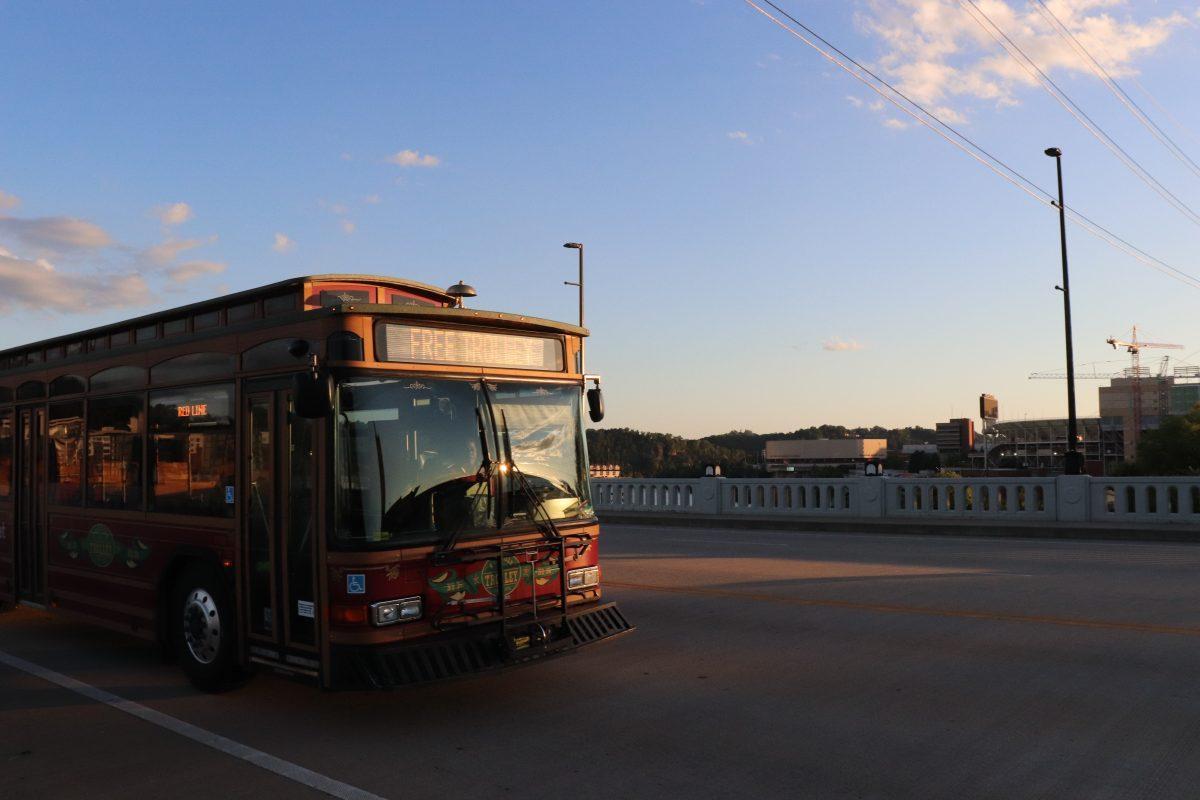
However, these new plans seek to create a new downtown connector, which will eliminate most of the free downtown trolleys, a change that concerns some residents and students.
Marisa Jackson, a junior studying human resource management, frequents the trolleys often and is not fond of this new plan.
“While I understand the need for additional coverage that these new routes can provide, many locals who take the trolleys access it due to being free, whether it be a college student or an individual trying to get back on their feet,” Jackson said. “Some people will suffer, especially if the new routes do not cover previously covered areas like the University of Tennessee campus. While UT does have its own buses, the KAT trolleys stop from Publix to downtown and cover a wider span of campus as well as parts of Fort Sanders. From my experience, UT’s bus system can’t do all that with one route and involves switching buses for 45 minutes.”
The trolleys still seem more convenient to locals, students and tourists, but KTA argues that their new outlook will increase transit access and give people more freedom by solving the problem of waiting. Bus frequency is a dominant factor in determining travel time, so increasing bus frequency at stops with their new route lines will immensely cut down on waiting time.
According to the KAT Draft Plan, this new route network will allow residents to reach 17,800 jobs — 16% more jobs than are currently reachable within the existing route network — by walking and taking transit within 45 minutes.
It is not yet known when this draft network plan will go into full effect.
Experts are working hard to accommodate and prepare for Knoxville’s rapidly growing population, but these plans are just the beginning. In order for real progress to be made, local governments and residents need to work together and take the initiative to implement these plans into action.
Locals can give input to the plans by taking TPO’s Mobility 2050 Plan survey or sending KAT Reimagined a comment.