While the scene was deemed clear and safety assured swiftly on campus, the active threat hoax at Hodges Library on Monday, Aug. 25, has left students and faculty with questions and concerns about how communication was handled.
The UTPD maintains it understood the threat to be a hoax the entire time. Some students and faculty did not share the same level of clarity or confidence during the event.
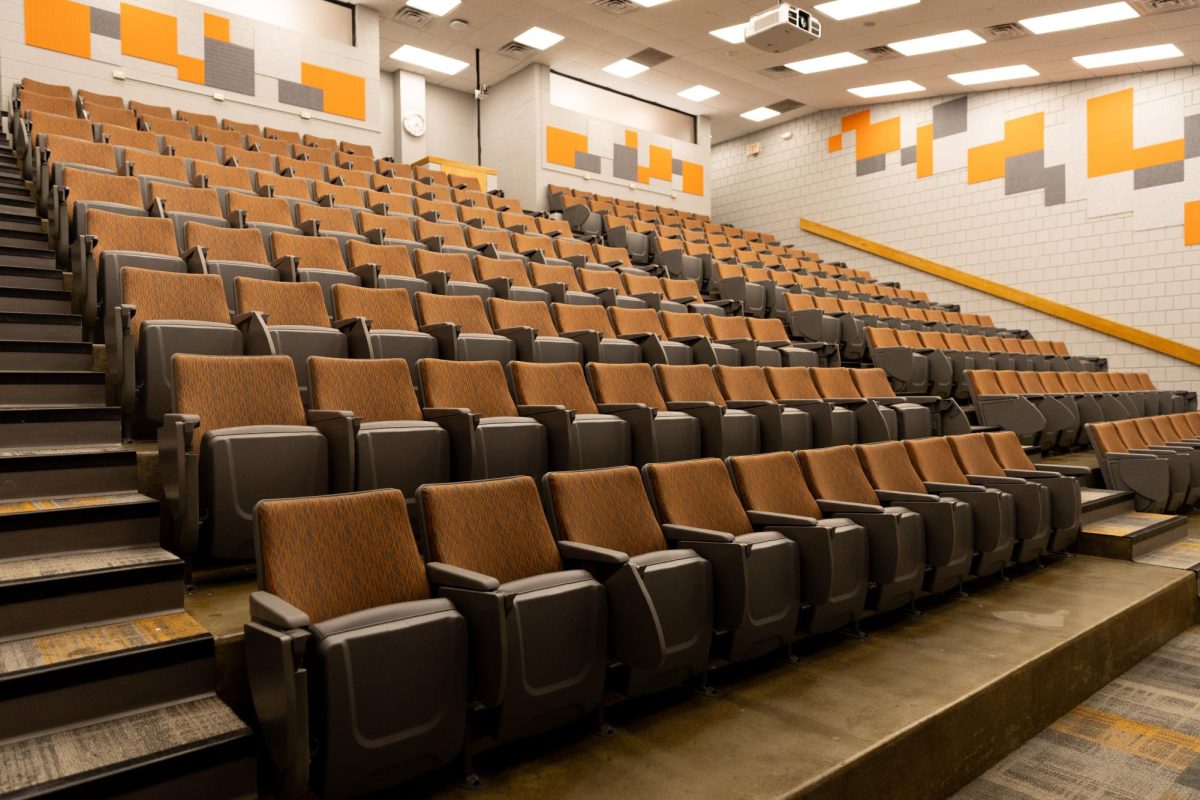
Carolina Hightower, a freshman and public relations major, was attending her 1:10 p.m. class in the Lindsay Young Auditorium on the first floor of Hodges on Monday afternoon. As news of what was going on in the building around them began to flood in through texts and social media, Hightower describes a confusing and uneasy atmosphere among the students.
“Our whole class felt like it was being ignored,” said Hightower. “We weren’t sure what was going on and I was very frustrated not knowing if something dangerous could happen. I wish a cop or someone could’ve come to let us know what was going on.”
In a statement provided to the Beacon, UTPD Public Information Officer Ryan Moore explained that in accordance with department procedure and the Clery Act, emergency alerts are to be sent out when confirmation of an imminent threat to campus is identified.
“In this recent situation, with only a single call to Knoxville Police on a non-emergency line, the information available, the presence of officers already on scene, our real-time camera monitoring, and the recent rise in hoax calls targeting universities, there was no confirmation of an immediate threat,” Moore said.
Moore said that the use of an emergency alert at other universities has led to unintended injuries as individuals attempt to flee or barricade themselves. Accordingly, officers had to consider that an unnecessary alert could result in injuries when deciding whether to send out an alert or not.
The resources and information that allowed the UTPD to be internally confident in the fact that there was no legitimate threat were not communicated with the campus or community until the event had ended. In other words, there was no public alert or statement issued during the entire process of UTPD and KPD officers swarming, searching, clearing and leaving the library. The lack of communication and the scene of officers armed with rifles served to rattle many students who experienced Monday’s events firsthand.
Hightower was walking into the library to attend class just minutes after the active threat hoax phone call was placed. Hightower walked past police officers and into her class as usual, until her professor received an email.
“My professor, Darcey Morris, got an email from a student saying that there were cops all around (Hodges),” said Hightower. “She told our class she didn’t know what was going on and asked if anybody knew anything. We were really just getting our information from rumors on social media.”
Hightower heard rumors that people on the second and third floors were getting evacuated, but the first floor — where her class was located — was not. According to Hightower, her professor told students that they could decide to stay or leave, and ultimately continued with class as usual.
“No, (the police) never came into the room or sent any sort of phone call, or text or anything,” said Hightower. “I was really scared. I wasn’t sure if there was an actual threat, because I knew there was a threat at UTC the week before. I thought it might not be anything serious because of the lack of communication, but I was still scared of the possibility of something dangerous coming to the room.”
Hightower says it wasn’t until an hour into that class that she became aware of the reality of the situation: that there had been a hoax threat made, but no real threat existed.
Sadie McPherson, a junior studying English, showed up to attend the same class as Hightower. At first, police officers prevented her entrance on the side facing Volunteer Boulevard. McPherson, worried about getting to class on time, went to the doors facing Melrose Avenue and entered there without issue.
McPherson echoed a similar sentiment — that confusion, fear and rumors dominated her and her classmates’ understanding of what was happening. Ultimately, fearing for her safety, McPherson left class early and exited Hodges.
“In that moment, it really put things into perspective for me, because life is short and unfortunately, situations like this are still happening in the country today,” said McPherson. “You don’t want to spend your time focusing on bad things, but it’s important to take your safety into account. The fact that stuff like this could happen at your school, and [you] not know it – just, hopefully after this, this changes things with the UT alert system.”
It wasn’t just students within Hodges who found the situation concerning, but those all around campus.
Elizabeth Levine, a senior studying business management, was in a class across the street from Hodges in the Haslam Business Building on Monday afternoon. According to Levine, throughout the lecture, multiple students stood up to interrupt class to express concern over what they were seeing and hearing from friends about a large police presence across the street.
“I was terrified,” said Levine. “It was so odd to see the way our school handled the situation because in high school we practiced lockdowns and barricading doors for even just a threat. Everyone in class was very clearly shaken.”
In spite of that, Levine says her class proceeded as usual. Levine and her classmates, receiving no formal communication, were left to speculate on the events occurring right outside their building.
“I thought there had to be a shooter or some threat because I was getting texts from friends and people were showing videos from their friends (in class) … I definitely thought something was going on,” said Levine.
Levine didn’t learn that there had been a shooting threat phone call made and that it was a hoax until she read it on the UTPD’s Instagram page. Around twenty minutes elapsed between the class learning of a potential threat and their fears being put to rest. Levine was left dissatisfied with the level of communication from UT and feeling less safe on campus.
“The fact that the university still hasn’t said anything is so disappointing,” said Levine. “It just worries me in the case that something actually happens, what would we do? The communication was a mess and it really freaked me out, especially hearing about all the other campuses’ having events and how they handled it better than we did.”
Other schools that have recently experienced active threat hoaxes have reacted with letters from their presidents or statements from the university’s own communications department.
The day after an active threat hoax at the University of Tennessee, Chattanooga, the university’s communications and marketing department released a statement to the community. Villanova University’s president released a statement to the university the same day as its active threat hoax. Another SEC school, the University of South Carolina experienced a similar active threat hoax and released a statement from its president and two vice presidents.
No form of alert was sent out to campus between the placing of the phone call, right around 1:00 p.m., and the library resuming normal operations shortly after 1:30 p.m. The UTPD has published on social media a statement outlining their response. There has been no official communication from the Office of the Chancellor about the event.
The safety of all students was secured professionally and promptly by the UTPD on Monday afternoon, but the handling of communication during and after, by both the UTPD and university administration, left some members of the UT community unsatisfied.