Surrounding the University of Tennessee is Knox County, where many local individuals struggle with housing instability — approximately 74% of new clients of Knoxville Homeless Management Information System were from Knox County or Knoxville in 2024.
Housing insecurity not only affects those without a permanent roof over their heads, but it also impacts the whole community.
“A sustainable city allows all its residents to thrive,” Courtney Cronley, UT professor of social work, said. “Homelessness affects local economies negatively, it draws on the local public budget and regional healthcare costs when people without shelter rely on emergency rooms or are put in jail rather than being housed.”
Knoxcounty.org ranks homelessness in the top three “most urgent issues impacting mental health in Knox County.”
“The main misconception is that mental health causes homelessness,” Cronley said. “Rates of mental illness are higher in the homeless population, but that does not necessitate a causal relationship … many people develop mental illness or find that what was a manageable mental health condition intensifies into illness once they lose housing and begin living on the street or in temporary situations.”
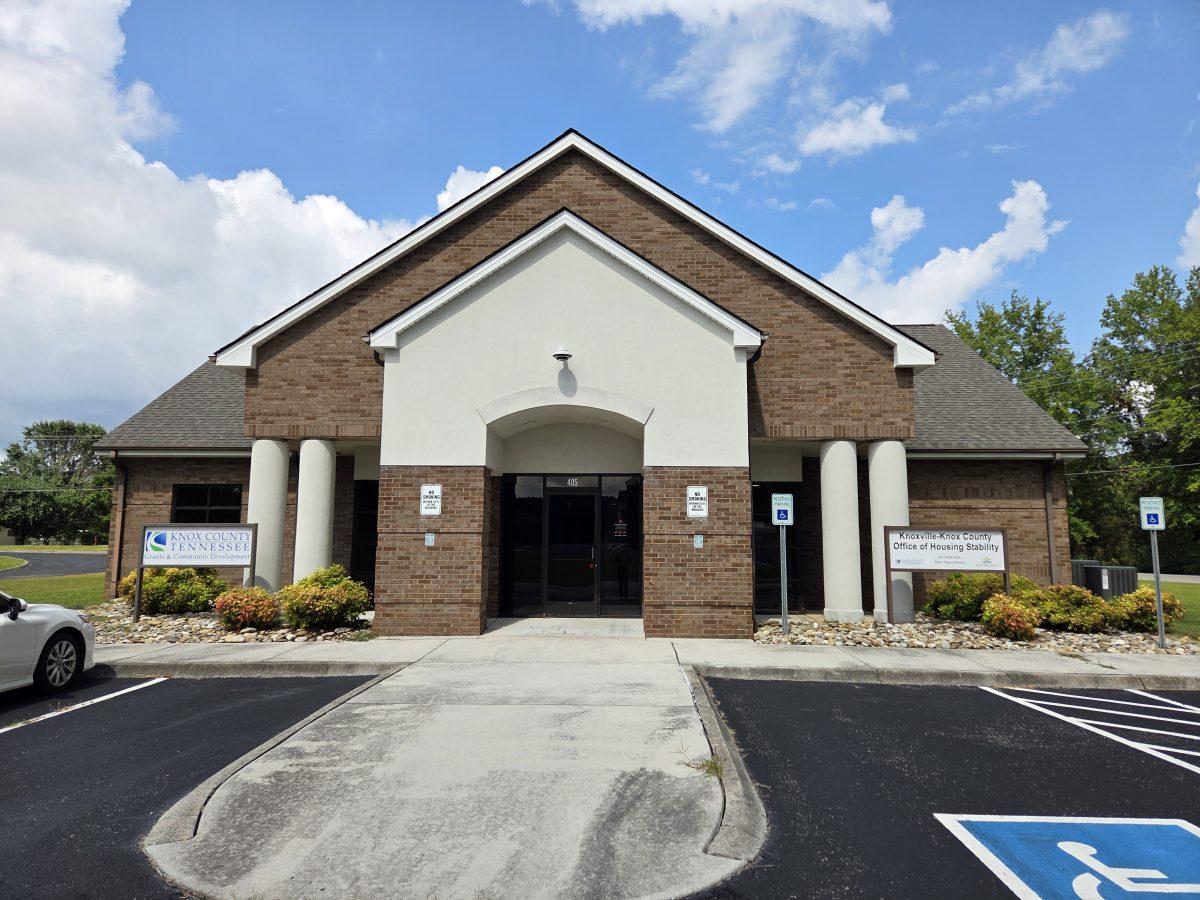
Similarly, Erin Read, the executive director of Knoxville-Knox County Office of Housing Stability, mentioned that she often hears the concept that “mental illness and substance misuse are the main reasons people become homeless,” when community data across the nation indicate the key factor is housing shortages.
Mental health disorders within people without housing do not go unnoticed, especially those who struggle with drug abuse.
“According to our local data, 19% of individuals accessing homeless services during the first quarter of 2025 report that they have a substance use disorder, and 38% report that they have a mental illness,” Read said.
Through Read’s experience, she observed that people who have a mental and drug disorder tend to be “the most visible among the unhoused population.”
“In tight housing markets with high rental costs (like Knoxville), we see that vulnerable households get pushed out of their housing before anyone else. … Individuals with mental illness or substance misuse tend to be the hardest to house, and their conditions worsen the longer they live on the street,” Read said.
According to Cronley, one type of drug misuse that is prevalent in this region is opioid addiction.
“Not all people enter homelessness through addictions. Some do, but just as many start their addiction once they lose housing because the street is a stressful place to live, and drugs are plentiful, and offered as a strategy for managing this stress and trauma,” Cronley said.
Artificial drugs like nitazenes and xylazine “have made substance misuse more complicated,” adding to the opioid crisis, and the reemergence of methamphetamine has led to an escalation in psychotic reactions, according to Read.
“Xylazine specifically can cause large necrotic wounds that are very difficult to treat, especially if the patient is living outdoors,” Read said.
These new synthetic drugs contribute to the complexity of drug abuse. Still, lethal overdoses in Knox County and Knoxville have declined since 2023, most likely due to naloxone distribution and community prevention efforts, Read said.
Despite the decline in fatal overdoses, Read and Cronley stated that several different areas need attention to help diminish the issue at large. Cronley contributes to this effort, having spent time as an AmeriCorps VISTA volunteer after college, which inspired her to pursue a career in social work.
“I appreciated the immediate impact that social work makes on the lives of ordinary people, particularly those who are often overlooked or marginalized. I think our country needs greater appreciation for services and systems that promote daily well-being,” Cronley said.
Through a scholarship with the KnoxHMIS, Cronley experienced homelessness firsthand during Hurricane Katrina and one of the U.S. market crashes.
“These crises revealed how extreme events — whether environmental or economic — can precipitate homelessness and how structural failures magnify vulnerability,” Cronley said.
Whilst OHS does not offer direct homeless services for people, Read helps with integrating homeless services and funds in Knoxville and Knox County to address displaced individuals and families.
“Right now, there is an effort to expand ‘difficult case conferencing,’ in which different service providers (medical, behavioral, homeless services, etc.) seek patient (or) client consent to share information with each other and better coordinate care,” Read said.
According to Cronley and Read, the primary gap that urgently needs to be addressed is housing; other gaps that pertain to mental health and housing include case management, street outreach and Narcan services.
“Street-based medicine, reaching people where they are, to provide regular care, can help manage chronic health conditions, and avoid overutilization of emergency rooms,” Cronley said.
For those who are dealing with housing instability and their mental health, Read encourages them to utilize resources like the McNabb Center, a facility that offers mental health and social services.
“Stigma around mental illness can hold individuals back from seeking care until their symptoms are very difficult to manage, and I would encourage them to look past the stigma and get the care that will improve their lives. If new housing developments are proposed in appropriate areas, we can be supportive,” Read said.
One way to destigmatize individuals without a home is to recognize that they, too, are human beings and to humanize those without permanent shelter, according to Cronley.
“They are a diverse group of people and not reduced to a single set of characteristics such as behavioral health or mental illness. Many are educated, have rich employment histories, and families. But almost all have lost social connections from when they were housed, and disproportionately they are victims of structural inequalities,” Cronley said.
To achieve actual progress and raise awareness beyond social work expertise and resources, it is vital to consider the values that we hold in society.
“Housing, food and health are basic human rights, not privileges, and everyone should have access to them,” Cronley said.