Hannah Clark, president of Tennessee Association of Supply Chain, wants prospective supply chain management students to know one thing first.
“You cannot fail. You will not, cannot fail,” Clark said.
Last month, U.S. News ranked the University of Tennessee, Knoxville’s undergraduate supply chain management program third-best in the country for 2026. It’s the sixth year in a row that UT’s program placed in U.S. News’ top five.
Students and faculty say that the program’s industry partnerships, professional development and supportive community among its nearly 1,500 undergraduates contribute to its sustained, prestigious success. Several also said the program’s goals are bigger than a high national ranking.
Clark, a senior supply chain management major with a concentration in business analytics, said supply chain management students have many opportunities to be successful.
For example, Clark pointed to UT’s SCM program requirement that every student — with rare exceptions — complete an internship of at least 150 hours in less than six months. Clark said this requirement sets students up immediately for success and can lead to job offers.
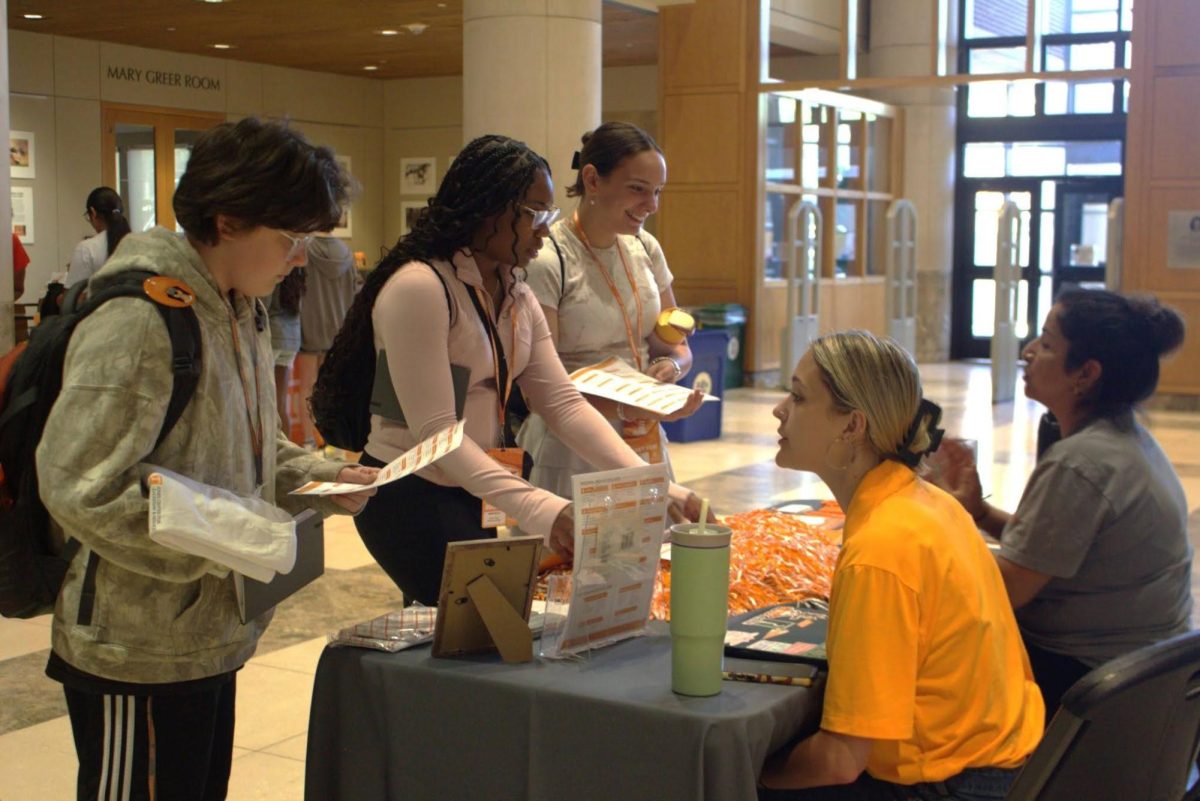
In addition, Clark pointed to the opportunities supply chain management students have to meet with industry professionals and professors, such as Coffee Chats hosted by TASC or Walk-in Wednesdays offered by the SCM program.
Sara Hsu, a clinical associate professor serving both the undergraduate and master’s supply chain management programs, highlighted the importance of the SCM program’s partnerships with industry employers.
“We have really strong relationships with our industry partners, and that’s really unique amongst supply chain management programs,” Hsu said.
“We actually talk to our counterparts in industry and ask them what they would like to see in courses, we make sure that the material we use is realistic and reflects real concepts that students will need to understand in daily life,” Hsu said.
Another professional aspect Hsu said makes the SCM program stand apart is its active recruiting of industry employers for internships and helping place students in jobs after graduation.
To emphasize the supportive network the SCM program provides, Hsu highlighted the experience of first-generation college students.
“I have had first-generation students who have struggled with the college experience because their family members haven’t been to college previously,” Hsu said. “But because we have such a strong support system, we have gotten those students to succeed in our classes and obtain well-paying jobs after, which is a huge milestone not only for the students but for their families.”
This year, there are 27 first-generation college students enrolled in the supply chain management program, according to the UT Fact Book.
Of supply chain management undergraduates, 50.3% are from out-of-state, including Samuel Averill, a sophomore supply chain management major with a concentration in data analytics.
Averill said he appreciates the opportunities he’s had to meet with companies such as Exxon Mobil and NASA and to travel for on-site visits through the supply chain management program.
“It’s just really cool as a freshman to have those experiences and to be able to talk to those companies, talk to those recruiters, something I was very scared of, but something I’m forever thankful for, because it’s set me up with an internship these last two years,” Averill said.
Averill serves as one of two professional development chairs of TASC, where he reaches out to companies to schedule informal events for students to meet with industry professionals. Averill said he appreciates being able to give students the same opportunities to network with professionals that he had.
“I just want to give back and give people the opportunity, especially those underclassmen,” Averill said. “Because a lot of the time, including myself, it was pretty scary talking to these big companies.”
Community is a key factor in the mission of the department of supply chain management, according to Andrea Prud’homme, clinical professor and Benz Supply Chain Leadership Fellow in the SCM department.
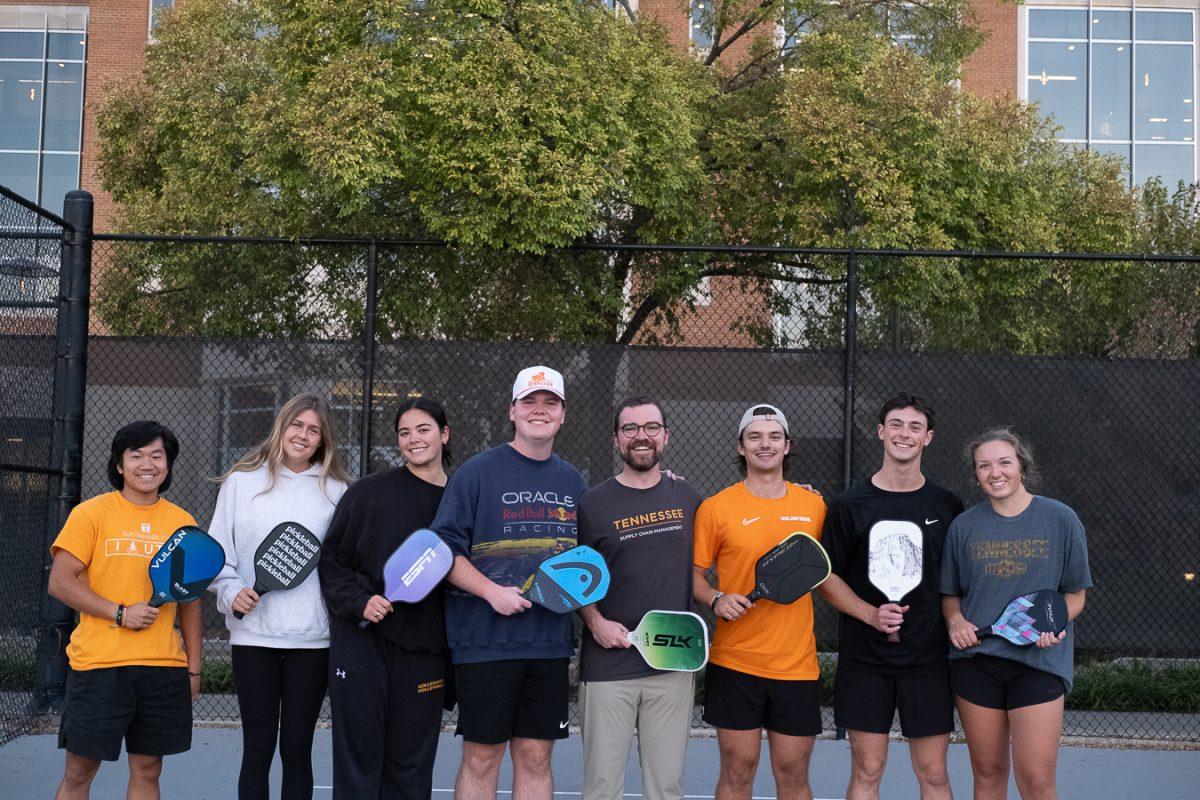
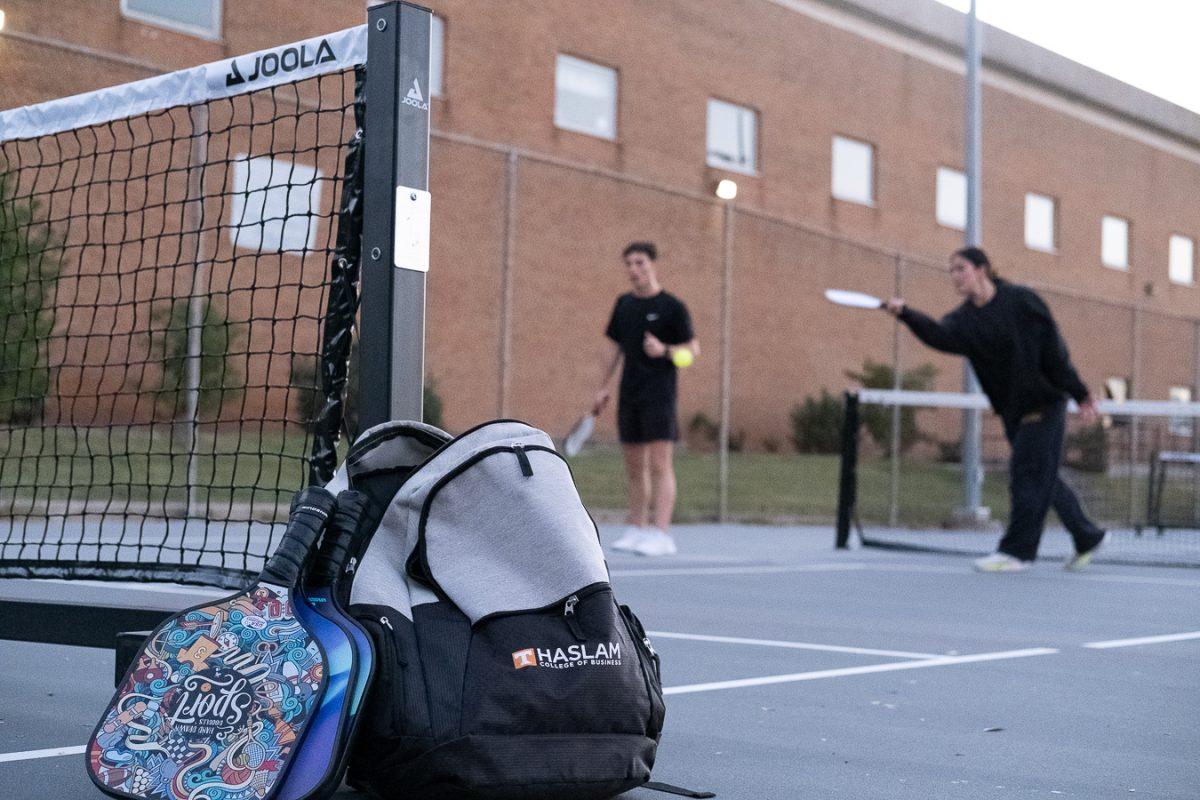
Members of the Supply Chain Management program playing pickleball in the morning of the Oct. 17.
Prud’homme said that while the department does great at teaching students technical skills, she believes community is UT’s competitive advantage.
“There’s a lot of technical things that students could learn at any school and should be taught well at any school because they’re in every single textbook, right?” Prud’homme said. “I think we do those things really well. But I think it’s the passion that our faculty have for improving supply chains overall, and for helping to educate individuals to go out and be better supply chain professionals, I think that is what makes our program different.”
Emmitt Breeding, a sophomore supply chain management major with a concentration in business analytics, characterized the supply chain management community as supportive. Despite not engaging in many events as a freshman, he said he’s appreciated the support he’s found in the SCM community this year.
“The joke is that I spawned in,” Breeding said. “They just took me under their wing and are doing everything in their power to help me grow not only as a student but as a person, and that’s been the case with everyone that I’ve interacted with in the program.”
Breeding said he thinks UT’s supply chain management program is the best in the country in teaching soft skills and professional development.
“I think those are truly the skills that push you to success in a business setting,” Breeding said.
While high rankings are great, Scott DeGroot, managing director of the Global Supply Chain Institute at UT, said the supply chain management program’s fundamental mission is to shape the future of the supply chain through developing future supply chain leaders.
“We know that the students who are coming here are anxious,” DeGroot said, “so that’s the real reward, when you see a student go on to become director or vice president or C-Suite officer and you can think, ‘Hey, I was a little part of shaping that future of this person who is now wildly successful.’”
In total, there are 1,452 undergraduates enrolled in supply chain management this fall, a slight decrease from the 1,532 undergraduates enrolled in fall 2024 but an increase from the 1,218 SCM undergraduates enrolled in fall 2020.
Every Friday morning before dawn, a group of supply chain management students and a professor play pickleball at the courts.
As the sun rises, they’re already finishing up: back to school, back to the world, and back to shaping the future.
This Friday, the dozen or so gathered included Hartley Barnett, a junior supply chain management major with an international business concentration, who sprained her ankle three weeks ago while taking a risky step to keep a ball in play.
She’s here just to watch. She says the risky maneuver and the resulting pain were worth the chance to compete and enjoy being in the community.
“It’s kind of a pain in the moment, but I’m glad that I came and I’m glad I’m okay,” Barnett said.
“I wouldn’t go back and undo it.”