In the latest round of budget cuts coming down from the federal government, on May 1 the White House announced that the federal government is seeking to end funding to the National Public Radio and the Public Broadcasting Service.
The executive order directs the Center for Public Broadcasting, which provides funding to both agencies, to cease direct funding, give no more new funding and cancel existing financing as much as possible.
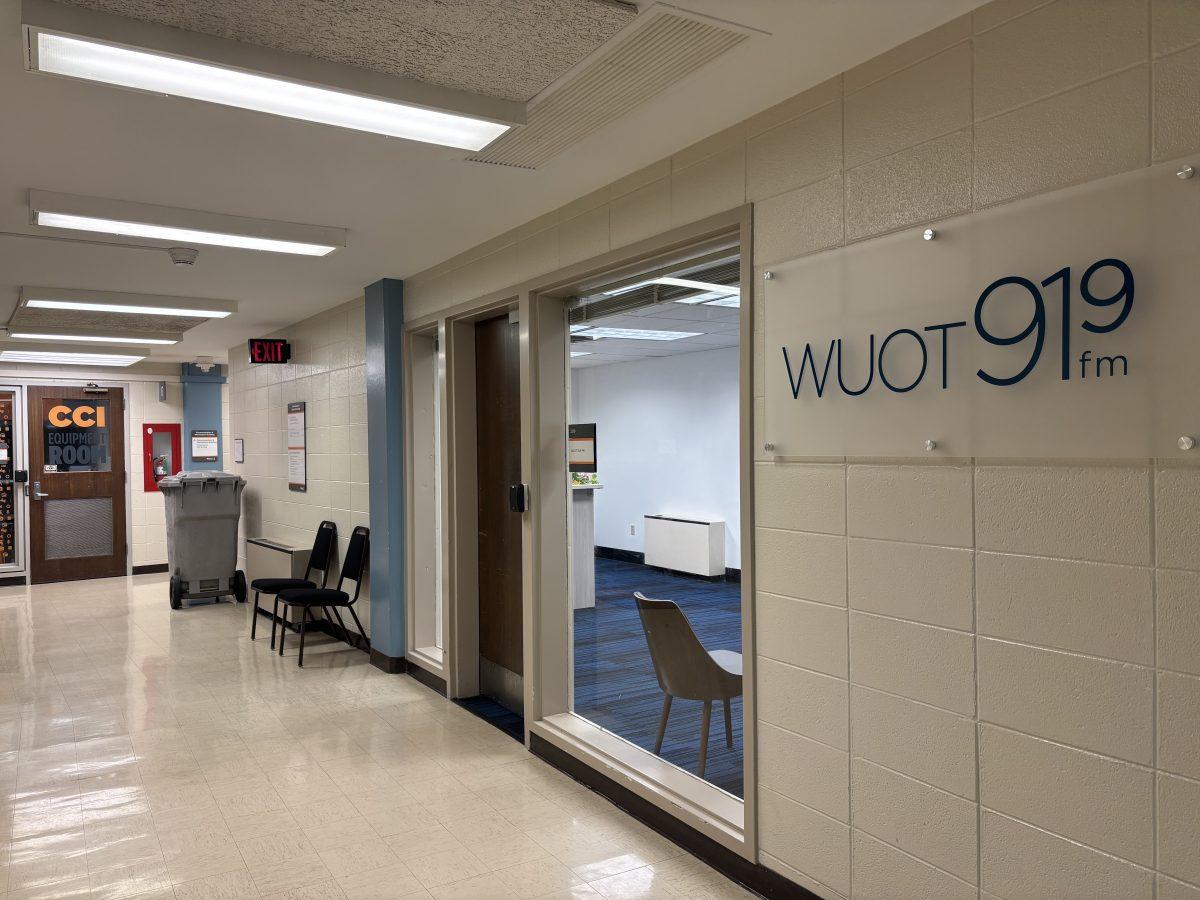
The impact of this decision will be felt across the entire nation, including, of course, Knoxville. The University of Tennessee operates the NPR-chartered WUOT 91.9 FM Knoxville radio station.
WUOT receives funding from various sources, such as community support, donations, and a CPB grant. WUOT received a radio community service grant of $177,000, which amounts to under 10% of its annual budget of $2 million.
Kerry Gardner, the director of media and internal relations at UT’s Office of Communications and Marketing, responded to the Beacon’s request for comment on how federal budget cuts will affect WUOT’s services.
“We are working to determine the full impact of the cuts. WUOT is committed to serving East Tennessee and that mission will continue.”
It is unclear if WUOT or the university has plans to make up for lost funding and what impacts that will have on programming, staff, and services at the station.
Outside of WUOT, the announcement of the end of federal funding has put East Tennessee PBS in jeopardy.
East TN PBS provides news, entertainment and educational programming, emergency alerts and more to the eastern portion of Tennessee and into some counties in Kentucky, Virginia and North Carolina.
The White House’s announcement threatens to end 27% of East TN PBS’s funding, provided by a grant from the CPB.
“If this funding is eliminated, we will have to cut certain services that we rely on, as well as possible staff reductions,” Vickie Lawson, the CEO of East TN PBS, told the Beacon. “But that is still up in the air because they have not sent the rescission package to Congress, so we’re not sure what we will do.”
The way the executive order operates is that it attempts to freeze all current and future funding from the CPB to NPR and PBS. Funding has been previously approved and provided for the current fiscal year, which will end June 30, 2025. The White House is asking Congress to reconsider and deny allocating funds to the CPB.
If the budget cuts occur, East TN PBS will begin to feel the financial impact on July 1 of this year.
Much of the language of the executive order indicates that the cuts are the result of bias or unreliable journalism coming from PBS and NPR.
“At the very least, Americans have the right to expect that if their tax dollars fund public broadcasting at all, they fund only fair, accurate, unbiased, and nonpartisan news coverage,” as stated in the executive order. “… The CPB Board shall cease direct funding to NPR and PBS, consistent with my Administration’s policy to ensure that Federal funding does not support biased and partisan news coverage.”
Lawson responded to that claim, emphasizing the fact that PBS does a lot more than just provide news coverage. More than 90% of East TN PBS’s programming is targeted for kids, art and culture media, documentaries and local shows.
Lawson continued, explaining the legal framework PBS operates within.
“We hope that people understand we are operating under the restrictions of the Federal Communications Act, which bars us from being able to interrupt programming and to run commercials like commercial television,” Lawson said. “We cannot produce ad spots that are considered ‘calls to action,’ we don’t interrupt children’s programming with commercials that ask parents to buy a kind of toy.”
These legal restrictions make it more difficult for East TN PBS — or any PBS station — to source alternative forms of income.
It continues to be misunderstood what exactly a PBS station like East TN PBS does, according to Lawson.
East TN PBS’s services are particularly important to the region it serves because much of it covers rural Appalachia.
East TN PBS’s children’s and educational programming is critical to the region.
According to Lawson, up to 65% of children in rural areas do not have access to Pre-K. As a result, families rely heavily on PBS’s programming for young children because it is free, trustworthy, and educational.
East TN PBS also operates an emergency early warning system in the region. Lawson explained the critical services that rely on East TN PBS’s broadcast infrastructure.
“We serve as an early warning system,” Lawson said. “At our transmitter in Sneedville, we have the FBI, the TBI, as well as highway patrol, and Hawkins County and Grainger County emergency antennas on our transmitter, so if we go away, that will have to be relocated. The services that will be hurt most are the educational services as well as the emergency broadcast safety services that we provide.”
As of now, the effects of budget cuts aren’t felt, but are certainly looming for local public broadcasting services.
East TN PBS continues to explore options and has received consistent communication from PBS and CPB nationally, but they still lack clear direction on the next steps.
What doesn’t lack clarity, however, is that a loss of federal dollars will mean tangible and significant reductions in services to our local communities, particularly those impoverished or rural.
Lawson ended by encouraging viewers to sign up for the Protect My Public Media campaign, an organization working to defend public media funding by lobbying to congress.
“We’re proud of our services and we want those to be forefront,” Lawson said. “We’re not in this to say anything against our government or congressional leaders, but we want our viewers to express the importance of the programs they have relied on so our leaders can make appropriate decisions on funding.