On Jan. 6, 2021, shortly after President Joe Biden’s election into office, a band of between 2,000 to 2,500 supporters of then President Donald J. Trump rushed and attacked the United States Capitol Building, injuring 140 police officers and causing $30 million worth of damage in an effort to stall certification of the election. In the year since the attack, 772 Jan. 6 rioters have faced charges for their actions.
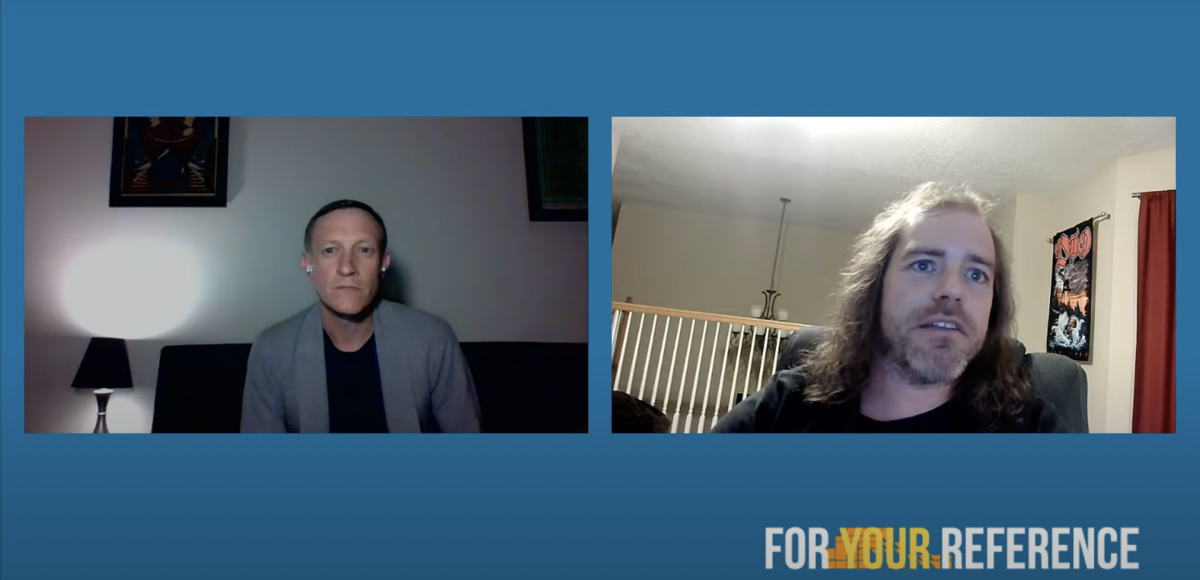
On Thursday evening, UT Libraries hosted the seventh episode of the livestream series, “For Your Reference,” which focuses on media and information literacy.
On this week’s livestream, titled “The Rhetoric of January 6,” guests Lucas Logan, an associate professor of communication studies at The University of Houston-Downtown, and Jeremy Rogerson, a lecturer in the department of communication at Mississippi State University, analyzed the events of Jan. 6, and how they might have been influenced by inflammatory rhetoric.
Logan suggested that the power to stop the Capitol riot was not held in Trump’s hands, but rather in the social media that had been whipping up the crowd for years. Trump, who was active in planning and executing the “Stop the Steal” rally in D.C. on Jan. 6, was widely condemned for what critics believed was a lack of action to prevent the subsequent storming of the Capitol.
A Select Committee in the House of Representatives is currently investigating the actions of Trump and other government officials surrounding Jan. 6.
“I think that a lot of the problem with Jan. 6 is that Trump was never really able to have any action there. He was completely powerless in that moment. I think that was kind of the problem with me with the narrative of it being an insurrection,” Logan said. “It was just awfully convenient how they threw him off of social media as soon as his time was up, as soon as they didn’t really care any more.”
Logan said that Trump’s permanent suspension from Twitter following Jan. 6 is evidence that greater power lies in the hands of tech giants.
“That really showed me who has the actual power there in that circumstance,” Logan said. “It is social media, our tech overlords that decided ‘Okay, that’s enough.’”
In an age when social media algorithms decide which kind of world users believe they live in, Logan described the role that Facebook and Twitter played on Jan. 6.
“I do believe that people are getting lost in their own realities now because you go on Facebook, Twitter, whatever. You get in a hole, this reality is just so subjective when you are on social media,” Logan said.
Some politicians know exactly what to appeal to in order to gain supporters, and they will go to far lengths to achieve this support. With social media organized groups such as QAnon, and a myriad of incorrect news posts, this phenomenon can easily affect the average social media user without their knowledge.
Rogerson explained how social media turned Trump into a serious candidate during the 2016 election.
“At first, Trump’s campaign was even considered a joke, but the media saw the ratings bonanza that they got from covering him, which legitimized him as a candidate before the primaries ever began,” Rogerson said.
In addition to social media influence, Rogerson explained how the riots of Jan. 6 were directly impacted by the rhetoric of President Donald Trump’s fanbase.
“Rhetoric is constitutive … Over the campaign and his four years in office, Trump characterized his supporters as people who were losing something,” Rogerson said. “He appealed to the threat of loss of their way of life or their America for example, but also the threat of others, the ones who are taking this away.”
Rogerson suggested that when Trump lost the election to Biden, the loss was monumental for his supporters, who had learned to place all their fears for the country on the former president’s shoulders.
Trump, who was by no means favored to win the 2016 election, served one term and developed one of the largest presidential fanbases to date. These supporters saw Trump as somewhat of a savior of their rights, and Rogerson suggested this could have been their reasoning for rushing the Capitol and the overall political division of the time.
“The supporters came to embody that identity over time, and if we view Jan. 6 as a culmination of all of Trump’s previous rhetoric, it makes sense that his supporters saw these previous threats as somehow very real now,” Rogerson said. “They’re losing their president, which in turn for them means they’re going to lose everything else that they’ve come to believe.”
Many active members of the political community agree with this claim, as Trump’s fanbase often followed his narrative of purpose for the United States. When he was not re-elected in Nov. 2020, many of his supporters were frightened and in disbelief at his loss.
Logan stated his opinion on the thought processes that might have gone into the insurrection, specifically taking aim at the entitled mindset of the rioters.
“I think a lot of people were there because of race and class privilege thinking that they could just walk into the Capitol and do whatever they wanted, and they were just like at a festival,” Logan said. “If you look at the backgrounds of these people, they are people that feel that they are experiencing loss and that they’re losing America.”
“They were people that were shocked that they were getting put into handcuffs because that doesn’t happen to people like them.”