An adventure awaits you.
This Saturday, the National Geographic Society will sponsor two events to promote the Young Explorers Grant program at the University of Tennessee. Awarded to budding researchers, journalists and conservationists between the ages of 18 and 25, the Young Explorers Grant helps cover field project and international travel costs.
Registered students will participate in a grant writing workshop with National Geographic Society staff from 10:30 a.m. to 1:30 p.m. in the University Center Shiloh Room. Two National Geographic explorers, Kenny Broad and Mark Synnott, will share their experiences and prepare students to write the two page proposal that can put their project ideas in motion.
Broad, whose documentary film expeditions have taken him into some of the world’s deepest caves, and Synnott, who has climbed to some of the world’s highest peaks, will describe their experiences as explorers at 7 p.m. in the UC Auditorium.
Hearing about their exploration will move students to have adventures of their own, said Carol Harden, a professor in the Department of Geography.
“Even for students who don’t have a plan in mind, I think they’ll be really inspired to look at the world in terms of, ‘What could I do? What could I learn?'” Harden said.
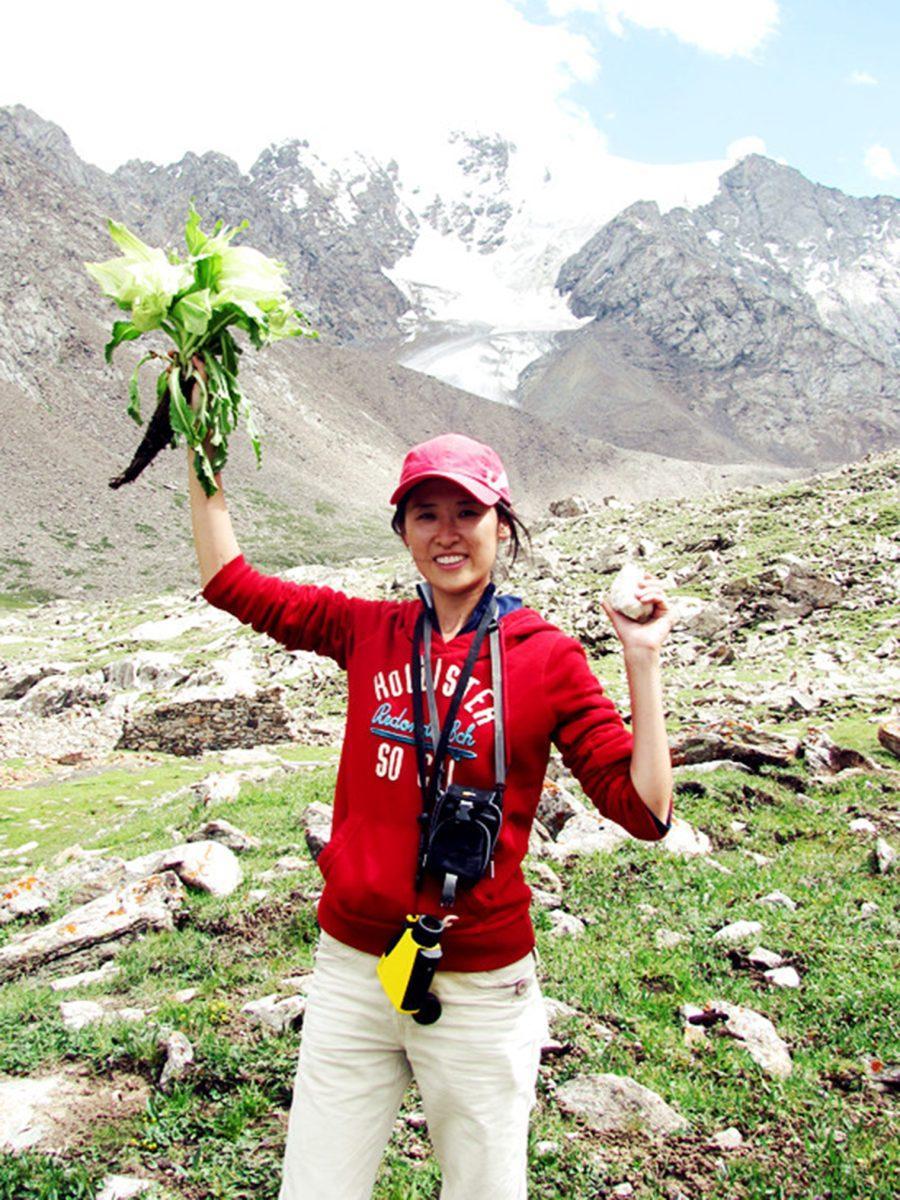
So far, only two UT students have received money from the Young Explorers Grant. Yanan “Nancy” Li, a graduate student studying geography, applied for funding to research glaciers in her hometown in northwestern China in 2012.
Todd Pierson, graduate student in ecology and environmental biology, received two Young Explorers Grants: one to search for a population of the Chinese giant salamander on the Qinghai-Tibetan Plateau in 2012, and one to develop an investigative procedure using environmental DNA for characterizing salamander communities in the Appalachians.
For both Pierson and Li, the grant money significantly impacted their ability to carry out research in remote locations.
“Not only have these grants funded projects that I otherwise wouldn’t have been able to conduct, but they’ve also enabled me to connect with colleagues across the world,” Pierson said. “The (Young Explorer Grants) have been critical for making my research successful.”
Harden, who was a Young Explorer grantee in 1993, now serves on National Geographic’s Committee for Research and Exploration. She reads about 80 to 100 grant proposals, when the committee meets five times per year. Although Harden said the grant is not “huge in terms of money,” the National Geographic name itself can open doors for researchers.
“In terms of people looking at your research and publicity and connecting science with the public, these are huge,” Harden said.
When applying for the Young Explorers Grant, students who do not have a science background should not be discouraged, Harden said. Opportunities are available for journalists, photographers, cultural anthropologists and conservationists.
“Most people think right away about the biologist, but (National Geographic) actually wants more applications in the social sciences,” Harden said. “They want students to document the current conditions and events and convey that to the rest of the world.”
Li, who will be presenting her research at the workshop on Saturday, hopes to encourage students to take advantage of the opportunities that the Young Explorers Grant presents.
“I think young people shouldn’t just be staying home, reading papers, they should go out and explore the world,” Li said. “(Being an explorer) means keeping an open mind always.
“You have to open your eyes to the world, not just your own city, your own country.?”
The event in the UC Auditorium on Saturday night is free and open to the public. To register for the workshop on Saturday morning, visit here.