Danielle Sumler walked into The Golden Roast Tuesday afternoon with the shell-shocked expression typical of students in the aftermath of midterms. But Sumler’s bloodshot eyes were not caused by hours of exposure to a computer screen.
Sumler, a senior in art with an unofficial concentration in sculpture and ceramics, had been awake since 8 p.m. the night before putting finishing touches on her piece debuting at Gallery 1010 this Friday. Although this is not Sumler’s first show, this is her first experience creating a piece specifically for such an event.
She spoke enthusiastically about how each of her fellow artists brought their own style and interpretation to the medium of ceramics around which the show is centered. The exhibition is titled “Human Connections,” a topic which Sumler identifies with closely as an artist. The personal element in Sumler’s piece is simple. She asked strangers to write their name and a word to describe them on a sheet of paper and then press their thumbprint into clay.
“Each piece has to do with human relationships and interactions,” Sumler explained. “For my piece, I actually had 326 different individuals participate, which is very exciting.”
As an artist, Sumler’s work revolves around the interconnectivity of all aspects of life. She enjoys making a set of seemingly separate objects come together as a whole.
“Even when I’ve done paintings in the past, I liked to make one painting be on several different canvases that all form one image,” Sumler said.
Sally Brogden, a former professor of Sumler’s in ceramics, has seen this theme in Sumler’s work firsthand.
“Danielle’s ideas over the entire last year have revolved around personal transformation,” Brogden said.
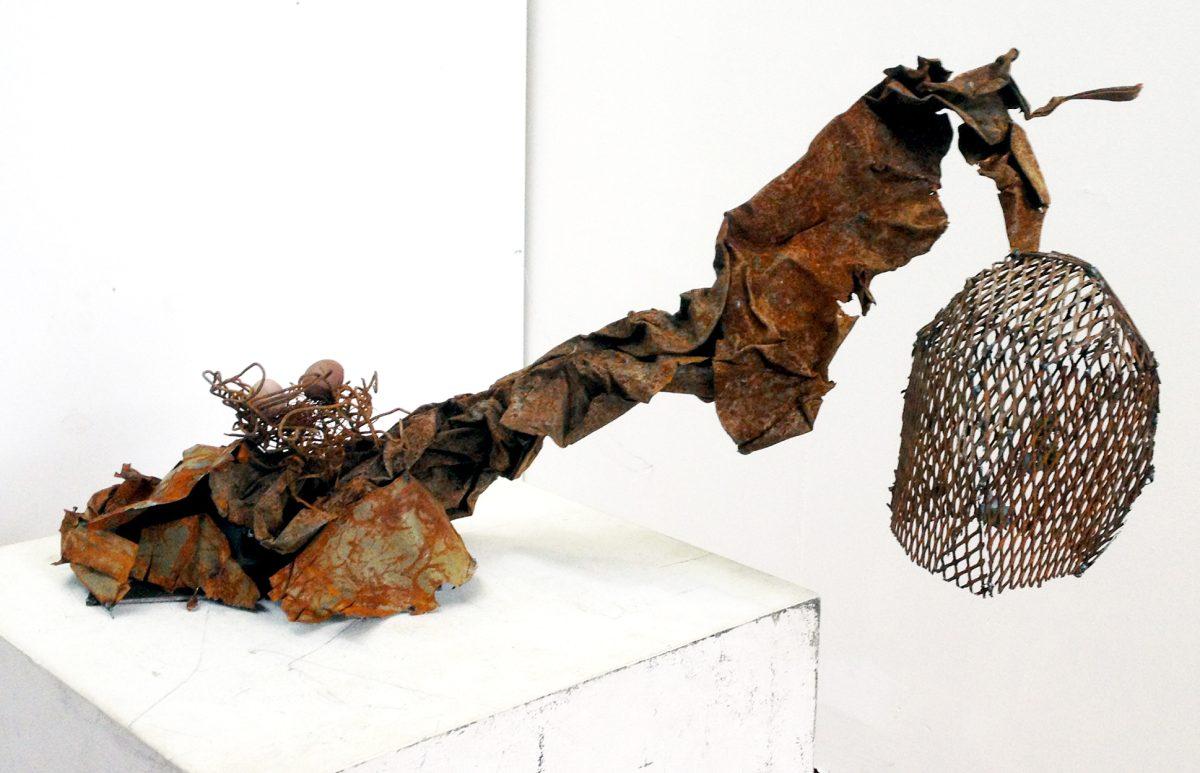
Sumler draws inspiration from this theme of transformation whether it is present in paint, every day objects or people. One of her most compelling works involves plastic grocery bags. Sumler brings out the potential in these pieces of “garbage” by pairing them with more traditional art mediums and an eye for hidden beauty.
“I feel like people see their differences a lot more than their similarities and that’s where the desire to communicate that visually comes from,” Sumler said about the people themselves.
A Memphis native, Sumler took her time before settling at UT. She studied first at Union University and at the University of Memphis as a digital media studies major, but she didn’t like the lack of personal connection when creating art virtually.
“I realized pretty quickly that it just wasn’t right for me,” Sumler said, “and it was almost like an identity crisis when I realized ‘What am I going to do?'”
Despite her initial resistance in pursuing art, Sumler emphasized that she found a home in the UT art department where collaboration and support were offered every step of the way. While it’s still unclear whether she will remain in Knoxville, Sumler feels confident she has found her niche.
In addition to direct artistic inspiration, Sumler draws creative energy from hobbies such as swing dancing. Whenever she can, she goes to the Laurel Theater Wednesday nights. She said the tight-knit community atmosphere present at these lessons ties into Sumler’s theme of connectivity perfectly.
“Everytime I go dance, I don’t necessarily want to make art about dancing, but I think that sense of community you get after you go dancing with people gets me excited about working again,” Sumler happily said.
Despite the lack of sleep, the hours of labor and the sacrifice of time required of an art major, the satisfaction of drawing the eye of a passerby makes this cost worth it for Sumler.
“I just really like trying to get different people involved in art that maybe aren’t normally in that world,” Sumler said.
As Brogden discussed Sumler’s piece for the galley, she said she saw the transformation process in the work.
“I think the idea of her piece is the transformation she’s doing to the clay with the help of others and the transformation they undergo as they are introduced to art,” Brogden said.
For her work on Friday’s piece, Sumler described how by approaching groups of people and asking them to describe themselves in one word she often ended up sitting down and getting to know these strangers.
“Most of the people aren’t artists or don’t consider themselves artists.” Sumler said. “But they went into it really enthusiastic asking, ‘What are you going to do with it?'”
For Sumler, the connectivity shown in her work is also her greatest reward as an artist.
“I think that’s the most exciting thing to me is getting people interested in art that don’t normally consider it or think about it.”