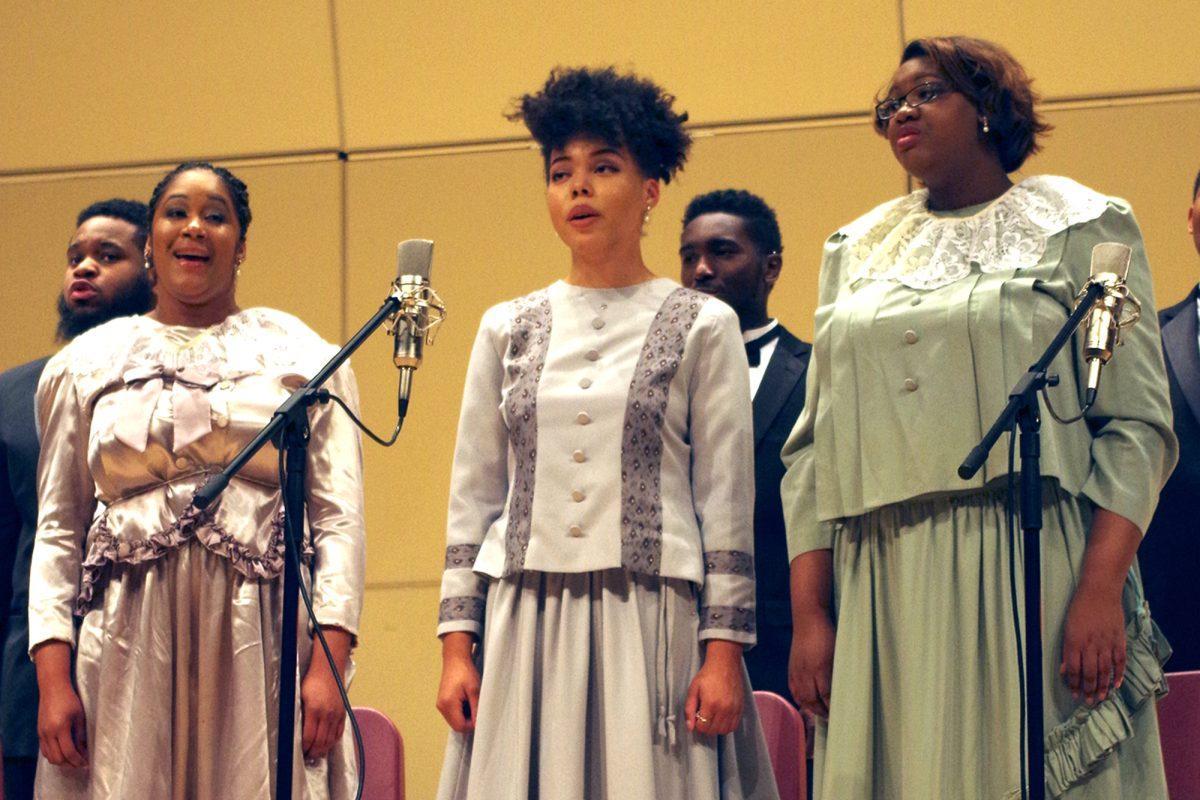
Cox Auditorium’s soft lights complemented their Acapella sound, and the 11 members of the Fisk Jubilee Singers brought a nineteenth century portrait to life last Thursday night.
Sponsored by UT’s Cultural Attractions Committee, the vocalists from Nashville’s 148 year old university demonstrated a full range of numbers in the first act, shifting from the upbeat “Done Made My Vow” to the haunting harmonies of “Listen to the Lambs” and “Steal Away to Jesus.”
As musical director Paul Kwami explained, the Fisk Jubilee Singers’ historic prestige and success rests in a song’s careful arrangement, distinguishing the Negro spiritual from a traditional gospel sound.
“We talk about gospel music as one of the forms of music that grew out of the Negro spiritual,” Kwami said. “Both are church music, but when we talk about gospel music, it involves the use of instruments, a lot of organization, hand clapping and in some cases, very little control of the voice when one is singing. But the Negro spiritual, on the other hand, is music that was arranged when the Fisk Jubilee Singers (first) decided to travel around the world to raise money.”
The line of subtly sparkling dresses and black bow ties matched the vocal sophistication as Kwami’s layers of alto, tenor and soprano tones rose and fell like a steady river of sound.
“I had an idea that it was kind of spiritual, religious songs because we had listened to the songs when we were marketing, so I knew what to expect, but I didn’t expect to realize how good they sounded live,” said Caroline Norris, sophomore in management and member of the Cultural Attractions Committee. “I had chills, especially from the soloists. They did an amazing job.”
Keeping with a tradition begun by founder George White in 1871, the Fisk Jubilee Singers still raise money for Fisk University as a nod to their artistic predecessors who required funds to continue giving concerts in the United States and around the world.
Yet, the Jubilee Singers displayed more than voice control, acknowledging the rich heritage of Negro spiritual and legacy of White’s original performers.
As the show’s second act opened, each member represented one of the Jubilee Singers’ original members, posed to imitate a floor to ceiling portrait commissioned by Queen Victoria.
The accounts of each performer’s life were as diverse as the voices themselves: stories laced with suffering and hard labor under cruel masters, musical training by parents or willing tutors and the common hope of completing an education at Fisk University.
“When they came out in the costumes, I didn’t know what they were going to do. I just thought they were going to do their usual concert, so that was a real treat,” Norris said. “Showing that rich history, how they had parents who were slaves and were slaves themselves and then rose above that and went to Fisk University and helped each other and became these great singers, I think is good to highlight that and realize how far they’ve come and all their achievements.”
Julia Navin, a freshman in nutrition, also recognized the group’s blend of musical excellence and special homage to the original Jubilee Singers.
“It’s cool to listen to these old slave songs and know they’ve kept that culture thriving and to get that passed-on knowledge,” Navin said. “It was really fascinating to see them pay tribute to that because they obviously still care about their heritage.”
By preserving the Negro spiritual, the Fisk Jubilee Singers not only impressed the audience with their vocal finesse but also injected fresh meaning into what music can do when unhooked from any instrumental embellishment.
“We sing songs that some musicians will take and arrange to bring out the beauty of music, so that when you sit and listen, music sung by pure voices without drums, guitars or wind instruments,” Kwami explained. “It changes into an art form — a higher art form of choral music.”