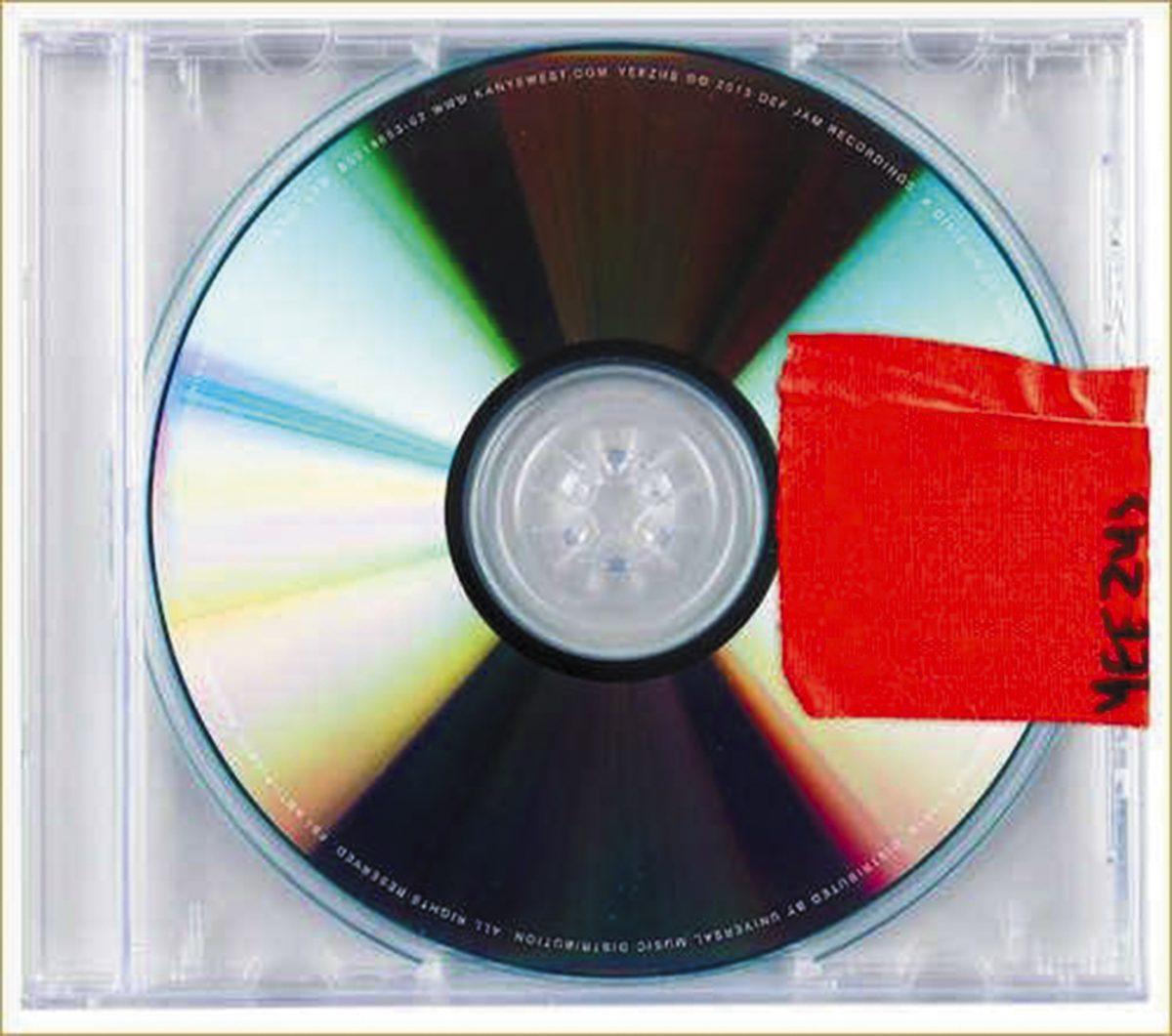
In possibly his darkest and most unapologetic album yet, rapper Kanye West pieces together a project that takes listeners down a mental spiral of audacious lyrics, true pain and a creative mash-up of modern musical genres in his sixth studio album titled “Yeezus.”
West has mastered soul in his album, released Tuesday, and that’s something that listeners haven’t heard since his fourth record, “808s & Heartbreak.”
Unlike his last album, “My Beautiful Dark Twisted Fantasy,” which was more of a creative symphony of artist compilations than lyrically driven songs, “Yeezus” has been replaced with heavy, hip-hop beats and his signature sing/scream courtesy of autontune. And these two thing are something that Kanye does well. The Chicago rapper has found a good niche in between his production of good beats and abrasiveness in his lyrics.
Since “808s & Heartbreak,” the mellowness the world once knew of the rapper has gone. His heart hardened after a messy break-up from ex-fiancé Alexis Phifer, his mother passed suddenly undergoing plastic surgery and actions were seen as a nuisance to the public eye. Some blamed his misfortunes on the believed personality change and others had no mercy for the rapper.
The key to “Yeezus” is West’s ability to blend cleverness with mental chaos. In “New Slaves,” West makes an argument of metaphorically being a slave of labels—Prada, Gucci, etc. He raps, “What you want a Bentley? A gold diamond chain? All you blacks just want the same thing.” The irony here is that West may very well be talking about himself. For the past few years, the 36-year-old has been turned into a fashion mogul/icon. He launched his own clothing line in 2012 called DW Kanye West, and can frequently be seen at fashion events, most recently being the Metropolitan Museum of Art’s Costume Institute Gala where he doted his now baby’s mother reality personality. The track is powerful with a hard, choppy hip-hop beat. It’s possibly the most audacious track on the album, and that’s saying a lot.
Then there’s the track “I Am a God.” The song is a mix of distorted bass beats, techno influences and West’s distorted voice rapping for people’s respect and compliance as he tells those to “hurry up with those damn croissants.” The controversial song is not a direct stab at Christianity (though indirectly, it’s a hard jab) but instead West’s proclamation of finally “making it.” In the track, West’s cocky overtures are no longer apologetic, which is why the track falls short. What saved West on the other tracks were the grit in his lyricism, but screaming that he is a part of the Holy Trinity makes him just another rapper bragging about how his presumed greatness makes him immortal. What the track gives in great production becomes obsolete as the listener is bombarded with hollow lyrics of an ego gone too far.
West redeems himself on “Blood on the Leaves,” a hip-hop heavy ballad that samples jazz legend Nina Simone’s song “Strange Fruit.” The track displays West’s best talents—taking a retro song, mixing it with a great beat and adding a gritty narrative. West raps, “We could’ve been somebody / ‘stead you had to tell somebody / let’s take it back to the first party when you tried your first molly.” His obscure tale of a love lost pairs well with his auto-tuned wails of heartbreak, making for an emotional piece.
For each lyrically, fine tuned line in “Yeezus,” there is West’s chaotic and abrasive proclamation of “God status” to bring it down. While the album is more synchronized production-wise than “My Beautiful Dark Twisted Fantasy,” West still struggles with controlling his emotions. But perhaps that’s not his intention, and long gone are the days of a themed album that’s not so rough around the edges. Kanye West doesn’t care about any critic’s opinion of “Yeezus.” He’s just trying to take listeners to church.