No matter the class, this year’s NCAA Outdoor Championships in Eugene, Ore., will be different.
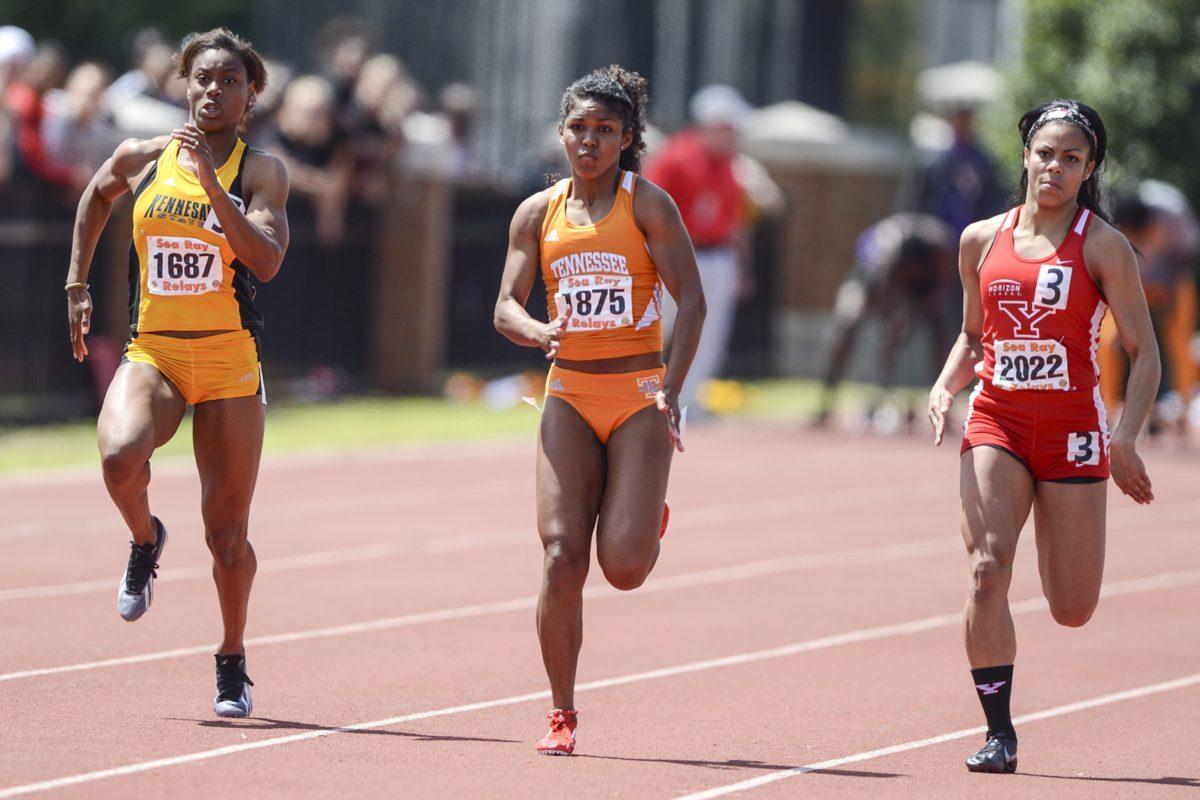
“I’m a senior and I graduated May 8 so this is it,” UT sprinter/long jumper Kia Jackson said. “This is my last time competing in my Orange and White so I’m excited.”
Despite reaching nationals for the third straight year, this year will be a personal first for the UT senior.
“I’ve actually never been to Eugene, (Ore.)” the Lithonia, Ga., native said. “They had nationals there my freshman year but I didn’t make it. In my sophomore and junior year, nationals would be held in Iowa, so I’ve been to both of those, but I’ve never been to Eugene. It’s by Nike Town USA so I’m excited for the facility; the facility is crazy, the fans are great. It’s like a sold out stadium so I’m definitely excited for the environment.”
As for on-track environment, Jackson will only have to worry about one event. The UT athlete’s 6.12-meter mark in the long jump qualified her for nationals, a feat that wouldn’t have been possible had it not been for UT men’s and women’s jumps coach Jerome Romain.
“I wasn’t even going to jump in college, so it’s like to not even jump in college to Coach (Jerome) Romain saying, ‘No you’re going to jump’ to making it to nationals in the long jump— that’s a surprise,” Jackson said.
Jackson’s practices might be easier, preparing for one event, but the UT sprinter/long jumper will face a tougher challenge after she finishes her jumps at nationals.
“As far as practice, it’s easier, but as far as mentally, it’s actually a little bit harder because at least throughout the season I’m pretty strong in events,” Jackson said.
“I can get to a track meet and if one event doesn’t go well, I still have the other event so that’s pretty much how’s it been this season. If the 100-meter doesn’t go well, long jump will. If long jump doesn’t go well, the 100-meter does. So mentally it’s a little bit harder to deal with because it’s my only event but as far as practice and as much as it’s my only event then at two or three.”
Jackson might be 21st in the pack and need at least .40m to contend for the long jump title, but Romain prepared his UT senior heading into her final runway at Eugene with a message: “Now’s your time to go big.”
“He knows I can jump in the 6.30-6.40 range and just (wants me to) have fun with it and not put too much pressure on myself,” Jackson said. “It’s my last time competing, so don’t think about it being my last time, let it be all crazy in my mind but just have a good time and if I do, then the results will be in my favor.”
Nonetheless, the UT senior said she couldn’t “pin point” a specific moment that stood out in her UT career, but she “couldn’t be happier right now.”
“There’ve been so many great memories I’ve had on and off the track,” Jackson said. “Definitely scoring for my team has always been the most memorable part for me because that’s so important for me to be a team player.
“Being a captain this year, I really wanted to make an example for the team and the younger girls and guys so definitely scoring for my team and making it to regionals in both events and making it to nationals, I couldn’t be happier right now.”
Reggie Juin, Jamol James and the UT men’s 4x100m relay team have come across a different obstacle this year.
“It’s different this year because it’s a little more pressure because we were expected to make it as opposed to last year we were a shock,” Juin said. “This year a lot of people already know what we’re capable of so this year there was a little more pressure, but you know what, we settled on in, believed in each other and we got it done and we advanced.”
The UT men’s 4×100 relay’s 39.58 at the NCAA East Qualifier clinched the sixth seed in the event, where four other SEC teams (Alabama, LSU, Florida and Arkansas) have given the conference five representatives in the Top 6. However, Wednesday’s race doesn’t have a guaranteed winner.
“I think it’s anyone’s game,” James said. “Don’t really care how we get there, once we get there, then we’ll take care of the rest. So right now the focus is actually now make it to the finals and win the finals; that’s just the focus we’ve got.”
Focus and momentum have helped James and Juin and the UT men’s 4×100 relay improve during the outdoor season.
Three of the team’s last five runs have dipped below 40 seconds. Each of the relay team’s improvement rate in its last three races—Penn Relays, SECs and NCAA Easts—is 0.64 seconds.
“It is motivating,” Juin said. “The times have started to improve because the workouts have been a little different. We’ve been working a little more on speed. At the beginning of the year it was mostly on speed and endurance, but our coach has been cracking down speed on us every day so definitely the turnover is different, the times have improved and also just due to experience. Due to having a couple meets under our belts, we’ve built that chemistry. Earlier in the year we looked kind of shaky because we didn’t practice the relay as much but as the year winds down we practice it more and more and we’ve just built that chemistry and I think we’ll be hard to beat.”