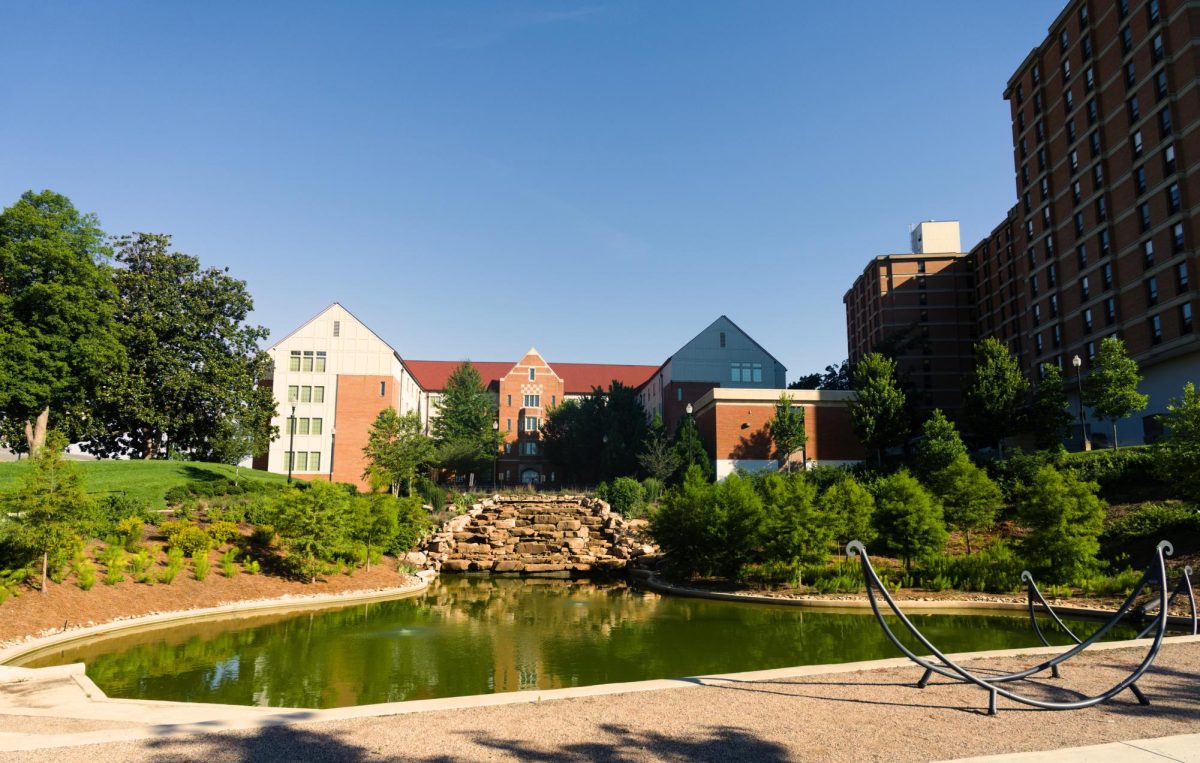
While construction continues on campus in preparation for the new Student Union, more construction is underway within the UC.
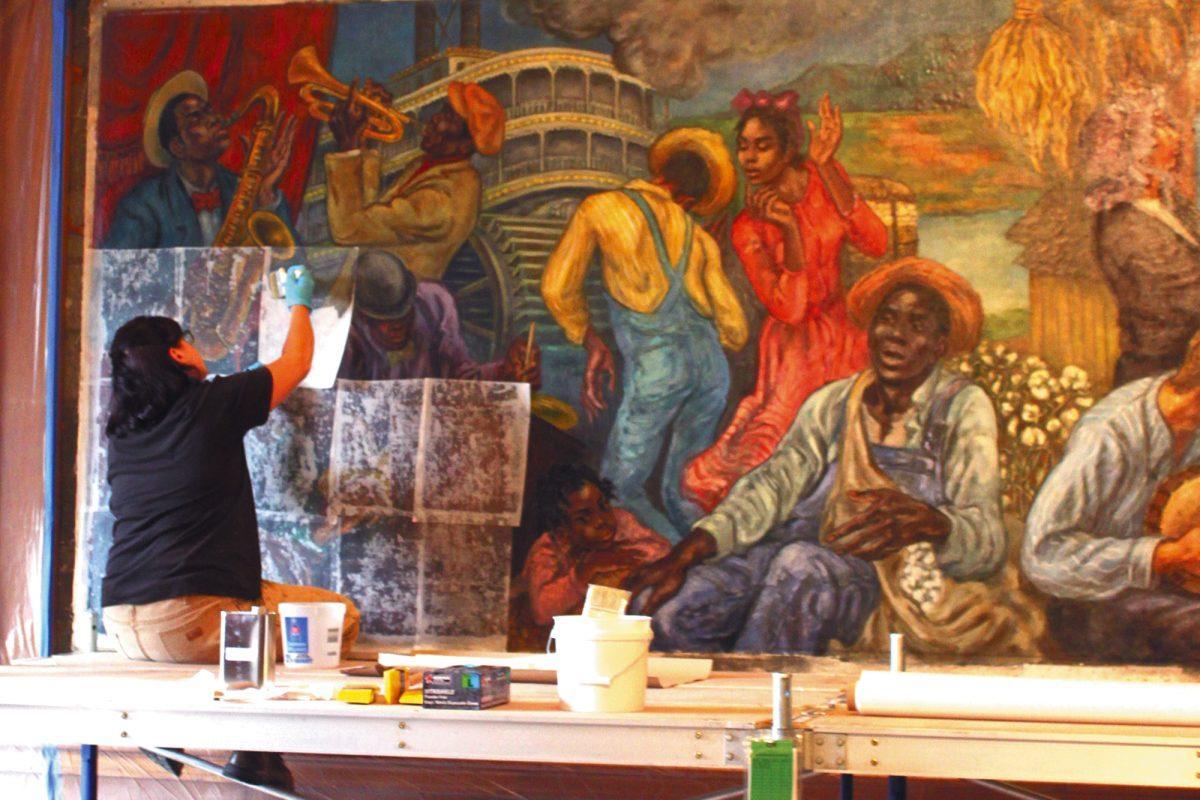
Workers began preparing the “Greenwood Mural” — one of UT’s largest pieces of art originally known as “The History of Tennessee” — on Friday for its planned move to a storage facility. The 29-foot by-6-foot painting has been hidden behind the maroon curtains in the UC Ballroom since 2006.
Due to the impending destruction of the UC, contractors from EverGreene Architectural Arts in New York arrived Friday and began the tedious “facing” process of removing the piece by placing a protective adhesion over the painting.
The conservators are scheduled to be on site for three weeks before it will be taken to the Ewing Gallery storage facility, where it will rest until next summer, where the piece will be placed on display at the UT Downtown Gallery on Gay Street.
The mural spurred an air of controversy on campus in the 1960s when some expressed concern over the portrayal of African-Americans in the painting.
Plexiglass was placed over the mural to protect the painting, and curtains were drawn over the piece because of its controversial nature in 2006. That same year, the Issues Committee along with the Visual Arts Committee held a forum titled, “The Greenwood Mural” to discuss the race issues and censorship associated with the painting.
Since then, some art and first studies classes have used the painting for education purposes. Aside from that use, conversation regarding the mural has been almost non-existent until plans to build the New Student Union occurred.
“Because this was a multipurpose facility, it was seen as as not the most appropriate place for a painting of this type,” said Jim Dittrich, director of the UC and a member of the UC Art Collection committee.
Created in 1954 by Marion Greenwood, the mural depicts the Grand Divisions of Tennessee using descriptive portraits.
In the east, people are painted holding hymnals to express religion-based Appalachian influences. In the center, men and women dance to a fiddler’s tune in an expression of the country and folk influences of middle Tennessee. And on the left side of the painting, African-Americans are painted playing jazz instruments and sharing slave spirituals to represent the Negro spirituals that occurred in that time.
“You have the beautiful intimacy between each of these portraits,” said conservator Byron Roessevelt. “It’s kind of rare almost that you find these types of portraits in a mural. For there to be controversy over the painting too, to me is a great frustration because Marion Greenwood worked very hard to be apolitical in her painting career. Controversy equals politics. She would be stunned to learn that people thought that.”
Once the painting has been properly removed, it will be taken to the Ewing Gallery storage facility, where it will rest until next summer, where the piece will be placed on display at the UT Downtown Gallery on Gay Street.
Placing the mural back at the university has been discussed, but Dorothy Habel, professor in the School of Art and mural committee member, said the wall space to host that large of a piece is sparse, especially in the New Student Union.
“We’re proud of it and think it’s a part of the university’s art collection and we’d love to retain it,” Habel said.
‘”Ultimately we hope there will be a campus site for it. In my mind that would be ideal.”