Can you smell it? There’s a growing scent of approval in America today, and its not just college kids or musicians.
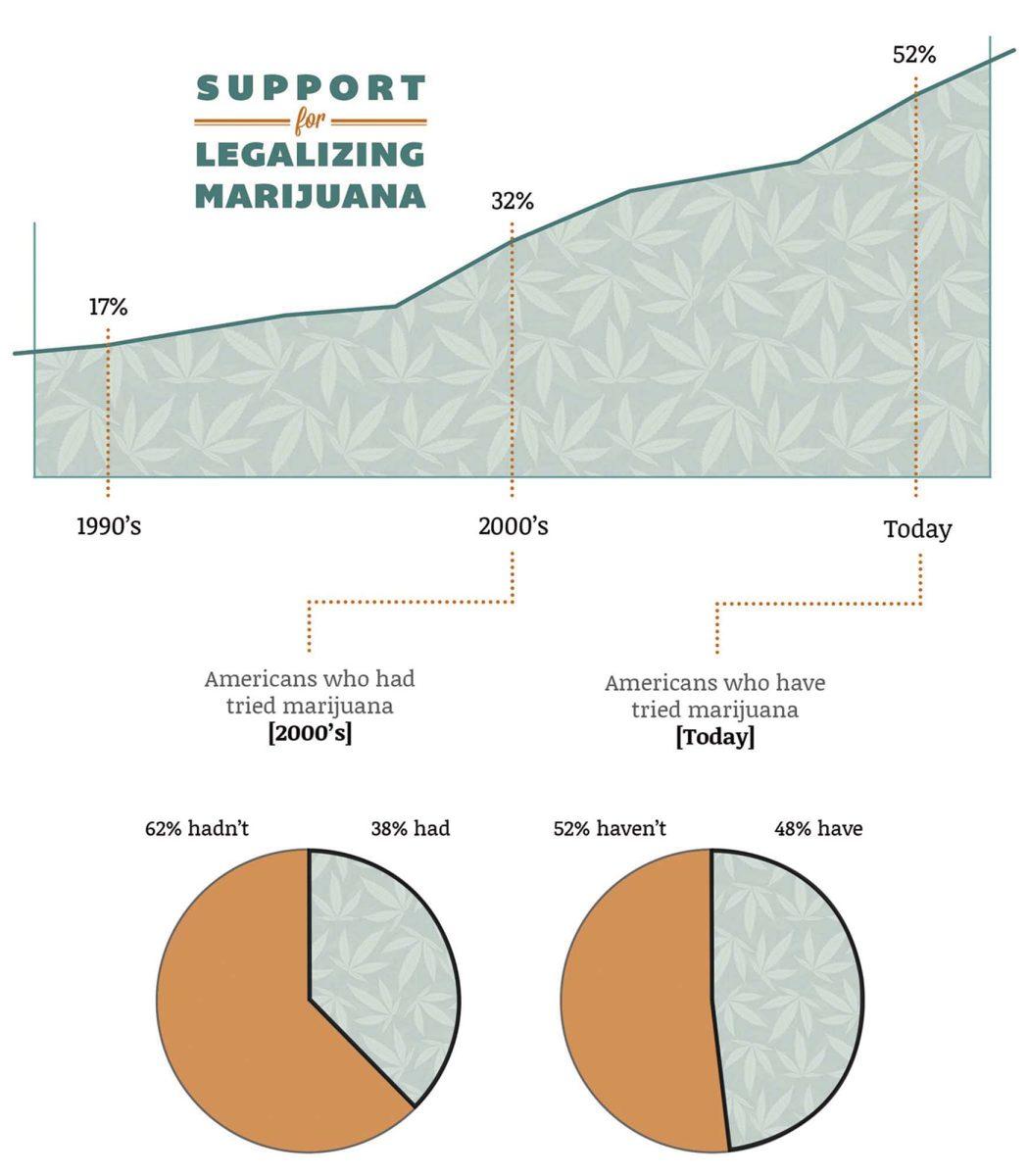
The Pew Research Association conducted a survey, showing that 52 percent of Americans approve of the legalization of marijuana.
The report, which was conducted in March among 1,502 adults, found that young people are the most supportive of it.
While a distinct culprit cannot be tied as to why the approval rates are rising, a clue could stem from the ever present representations of marijuana and other smoking practices in the media. What’s not always shown in the movies, however, are the health effects of using such practices.
Films such as Book of Revelations comedy “This Is The End,” (2013) starring popular comedians Seth Rogen and James Franco, centered much of the dialogue and character development around weed.The same concept was seen in the movie “Ted,” (2013) which featured Mark Walhberg befriending an animated talking teddy bear slacker with a vulgar tongue and a constant trail of marijuana smoke streaming from his sewn-together mouth.
While popular media seems to be filled with images and messages of weed, it’s just that; the less glamorous aspects of the drugs are often omitted, such as the studies behind the long-term usage of the drug.
Rosa Thomas, a wellness coordinator for UT Student Health, said many of the health concerns revolve around supposed decreases in memory and learning. It is also widely considered a hindrance to a person’s long-term ability to organize and generate complex information.
“If you can’t focus and you can’t concentrate, then it would make it really difficult to study,” Thomas said.
Thomas said that the practice of smoking mariuana is dangerous in similar ways as smoking hookah. In a study conducted by the Centers for Disease Control and Prevention, the charcoal used to heat the tobacco in hookah contains toxins linked to lung cancer.
But despite the health implications, smoking “ganja” seems to be on the rise. In the same study, a reported 48 percent of adults admitted to trying marijuana, with 12 percent saying they smoked within the last year.
Senior in theater Thomas DeMarcus said there is a skewed depiction of weed in the media, but not necessarily in a positive way.
“The media-majority would have everyone in fear that the passing of certain marijuana laws will lead to ‘reefer madness’ and a society of broke, jobless hippies,” DeMarcus said. “Movies have a knack for portraying marijuana smokers as dysfunctional losers whereas I have friends who are fully-functional (and occasional) weed-smokers. Moderation is key.
We have no problems pointing the finger at alcohol abuse and obesity and yet alcohol and fast food are legal in all 50 states.”
DeMarcus said that the media also places a substantial amount of focus on the negative side effects of smoking weed.
“I think a majority of people focus on “side effects” as a negative thing. Marijuana has potential positive side effects, and yet, it seems the good never outweighs the bad,” DeMarcus said. “While the focus might be on ‘drug use,’ ‘lung-cancer,’ ‘memory-loss,’ and ‘laziness,’ one could argue that it is also ‘muscle relaxing,’ ‘pain-relieving,’ and ‘seizure/migraine/MS preventative.'”
There are some studies of long term use of marijuana that show positive side-effects of smoking the drug, such as smaller waistlines and lower levels of insulin. However, the findings weren’t enough to prove that long term use of the drug keeps users slim and fights disease.
As the discussion of national legalization of the drug continues, studies will continue to be conducted on both sides.
“I think the laws are the laws but, while I don’t necessarily agree with them the way they are currently, acceptance is growing but I’m not entirely sure usage is growing along with that,” DeMarcus said.