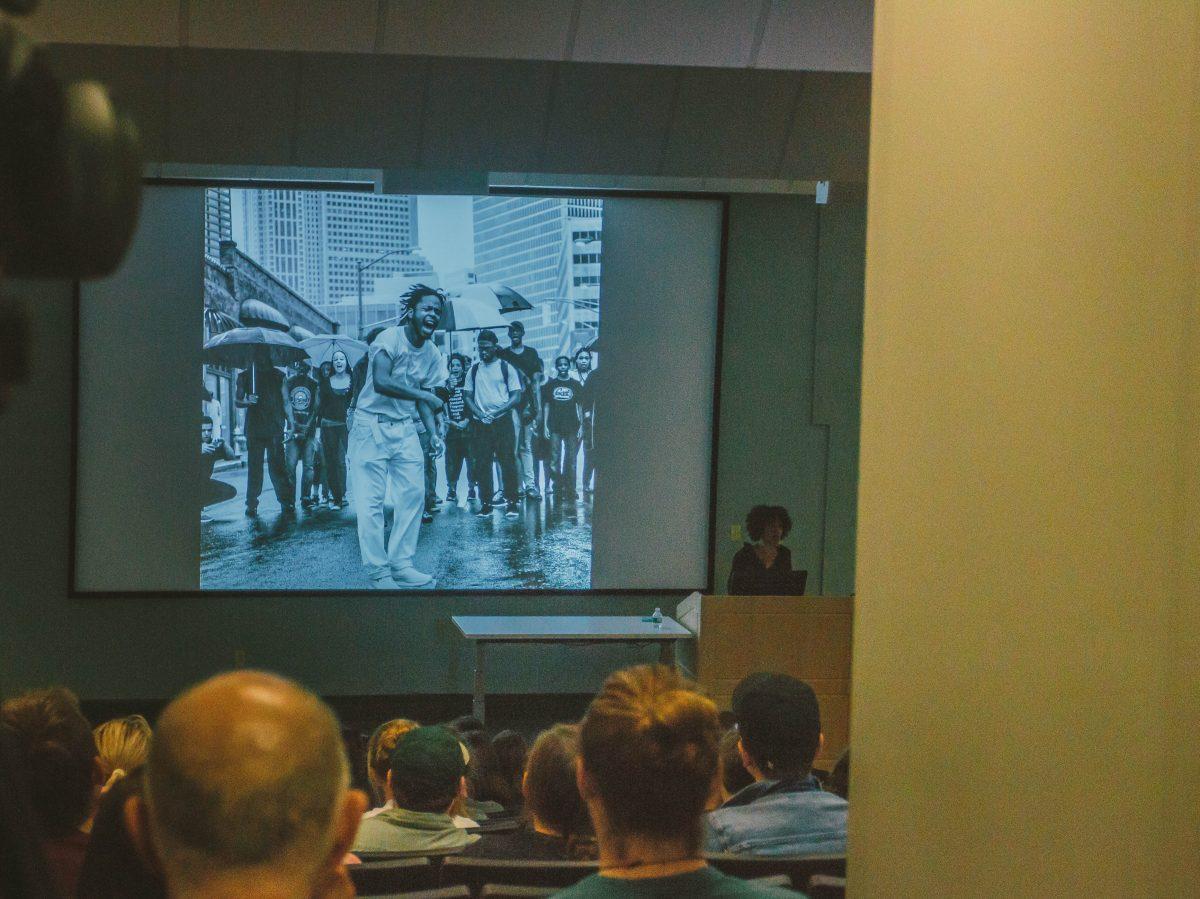
Thursday evening, cultural anthropologist Sheila Pree Bright presented her photographic work on biased media presentation of the Black Lives Matter movement at McClung Museum.
Through her photography, Bright wanted to communicate a different perspective, one that portrays these activists as people who want to end an ongoing race war rather than start one.
“I think it’s very important that the young people know what is going on, because the media depicts black activists as a terrorist group,” Bright said. “In reality, they are young people who are tired.”
Her photo series “Young Americans” is meant as a response to negativity associated with the millennial generation. Bright gave the subjects in the photos a platform for self-expression by allowing them to come up with their own props, clothes and poses.
Another one of these photo series, titled #1960 NOW, depicted several portraits of activists from the Civil Rights Movement — including people like Hank Thomas and Lonnie C. King Jr. – across several cities in America. This photo series commented on how similar the current Black Lives Matter movement is to the original Civil Rights Movement of the 1960s, Bright said.
“The images are really powerful,” Anne Langendorfer, lecturer in English, said. “I feel like the way the artist portrays the protesters gives them more dignity. It really makes you think about how photography is used (and) can change how we perceive what we see.”
Bright also recounted several protests and demonstrations she had attended to photograph. From the die-in demonstration in Atlanta to #ReclaimMLK demonstrations to the streets of Ferguson after the 2014 death of Michael Brown, Bright has seen her fair share of protests. From them, she has learned a great deal about the lives of the black people in these communities.
“Journalists and the mass media have been taught to see these people as victims. I prefer to see them as people,” Bright said.
Bright described an experience she had in Baltimore, where she was told that the only time that journalists come down there is when there are riots to report. Bright was told that no one truly cares for the constant struggle of Baltimore communities and that no one reports when the community gets together to clean up the morning after a protest.
“Here, she’s asking us who America is now. And me and my students – we’re Americans,” Beauvais Lyons, Chancellor’s Professor in the School of Art, said. “It’s important that we’re all aware of what’s going on in our country.”
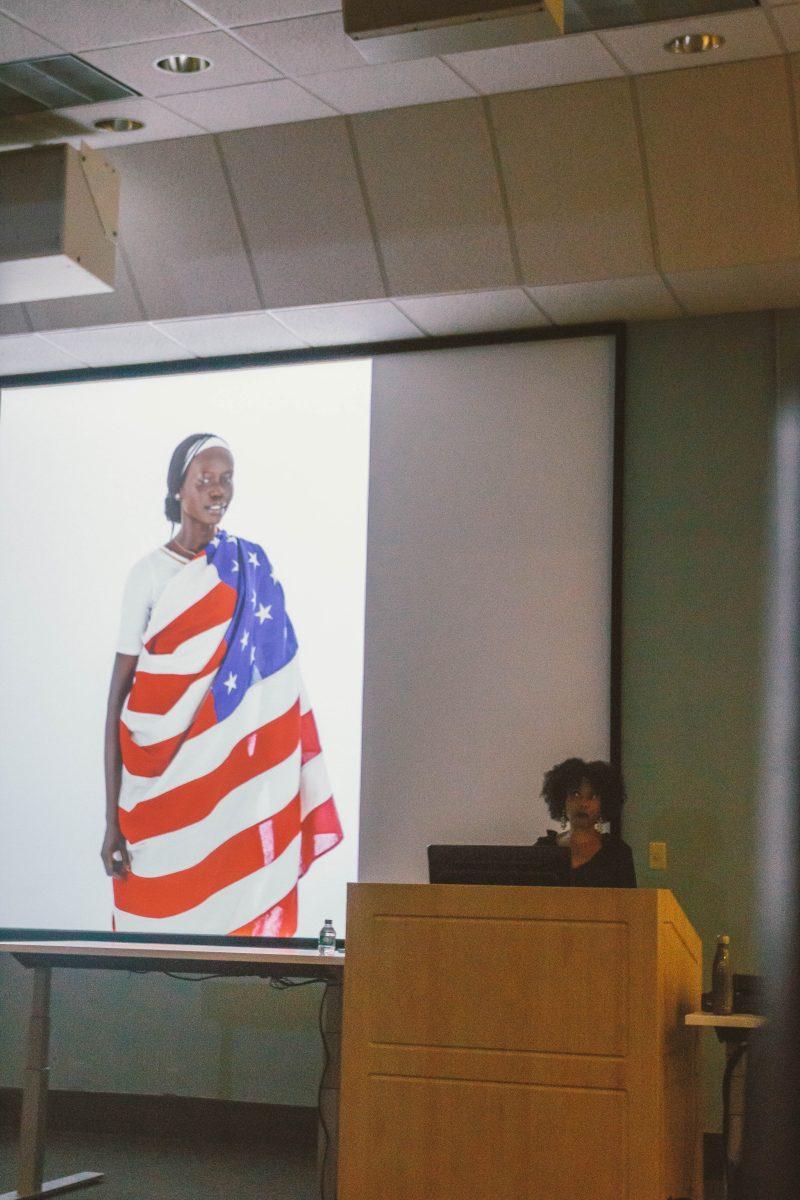
Sheila Pree Bright showcases her photography that embraces a focus on America during her lecture in McClung Museum on Aug. 13, 2018.
Bright also added that protests are like parades for media. In her experience, journalists get in people’s way, shoving microphones into the faces of protesters. Some even try to argue with protesters – and when the protesters get angry, that is what is shown on TV. The media is taught to see and portray them as violent rioters instead of as people who want to make a difference in the world.
The lecture ended with Bright asking her audience challenging questions: How can we move forward as a country? Will our country ever change? Does our country even want to change? Bright concluded that she is optimistic for the current generation due to the resistance she has seen all over the country and will continue to see as she documents more protests and gives voice to the unheard.
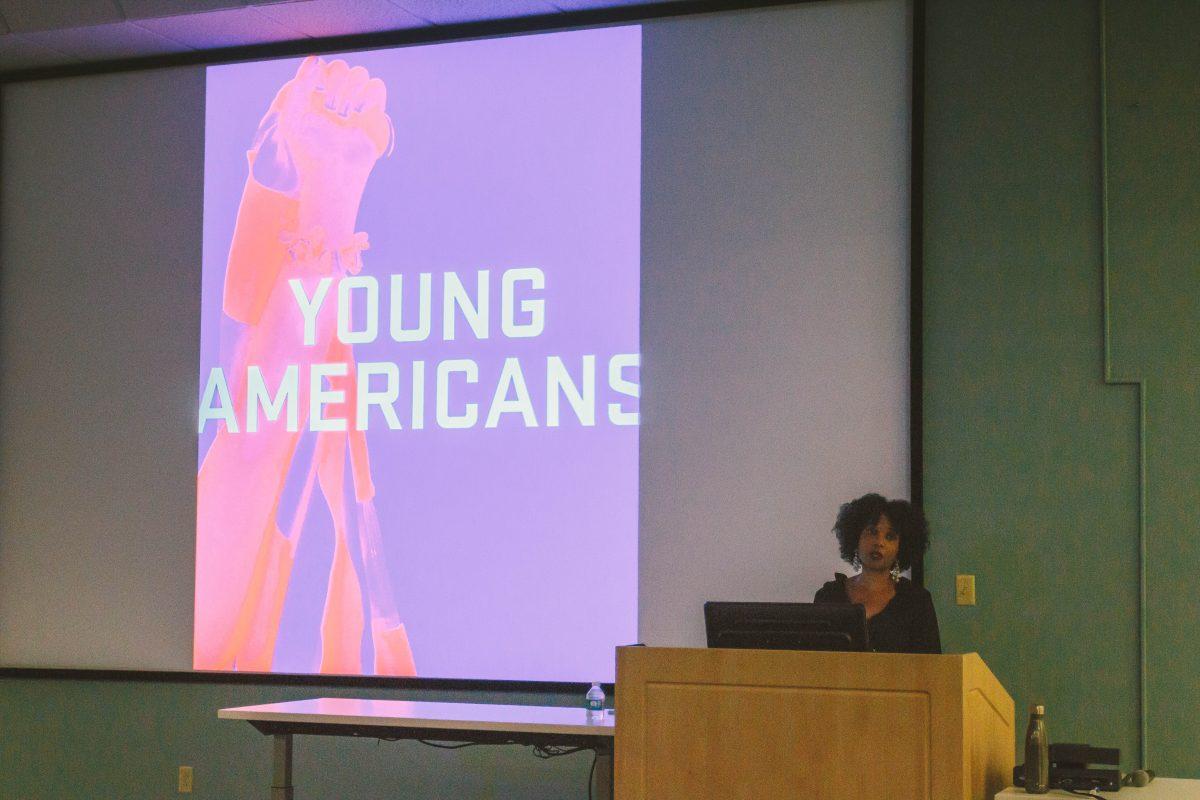
Sheila Pree Bright presents her photo series "Young Americans" and explains how it is a response to negativity associated with the millennial generation during her lecture on Sept. 13, 2018 in McClung Museum.