“Bad luck to kill a sea bird.”
Solitude. Even those with the strongest minds would go mad if left alone for enough time. However, what might be worse than solitude is being stuck with someone who might be a little mad themselves.
Robert Eggers’s new film “The Lighthouse” sees two lighthouse keepers deal with this issue. However, the question is who is insane and who isn’t?
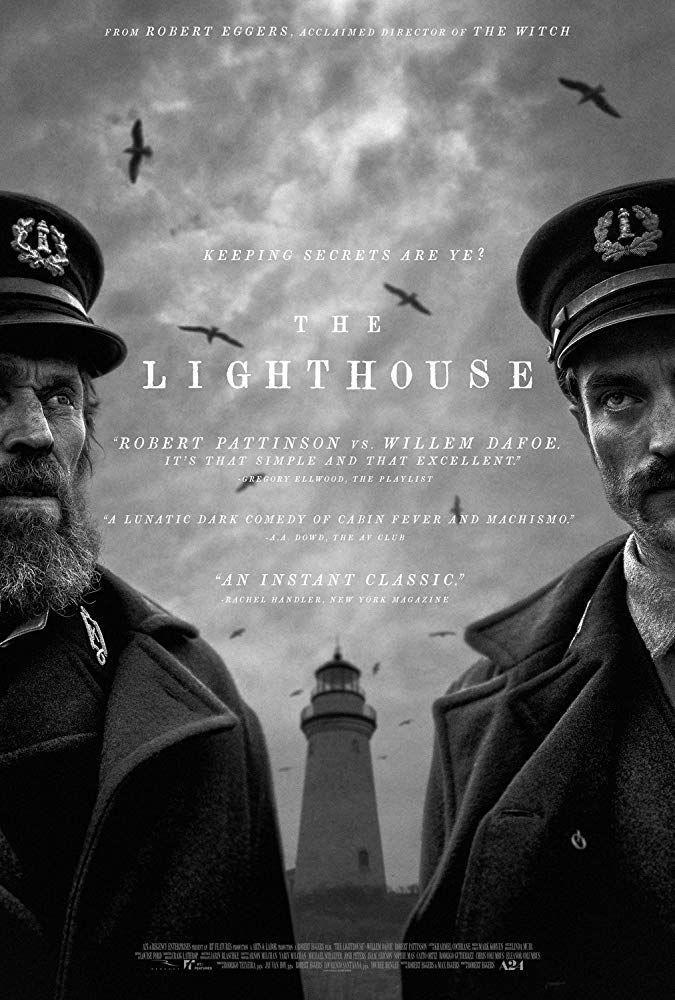
In the mid-1890s, Ephraim Winslow arrives on a small island in order to take care of a lighthouse with the keeper, Thomas Wake. While only on contract for four weeks, Winslow begins to have struggle with the eccentricities of Wake. As the days go on, Winslow is tormented by seagulls, as well as strange visions and a sense that something might be off about Wake or possibly himself.
I had admittedly high expectations when going into this film. “The Witch,” also directed by Eggers, quickly became one of my favorite horror films of all time and I heavily anticipated Robert Eggers’s next project.
With such high expectations, I was sure that the film was going to let me down in one way or another. Instead, it did the opposite and was somehow more brilliant than I could’ve possibly imagined.
There really isn’t anything about “The Lighthouse” that I can criticize. Eggers perfectly blends every aspect of filmmaking together in order to make an experience that I will not soon forget. His brilliant carries the film from beginning to end, and I’m not sure that the film would be the same if helmed by a different director.
Eggers’s attention to detail can be seen throughout the film and within the script, just as with his script for “The Witch.” All of the dialogue in the film is written in a very specific, old-timey way. The way that Winslow and Wake speak almost feels like poetry at times, perfectly pulling viewers into the film’s time period.
“The Lighthouse” is shot in an incredibly strange aspect ratio, 1.19:1, that I’ve never seen used before. Around half of the screen at a normal movie theater won’t even be used, with only the middle showcasing the film. Pairing this with the choice of shooting the film in black and white gives the entire film an eerie, claustrophobic mood that doesn’t let up until the credits have finished rolling.
From the moment the film begins, audiences are blast with a creepy, off-putting score by Mark Korven. Many scenes seem mundane in nature, with nothing particularly interesting happening. However, thanks to the score, I was constantly enthralled by every scene in the film.
The film is brilliantly led by only two actors: Robert Pattinson and Willem Dafoe. Although many know Pattinson from cheesy teen dramas of the mid 2000s, he has grown into one of the best actors in Hollywood. He has impressed me with every project he has been attached to in the past few years, with “The Lighthouse” as no exception.
Pattinson is paired with the legendary Willem Dafoe, who is clearly not slowing down in his old age. The two have some sort of strange anti-chemistry. Every time the two are in the same room, it feels as if a powder keg is about to go off. These two were without a doubt the perfect actors for this film and gave performances that I’ll never forget.
Film-going experiences like the one I had while watching “The Lighthouse” are the reason that I continue to see movies. The combination of directing, cinematography, editing, score and acting in this film are as close to perfect as any film can get. Do yourself a favor and see “The Lighthouse” as soon as possible.
5/5 Stars