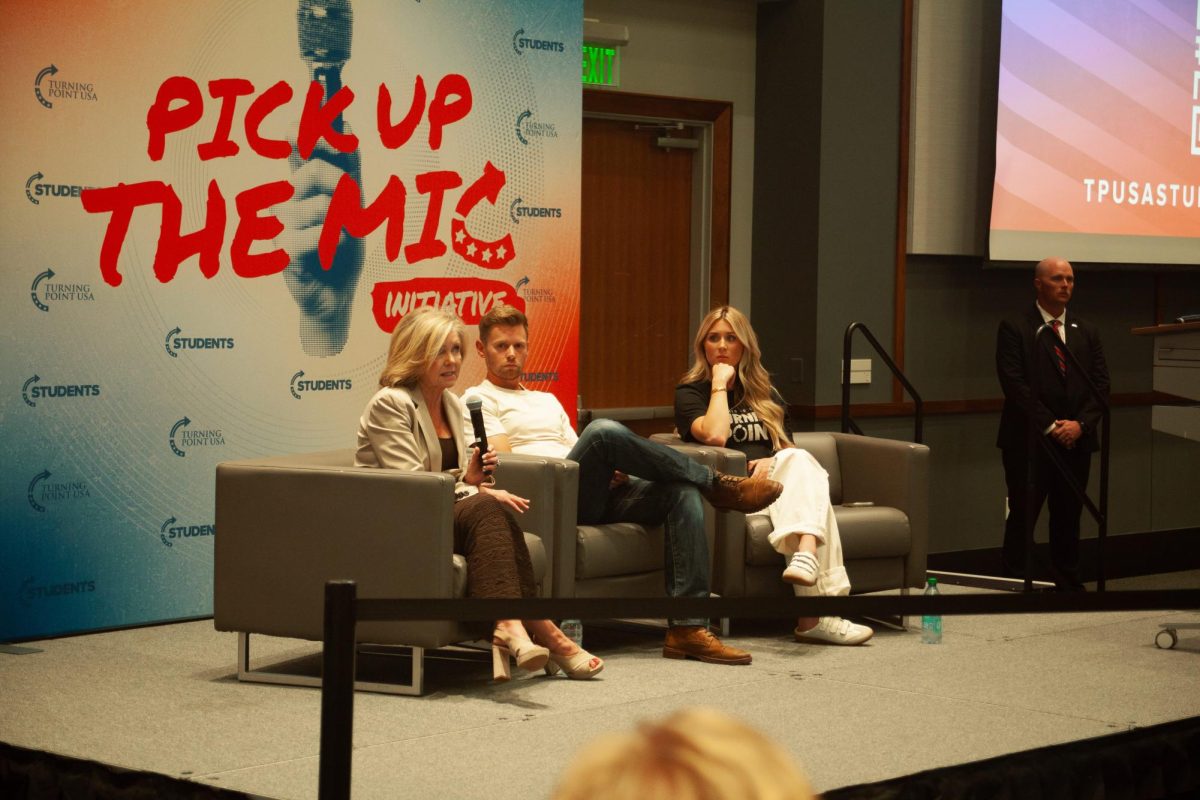
Natalie Ivey, director of advocacy and outreach for Community Coalition Against Human Trafficking, returned to UT Tuesday evening to speak to students about the realities of human trafficking in Knoxville and beyond.
Ivey graduated from the UT College of Law before she began her career as an assistant district attorney who prosecuted crimes of domestic and sexual violence. She then served as the executive director of a victim service agency before relocating back to Knoxville.
According to CCAHT’s website, their goal is to “unite and equip our community to end modern-day slavery while providing survivors of human trafficking with individualized, relational care through our direct services program, Grow Free Tennessee.”
Ivey told the crowd how encouraging it was to see people come to hear about the issue of human trafficking.
“Obviously it’s not a fun topic to talk about. I always joke that I’m a professional Debbie-downer because inevitably, you guys are probably going to leave here slightly more depressed than you are now,” Ivey said. “But it’s really important that we have this conversation.”
While Tennessee, and Knoxville specifically, are places prevalent with human and sex trafficking, Ivey noted that in a positive view, Tennessee ranks first in fighting human trafficking.
“We are leading the nation,” Ivey said. “It’s because we’ve seen other states fall behind the ball and not be equipped and prepared to respond.”
Furthering the conversation about Tennessee’s actions to combat human trafficking, Ivey focused on East Tennessee specifically as she noted Governor Haslam’s Anti-slavery Alliance. As the alliance appointed agencies across the state to serve the communities, CCAHT became the agency for East Tennessee.
Ivey discussed all of CCAHT’s roles such as trainings, community outreach and specialized trainings for professions that will interact with trafficking. These professions include educators, medical providers, foster parents, realtors and law enforcement among others. The training is offered free of charge.
Grow Free Tennessee is another important aspect of CCAHT as it serves survivors of human trafficking in East Tennessee and offers one of the few safe houses in Tennessee for survivors of trafficking.
Rachel Garner, a freshman industrial engineering major, voiced her opinions on the prevalence of human trafficking in the Knoxville community.
“I think it’s terrible,” Garner said. “There needs to be some more protocol implemented so that it’s not such a huge and growing problem. I feel safe on campus knowing law enforcement is here and with the blue light systems, but walking around downtown alone . ..not at all.”
Through Ivey’s experience in the criminal justice system, and through prosecuting sexual and domestic violence crimes, she noticed something that kick started her hands on involvement with CCAHT.
“What I learned very quickly is that the criminal justice system often times has a difficult time actually helping victims,” Ivey said. “We might have a way to punish offenders, but there is not a lot of support and resources needed for victims of crime.”
Grow Free Tennessee allows human trafficker victims to talk about their rights, provides them with assistance and starts conversations about routes to compensation. Ivey also highlighted that human trafficking is happening every single day in plain sight.
“Unfortunately, traffickers are very, very smart. This is the fastest growing enterprise,” Ivey said. “Some experts believe it’s going to outgross drugs in the near future. They don’t get that way, they don’t become successful, they don’t make money if they’re not smart about it. If they don’t protect their business and if they don’t ensure that no one detects what’s going on.”
Ivey also talked about the two types of trafficking in East Tennessee, sex trafficking and labor trafficking, with sex trafficking being more common.
Sex trafficking is different than other forms of sexual assault because of the commercial component. Often times, especially in rural areas with geographic isolation and high poverty rates, sex trafficking is even familial, meaning the victims know their trafficker. It might be mom, dad or sister who feel that trafficking is their only means of paying rent or getting groceries. This is when it becomes complex and difficult, Ivey notes, as the mom is usually not a trafficker suspect of her child.
In investigations, it was revealed that the most consistent demographic across the country of sex trafficking buyers were white males aged 40 to 60.
“If the victim is homeless because their trafficker kicked them out, and they are drug addicts because that is what they use to cope with their trauma while their most frequent buyer is a youth pastor, who is the public going to believe?” Ivey said. “Is that an even playing field? Not a chance.”
Ivey noted there were two things that people can do to recognize sex trafficking in their communities.
“Accept that it’s happening here and I mean really accept that,” Ivey said. “So that when you go to a UT football game or go eat at Market Square or are out in public that you are considering the fact that you might see a victim of sex trafficking. That’s uncomfortable. That’s not fun. But if we can get past that hurdle, then we’re going to start paying attention to things around us. The second thing I would encourage you to do is be observant and listen to your gut.”
James Hatcher, freshman food and agricultural business major, described his takeaways from the night as he mentioned the prevalence of human trafficking in Knoxville was “disheartening.”
“I’m definitely gonna keep those hotlines on hand in case I need them,” Hatcher said. “I’m gonna be looking around a lot more so that I can hopefully do my part.”