Since the Tennessee Promise’s launch in 2015, Cumberland University and Pellissippi State Community College have increased enrollment and degree completion, according to studies by UT’s Postsecondary Education Research Center.
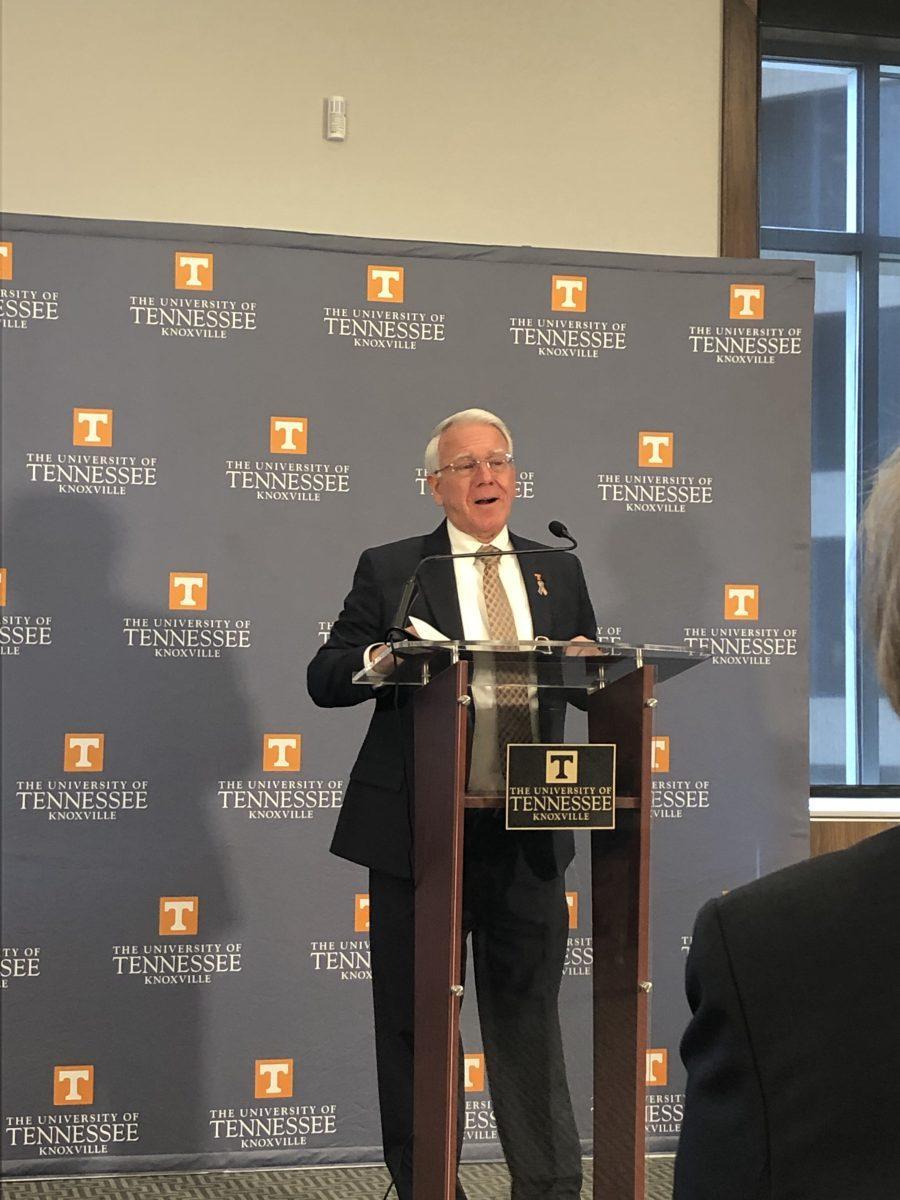
“We are a university that takes pride in being heavily engaged in research,” Interim Chancellor Wayne Davis said to introduce a news conference on Tuesday.
“This research is the kind of thing that allows us as the university, (to) do the research, inform our legislators, our public officials and others in the state of Tennessee … to then move forward and make a better state.”
UT’s Postsecondary Research Center is housed in the Department of Educational Leadership and Policy Studies in the UT College of Education, Health and Human Sciences and is led by Chancellor Emeritus Jimmy Cheek. The center looks to identify, conduct and coordinate research on initiatives and ideas designed to enhance education.
UT associate professor of educational leadership and policy studies Lisa Driscoll said the studies involved a straightforward methodology, using student head counts and averages of commonly used indicators.
Interim UT President Randy Boyd encouraged UT community members to focus less on the money behind Tennessee Promise and focus more on the students behind the stats. In order to retain the scholarship, students must participate in eight community service hours a semester, giving them “skin in the game.”
“This whole program isn’t about access, it’s about success,” Boyd said. “It doesn’t really do us any good to get them into school if we can’t get them out of school. We want to graduate them.”
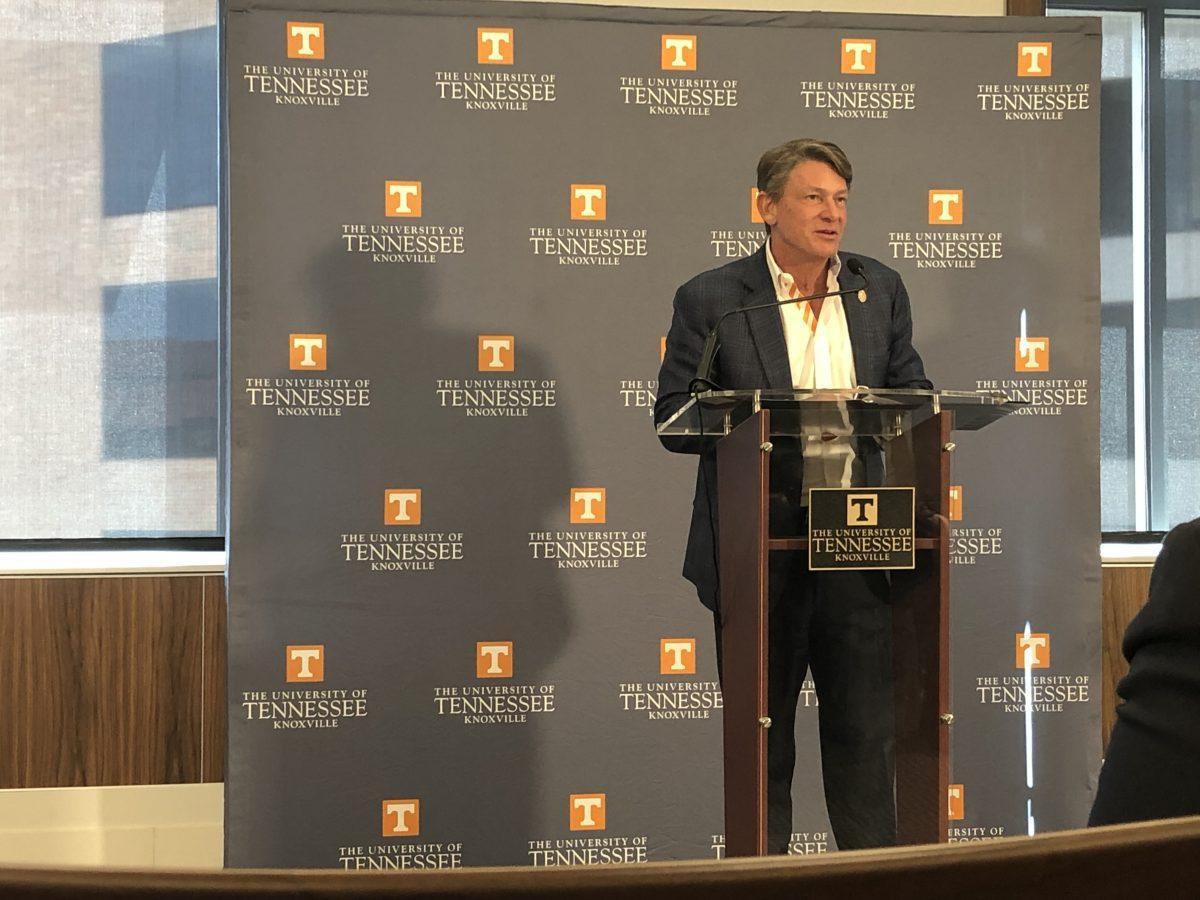
Interim President Randy Boyd closed Tuesday's news conference sharing UT's study on the Tennessee Promise.
Study shows enrollment, retention increases
Enrollment for first-time, full-time freshmen students increased 25 percent in the first semester of the program in 2015 and 40 percent by the fall of 2018 at PSCC. Cumberland University, located in Lebanon, Tennessee, has seen 1,067 students benefit from the Tennessee Promise. The first-time, full-time student population grew from 68 in fall 2015 to 414 in fall 2018.
Pellissippi has also seen an increase in minority student enrollment, according to the study — African American student enrollment increased from five percent in fall 2015 to 6.4 percent in fall 2018 and Hispanic student enrollment increased from 4.4 percent to 5.9 percent over the same three-year time period.
Underrepresented communities also grew in size at Cumberland University. Hispanic enrollment grew from 1.5 percent to 5.6 percent, African American from 4.4 percent to 5.1 percent, Native American from one percent to 1.7 percent and Asian enrollment from one percent to 1.2 percent.
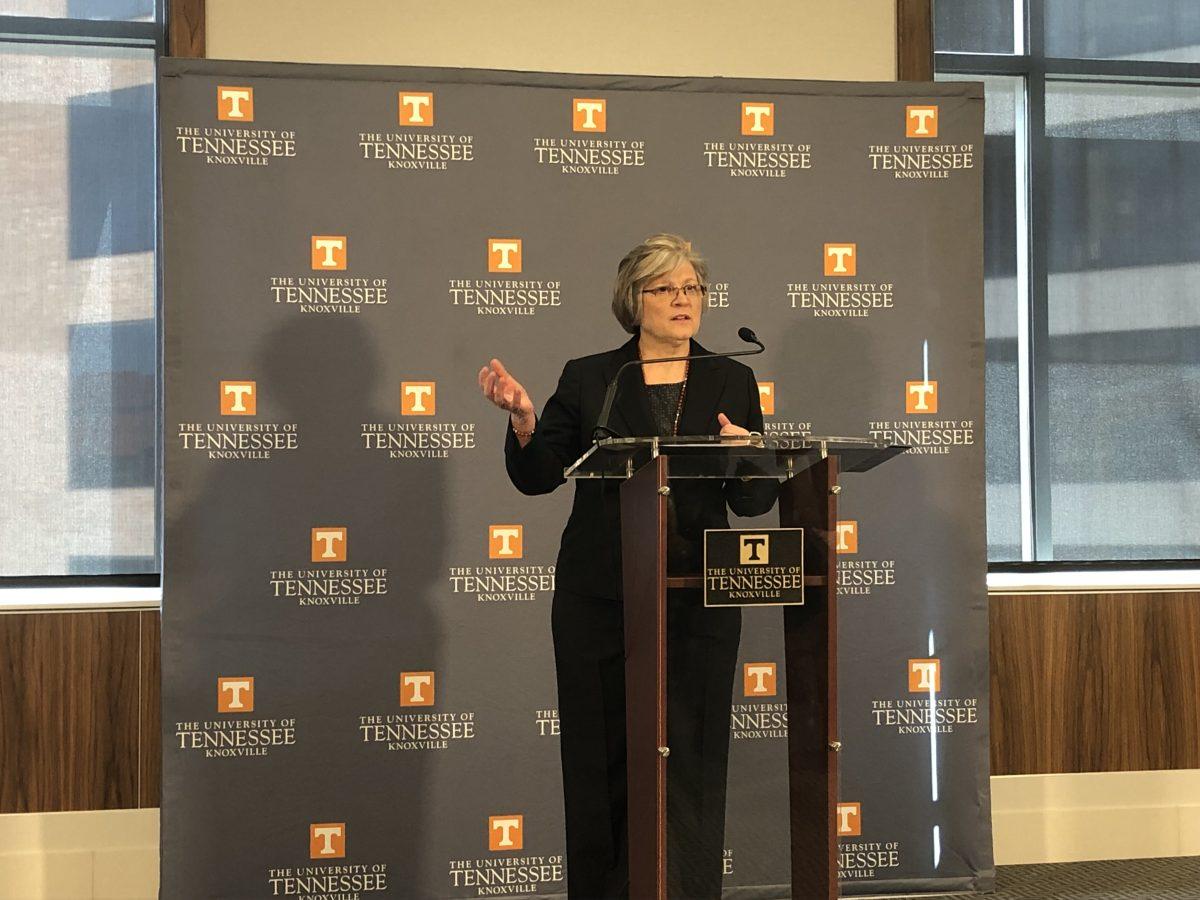
Lisa Driscoll shared insight into Tennessee Promise research at a news conference Tuesday, April 2.
“The increased access for students at both institutions means that more high schoolers in Tennessee were able to move forward with their lives, with their careers, and make a contribution,” Driscoll said. “Students enrolled in Tennessee attempted more credit hours on average than other students in both institutions. So they are not only coming; they are attempting more course work.”
Along with noting an increase in enrollment, the study shows that Tennessee Promise participants took more credit hours in their first semester and were more likely to receive a certificate or degree than students not in the program. 23 percent of students enrolled in the fall 2015 Tennessee Promise completed their program in five semesters.
Students in the same cohort had a three-year associate’s degree completion rate of 20.1 percent. In comparison, 23.5 percent completed both certificates and associate’s degrees for students who entered fall 2014.
According to the study, 44.9 percent of the first group of Tennessee Promise participants completed an associate’s degree in the first five semesters at Cumberland University in comparison to 23.6 percent across Tennessee. In the second group of participants, over half of the Tennessee Promise students completed an associate’s degree.
Driscoll said that plans are in motion for future studies linking the Tennessee Promise to individual development and workforce production.
“This research is very important to the state of Tennessee because it is forming a foundation for the next steps in our research where we can look in depth and what works and what doesn’t,” Driscoll said. “And it’s critically important for our individual development of our residents as well as workforce development that we have qualified individuals … to produce and move Tennessee forward in the future.”
The full report can be found here.
Managing Editor Tyler Wombles contributed to this story.
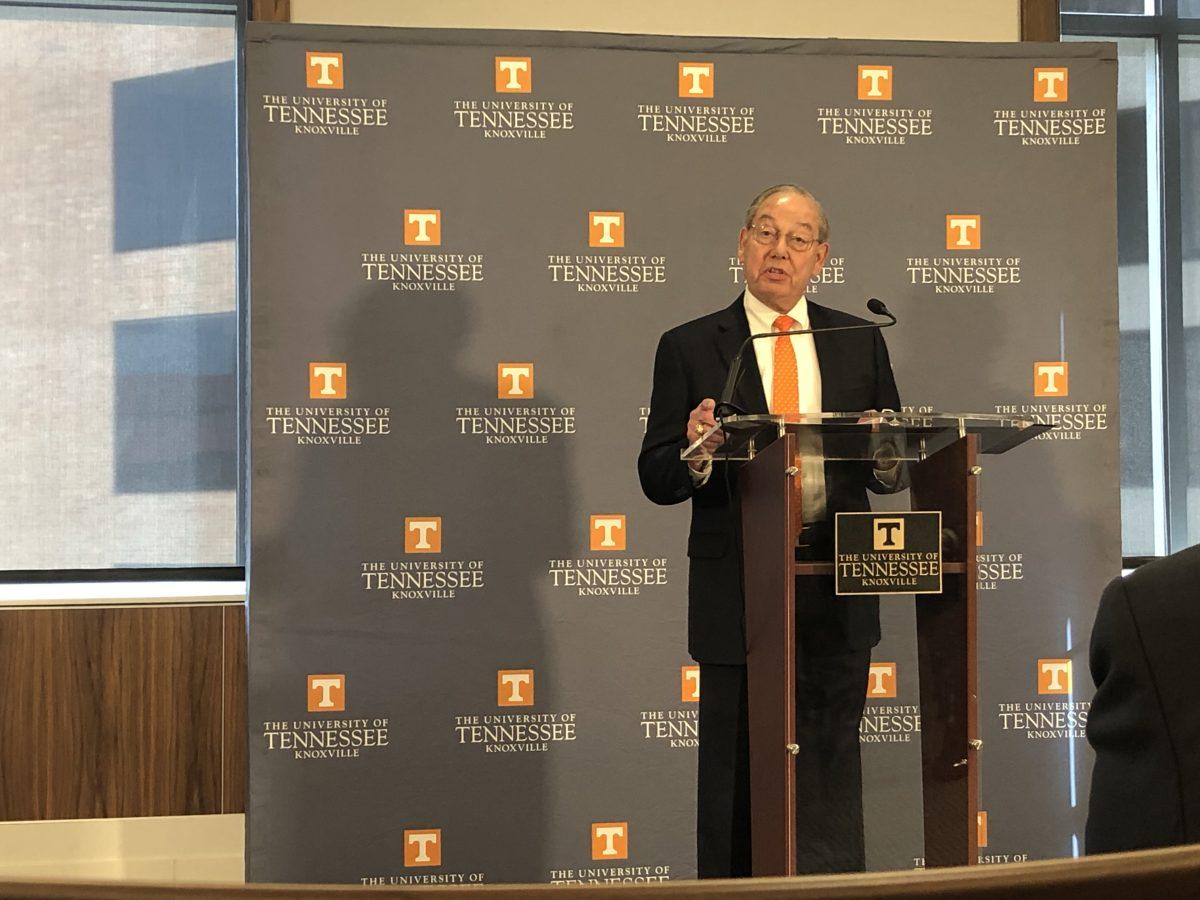
Chancellor Emeritus Jimmy Cheek shared insight into Tennessee Promise research at a news conference Tuesday, April 2.