We live in an era of self-improvement, whether it be cosmetic surgery, miracle diets or mid-life crises involving affairs with personal trainers. Every time I hear about a book, television series or new film espousing some life-altering approach to physical health, naturally I assume that some angle of capitalist gain is driving the project rather than a desire to help the masses.
When I viewed Lee Fulkerson’s “Forks Over Knives,” I had to not only question my condescending view towards the health doc genre, but also my own regression into a red meat carnivore from a mere pescatarian.
Summarizing the film would be simple: Almost a half-century of research co-opted by the United States and China (!) has yielded massive data proving the benefits of a whole foods, plant-based diet.
Fulkerson returns to this point over and over again, yet the film neither resembles an attempt at vegetarian proselytizing or blatant product placement. Instead, Fulkerson follows the work of physicians T. Colin Campbell and Caldwell B. Esselstyn, whose independent studies eventually joined field research and clinical application to form the basis of Fulkerson’s supposition.
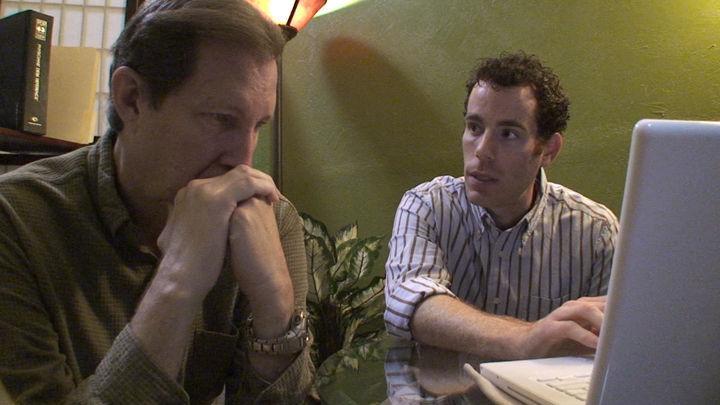
The film begins with Fulkerson’s own story, a middle-aged American man who consumes excesses of caffeine and sugar and subsequently is a bit overweight. He visits a nutritional specialist and realizes that his cholesterol, blood pressure and numerous other criterion are in the critical category, and that a change of diet could reverse all of these negatives.
By implanting his own story, Fulkerson lends urgency to the film’s message. The issue at hand is what saved the lives of several other patients of Campbell and Esselstyn interviewed in the film, and perhaps Fulkerson himself.
Now would be the time when you say, “Show me the proof!”
So glad you asked. The core claim of the film is rooted in the long-standing myth that the human body requires animal protein, over that of, say, beans or rice, to carry out proper functions. Fulkerson battles these ideas with research conducted between Campbell and Junshi Chen, which documented the cancer rate and animal product consumption in 65 counties of China in the early 80s, along with a study by Campbell which showed that various amounts of casein, the protein found in diary products, could both trigger and shut down malignant tumor growth.
Now, as with any other scientific study, social media survey or the turning of nuclear warheads into a whale and a pot of petunias, these results are random and completely based on their sources. However, the overwhelming conclusion backed up numerous times throughout the film is that Fulkerson, by way of Campbell and Esselstyn, may be on to something.
Fulkerson claims that the results of Campbell and Chen’s survey showed a positive correlation to meat and dairy consumption and cancer occurrence. Campbell even states that roughly two percent of cancer actually results from genetic breakdown, the prevalent theory in oncology next to carcinogen exposure. When observed 30 years later, after the widespread introduction of fast-food chain restaurants and Western products featuring high fructose corn syrup, Fulkerson observes that the same Chinese populations already exhibited the rampant rates of hypertension, cardiovascular disease and even cancer occurrence observed in Western culture.
I’ve barely scratched the surface of Fulkerson’s thought-provoking film. While many of the claims may say inflammatory or “finger-pointing,” I urge you to see the film, and observe how they are presented: educationally, and with genuine concern for the viewer and the Western world. Not many films can boast such a purpose, but it only takes one to make you believe others must exist.
four stars