“I’m at the end of my rope, and I feel like swinging.”
So sayeth the Bard of New Jersey, and I’m not talking about the Boss.
Chances are pretty good that you haven’t heard of Titus Andronicus (the band, not the play), though just two years ago they were the “It” band of the indie scene. Their leader, Patrick Stickles, straddles the line between confessional poetry and emo with remarkable aplomb, and the band is destined for the stardom, should we ever choose to break the current trend of tepid tween pap that dominates the radio. Here is why.
It takes a lot to make a concept album with the Civil War as allegory for break-up with a place work. The ability to portray gut-wrenching emotion without drowning in incessant whining also seems a Herculean task. In both respects Stickles scores perfectly, relating life in New Jersey as anything but a Guido juicehead-fest, rather resembling the Shakespeare play which gave the band its name.
But I didn’t set out to write a column about a band. I’m trying to get at the fact that while the aforementioned quote may seem defeatist, the context in which it is sung is anything but. What really sets bands like Titus Andronicus apart is the will to care, the ability to look at the world and realize you can’t change it, but you can change your life. This caveat is the metaphorical tide-breaker, that which saves the band’s music from smothering emotionalism.
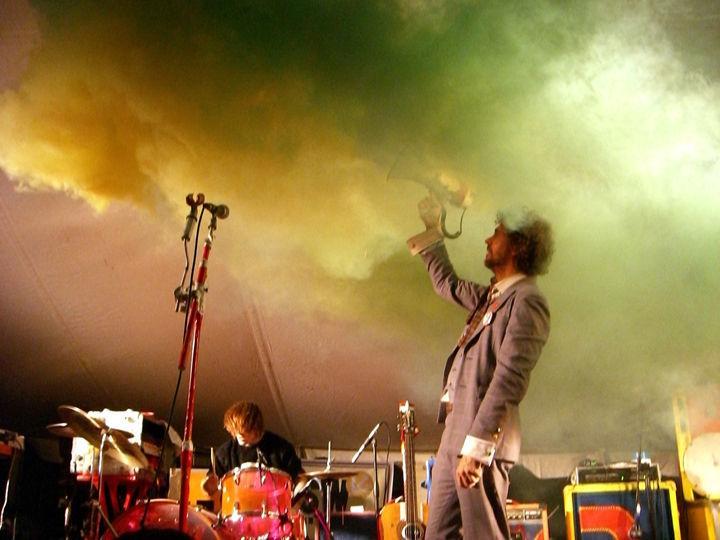
Other bands do this with similar effect, if disparate approach. This summer I renewed my love for the Flaming Lips, whose wide-eyed wonderment always functioned to level the egoistic playing field and remind you there is still so much in the world left to experience. Sure, Magnavox basically killed “Do You Realize???” with its ad campaigns, but if that’s the depth of your experience with the band, you have missed the cosmic boat. Another band that comes to mind is Cursive, whose Tim Kasher blends romantic dysfunction and self-deprecating levity in a manner which makes you simultaneously want to polish off a bottle of bourbon and strangle a guitar.
Not to wax existential too much, but sometimes the effort of empathy and basic human compassion seems lost on the world; after all, rarely is such congeniality profitable. Artists who unbashedly declare their love for the world often catch a rash of flak for such idealism. Not that I believe in a supreme being, but the same logical rationale used to deny such a presence is used to quash optimism at every turn, which does nothing to solve the problems of the world.
Last night I had a marathon conversation with my dad, who works a union job in a factory, about what kind of purpose people will have when we move away from manufacturing entirely, a prospect on the not-so-distant horizon. Neither of us could really imagine what would come next. We function on a fundamental level with purpose-drive, that is to say that while we might fight the idea of determinism, it is exactly what drives most of us. The grim reality of having no real purpose, which many of the unemployed across the nation have faced, is something I now have to look forward to upon graduation.
Which brings me back to sources of eternal optimism. Music, films, books and art in general have the magical galvanizing effect of displacing death anxiety and existential fear with the necessary courage to live in spite of such crushing odds. We all will die, and for those of us who don’t believe in heaven, it’s lights out for good. For me, that is all the more a constant motivation to live a virtuous life and shed the noose of flowing along the grain of society and life in general. Wayne Coyne himself has said, “Sometimes I don’t know if optimism works, sometimes it’s better to fight back with all you have.” But as that man and his music have proven, sometimes smiling in the face of prevailing evil and doom is more daring and defensive than any weapon wrought by human hands.
In the end, the time we spend on both frivolous worry and careless loafing amounts to a lifetime of missed opportunities to experience the rich potential of our world. Why imminent death may be one of the few predictable constants in life, to miss out on living in fear of consequences is a waste of the life we are given, by a Creator or a nebulous blob of energy 14 billion years ago. Where you go at the end matters little when you’re in the moment. As the age-old platitude goes, “What man is a man who does not make the world better.”
—Jake Lane is a senior in English. He can be reached at [email protected]